
Strategic Expansion of the West Cebu Industrial Park
The expansion of the West Cebu Industrial Park (WCIP) is a significant move aimed at strengthening the Philippines’ defense and economy, while also positioning the country as a key player in shipbuilding. This initiative leverages the nation’s unique geography, skilled workforce, and deepening ties with Japan to build a robust maritime industrial base. Analysts believe that the success of this push will be determined by whether fresh investment can create lasting capacity within the industry.
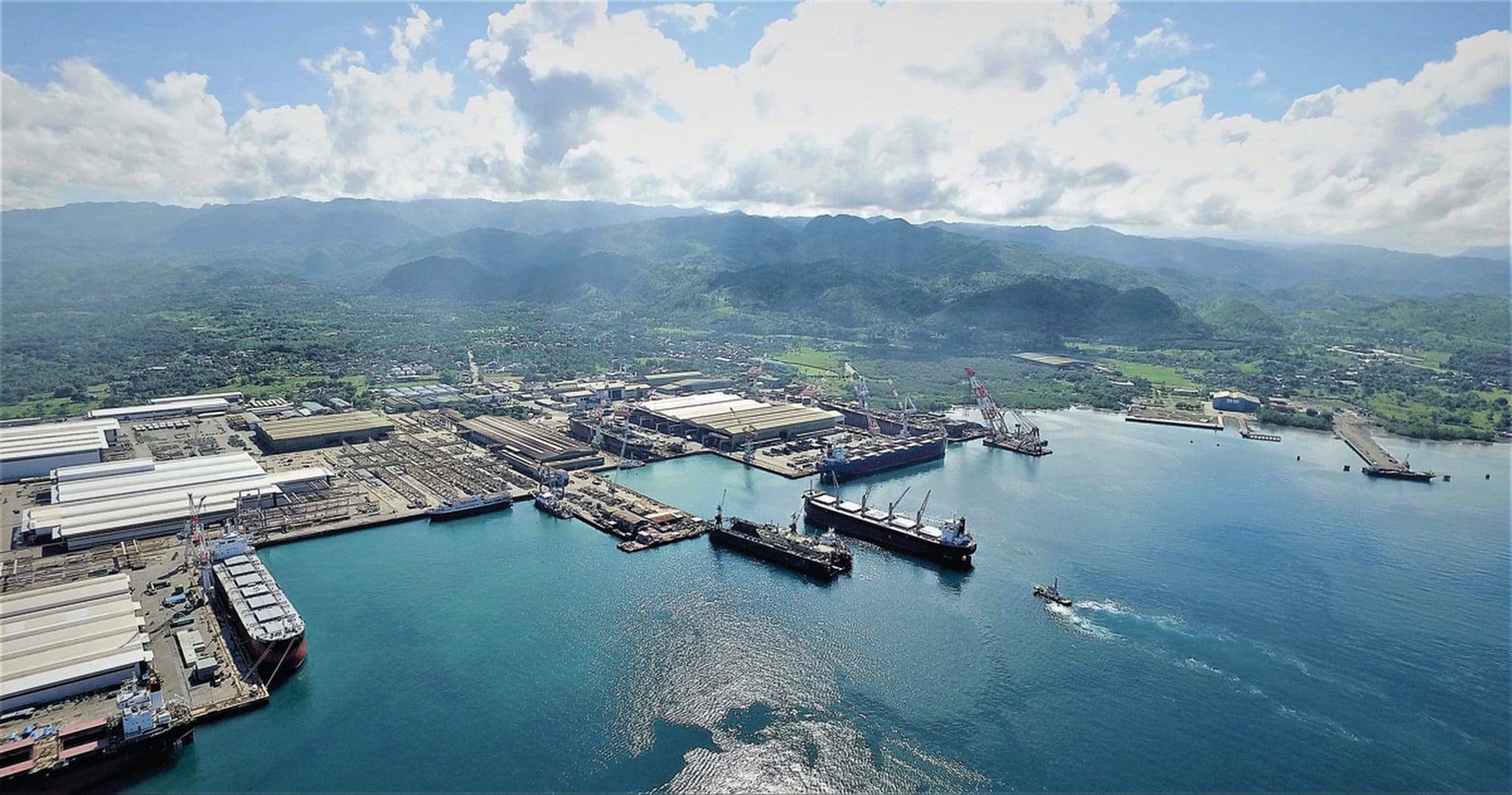
President Ferdinand Marcos Jnr provided a concrete boost to this drive on June 3, when he ordered the addition of 64 hectares (158 acres) to the WCIP, one of the country’s most important shipbuilding and heavy-industry hubs. This expansion brought the special economic zone in Balamban, on Cebu’s western coast, to over 600 hectares. It marked the third expansion of the industrial estate; a separate order last year covered seven parcels of land in the same municipality.
The expansion came shortly after Marcos’ state visit to Japan, where he met officials from Tsuneishi Group Corporation, a Japanese conglomerate with interests in shipbuilding, shipping, energy, and other related industries. Their discussions focused on Tsuneishi’s ongoing and planned investments in shipbuilding expansion, green maritime technologies, and advanced maritime manufacturing in the Philippines. These plans include expanding Tsuneishi’s shipyard facilities at the WCIP and continuing the development of environmentally friendly next-generation vessels.
The WCIP, also known as West Cebu Estate, was established in 1992 and hosts 11 locators from medium to heavy industries that enjoy government tax incentives. The ecozone is operated by Cebu Industrial Park Developers Inc, a joint venture between the Aboitiz Group and Tsuneishi. “The additional 64 hectares will be dedicated to supporting the continued growth of the shipbuilding industry within West Cebu Estate, further strengthening the estate’s integrated maritime and industrial ecosystem,” Aboitiz told This Week in Asia.
The group said the industrial estate employed more than 14,000 skilled Filipino workers in its medium- and heavy-industry operations. Chester Cabalza, founder and president of the International Development and Security Cooperation think tank in Manila, said the hub’s “long-awaited” expansion was positioned to cement the country as one of the top five global shipbuilding powerhouses, double its workforce, and help prevent the loss of skilled workers to migration.
“By expanding the capacity of the heavy industries in the country’s shipbuilding capital, it expands the manufacturing and services sectors,” Cabalza said, adding that its focus on green technologies could develop Cebu into a “self-sustaining economic engine.”
Mark Manantan, a research fellow at La Trobe University’s Centre for Global Security, hailed the Marcos administration’s efforts to deepen cooperation with strategic partners like Japan and South Korea. “Having such an anchor can guarantee institutional continuity, political momentum, and cross-sectoral collaborations from government, industry, and even academic research institutions within and beyond the Philippines,” Manantan told This Week in Asia.
While defense and security “get the spotlight” from strengthening the shipbuilding industry, Manantan said the larger benefits included developing the Philippines’ maritime industry to tackle issues “concerning the blue economy, marine and biodiversity, counterterrorism, piracy, and increasingly, humanitarian and disaster response.”
In November, Danish Ambassador to the Philippines Franz-Michael Skjold Mellbin said Manila had the potential to generate 100,000 skilled jobs in its shipbuilding industry, with Danish investors keen to invest, local news outlet BusinessWorld reported. The Philippines could serve as an alternative to China as a shipbuilder due to its skilled workforce and geographical location, Mellbin added.
For Manantan, however, framing the country’s shipbuilding industry as competing with China is “counterproductive” because the Philippines cannot compete in terms of scale and capital. “Broadening the agenda beyond great-power competition to one that serves the Philippines’ national interest will bear more positive outcomes for its economic development and technological advancements,” Manantan said.
“With the rise of AI, the outgrowth from the shipbuilding industry can be enormous, including the development of unmanned autonomous vehicles operating above and below the waters.”
Japan and Other Players
Analysts say the hub’s expansion also underscores Japan’s role as a key player in the growth of the Philippines’ shipbuilding and maritime industry. Manantan noted that bilateral ties had entered “a new Golden Era 2.0,” with Marcos’ recent state visit highlighting the countries’ enduring partnership due to shared geopolitical and economic concerns. He also viewed it as an opportunity for the Philippines to capitalize on networks in the wider ecosystem of US allies and partners, including South Korea and Australia, to develop its strategic industry agenda.
Cabalza said elevating ties to a comprehensive strategic partnership showed high trust in maritime security and defense cooperation, which translated to commercial and maritime expansion in the Philippines. Shoring up the shipbuilding industry could also help strengthen the Philippines’ self-reliant defense posture, analysts said, but stressed that structural barriers needed to be overcome.
“Building ships domestically protects military procurement from geopolitical supply disruptions. Because of this, localised shipyards build defense assets tailored exactly to unique domestic archipelagic needs,” Cabalza said. “High skills and natural geography are present, but the Philippines has to overcome severe structural bottlenecks. Manila must legislate the Shipbuilding and Ship Repair Development Act aimed at fast-tracking land leases and offer liberal financial lending to domestic builders. Aligning commercial yard output with the revitalised Self-Reliant Defence Posture Act guarantees a domestic customer base among local hulls.”
Manantan said the hub presented a window of opportunity for the Philippines. “It protects the country’s territorial integrity, and sovereignty against coercive actions, while also maximizing its unique position as an integral player among US allies and partners to acquire cutting-edge capabilities, and technology know-how to create its own defense industries,” he said.
However, Manila needed to address issues such as outdated infrastructure and limited supply chains, he cautioned. “The country must also balance its export-oriented approach to foreign-owned yards to more domestically focused maintenance, repair and servicing facilities, while ultimately, developing its own ships down the line,” he said.
The Marcos administration also faces another challenge: ensuring the hub comes to fruition before the 2028 presidential election. “What happens in 2028 is, of course, a determining factor in terms of continuity. And this is not unique to this particular administration alone,” Manantan said, adding that previous governments had seen 180-degree turns in policies.
“So I think how much of these strategic partnerships really eventuate or come to life really depends on how much the Marcos administration is really going to lead a whole-of-government, a whole-of-political and whole-of-society approach, because this is really a once-in-a-lifetime opportunity that the Philippines cannot squander, given the current interest of many partners investing in the country.”