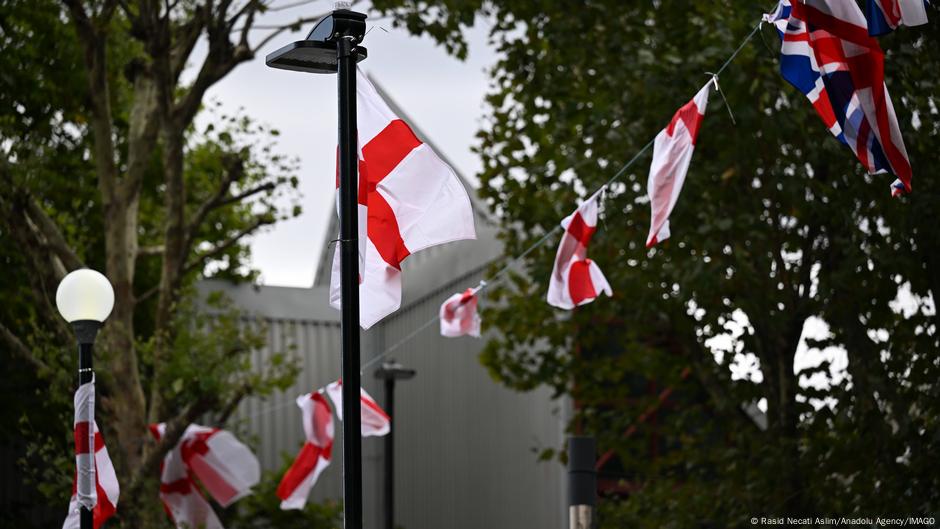
The Rise of the British and English Flags in Public Spaces
The presence of British and English flags in public spaces across the United Kingdom has sparked a significant debate. Are these symbols a harmless expression of national pride, or do they reflect more troubling underlying sentiments? This question has gained urgency as the country grapples with issues of identity, immigration, and the meaning behind these national emblems.
An estimated 110,000 to 150,000 people participated in the “Unite the Kingdom” protest against immigration in London on September 13. Organized by far-right activist Stephen Yaxley-Lennon, known as Tommy Robinson, the event claimed an attendance of up to three million, a figure that was later debunked. Despite this, the protest highlighted the growing concerns about immigration in the UK and the role of national symbols in public discourse.
The use of the English St. George’s Cross and the British Union Jack has become increasingly visible in recent months. These flags, often seen during sporting events, have now appeared in public spaces more frequently, leading to discussions about their significance. While some view them as a symbol of national pride, others see them as associated with xenophobia and racism.
The ‘Raise the Colours’ Campaign
A campaign known as ‘Raise the Colours’ has brought attention to the increased visibility of these flags. The campaign involves displaying the St. George’s Cross and the Union Jack on lamp posts, bridges, and other surfaces. This trend coincided with reports of a Birmingham school banning a 12-year-old girl from wearing a Union Jack dress during a presentation on British identity. The city council stated that the removal of flags was due to maintenance and safety, not an attempt to suppress patriotism.
Social media has played a key role in amplifying these discussions. Posts claiming that the government is suppressing national pride have circulated widely. Some videos suggest that police are removing flags, but in reality, many of these images show officers installing CCTV cameras. Other content claims that foreign flags are replacing British ones, but fact-checkers have debunked these claims, pointing out that such events are often related to cultural celebrations rather than an invasion.
Anti-Immigrant Sentiment and Hate Crimes
The UK’s colonial history has contributed to a diverse population, including communities from India, Pakistan, Bangladesh, and the Caribbean. However, this diversity has also led to tensions, particularly around immigration. In 2024, far-right anti-immigrant riots broke out in Southport after misinformation spread about a man who committed a violent act, falsely labeling him as an asylum seeker and Islamist extremist. The incident led to a surge in anti-Muslim hate crimes, with reports from organizations like Tell MAMA showing a significant increase in incidents.
Public opinion in the UK has shifted, with growing concerns over net migration and illegal crossings of the English Channel. A study by More in Common found that while many people support flag displays, there is skepticism about the motives behind some protests. Incidents such as the vandalism of a mosque in Basildon, where a St. George’s Cross was used alongside threatening messages, have raised alarms about the potential for racial and religious hostility.
Who Determines the Meaning of the Flags?
The meaning of the British and English flags remains a subject of debate. Organizations like Hope not Hate note that the ‘Raise the Colours’ campaign is largely driven by far-right activists, though not all supporters identify with extreme ideologies. A survey by More in Common shows that support for flag displays varies across political parties, with higher levels of support on the right.
Sunder Katwala of the think tank British Future emphasizes the evolving symbolism of the British flag. While it has been linked to pop culture and far-right groups, efforts have been made to give it a broader, more inclusive meaning. Immigrant communities have responded differently, with some feeling threatened and others asserting their Britishness through actions like flying flags and displaying portraits of royalty.
Katwala also highlights the performative aspect of flag displays, noting that small protests can appear larger online, distorting public perception. International figures, including Elon Musk and US Vice President JD Vance, have supported the ‘Raise the Colours’ campaign, further amplifying its reach.
As the debate continues, the meaning of these flags remains complex and multifaceted, reflecting the diverse and evolving nature of national identity in the UK.


