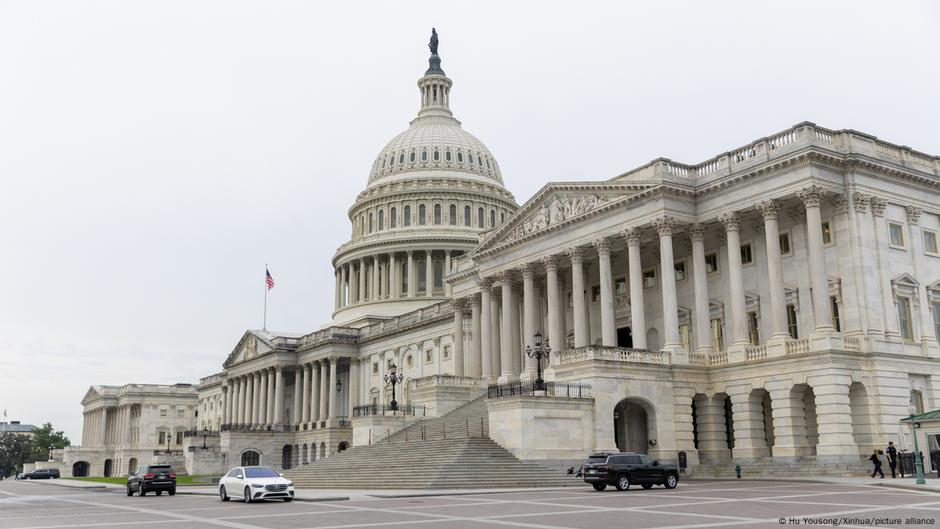
US Federal Government Enters Shutdown Amid Political Deadlock
The US federal government has officially entered a shutdown after Democrats and Republicans failed to agree on a stopgap funding bill. This marks the first government shutdown in nearly seven years, causing widespread uncertainty for federal workers, the economy, and public services across the country.
The shutdown comes as the Senate was unable to pass a temporary measure to fund the government, leading to a complete halt in nonessential operations. This decision has left hundreds of thousands of federal employees without pay and disrupted various government functions. The situation highlights the deep political divide between the two major parties, with each side blaming the other for the impasse.
Impact on National Parks and Public Services
One of the most visible effects of the shutdown is the impact on national parks. The National Park Service has announced plans to furlough approximately 9,200 staff members, nearly two-thirds of its workforce. Despite this, most park roads, lookouts, trails, and open-air memorials will remain accessible to visitors. However, some sites may close if they face damage or excessive garbage.
The National Parks Conservation Association has raised concerns about the risks of leaving parks open during a shutdown, citing previous incidents where damage occurred due to lack of maintenance. During a 35-day shutdown under President Trump’s first term, several national parks suffered significant harm, including vandalism of ancient petroglyphs and the theft of artifacts from battlefields.
Unexpected Event: Fat Bear Week Winner Announced Early
In an unusual twist, the winner of the annual Fat Bear Week contest was announced ahead of schedule to avoid the disruption caused by the shutdown. Chunk, a massive brown bear weighing around 1,200 pounds, emerged victorious over 11 other contenders at Alaska’s Katmai National Park and Preserve. The contest, which typically takes place in early October, saw over 1.5 million votes from fans who watched the bears via live video feeds as they feasted on salmon.
This early announcement underscores the unpredictable nature of the current political climate and how even seemingly unrelated events are affected by broader governmental issues.
What Does the Shutdown Mean for the Country?
The exact consequences of the shutdown are still unclear, but nonessential government operations are expected to come to a standstill. This means that many federal workers will be placed on unpaid leave, and some social safety-net benefits could be delayed. Federal agencies have developed contingency plans outlining which offices will remain open and which employees will be furloughed.
While critical services such as NASA’s space missions and border protection will continue, the White House has warned of potential large-scale layoffs. President Donald Trump previously suggested that many of those affected would be Democrats, adding to the growing tension between the two parties.
Why Couldn’t Congress Agree on a Funding Bill?
Despite being in the minority in the Senate, Democrats sought to use their leverage to push for increased healthcare spending for low-income households. However, Republicans refused to negotiate on this issue, leading to a stalemate. Both parties have blamed each other for the failure to reach an agreement.
Senate Democratic Leader Chuck Schumer criticized the administration, stating that “it’s only the president who can do this,” while Republicans defended their position, calling the proposed bill a “clean” and noncontroversial measure. The situation escalated further when Trump released an AI-generated deepfake video mocking Schumer and House Minority Leader Hakeem Jeffries, highlighting the increasingly polarized political environment.
How Did We Get Here?
Congress failed to agree on a bill that would have extended federal government funding beyond Tuesday, the end of the fiscal year. The US federal government’s fiscal year runs from October 1 to September 30, and both chambers of Congress—House of Representatives and Senate—are responsible for passing funding measures.
With Republicans holding 53 seats in the Senate and Democrats having 47, a majority of 60 votes is required to pass any funding bill. Even if all Republicans supported the bill, they needed at least seven Democratic votes to pass the stopgap measure already approved by the House. This requirement proved too difficult to meet, resulting in the shutdown.
A Historic Moment
The last government shutdown occurred during Trump’s first term, lasting 35 days starting in December 2018. Since then, the political landscape has shifted, and the current deadlock reflects the challenges of governing in a deeply divided Congress. As the shutdown begins, the focus remains on how long it will last and what long-term effects it may have on the nation.


