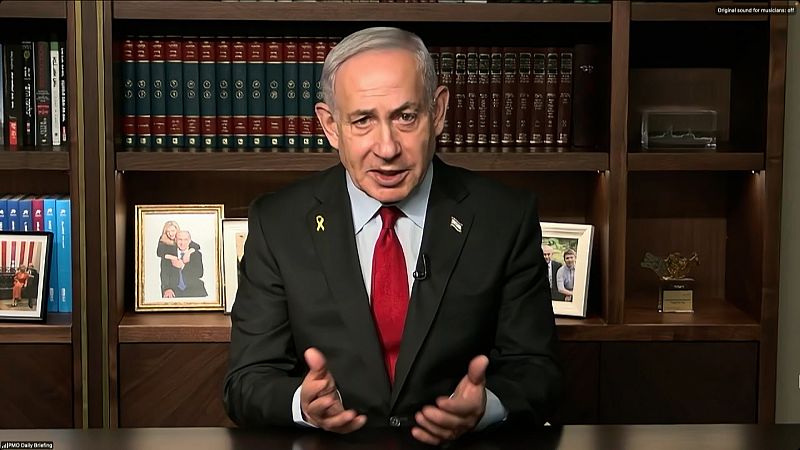
Israeli Prime Minister Benjamin Netanyahu has made a strong statement regarding the future of Israel and Gaza, emphasizing that “Hamas’ rule has to come to an end.” This was conveyed during an exclusive interview with Euronews, where he discussed the US-led ceasefire plan and its potential impact on the ongoing conflict.
Netanyahu suggested that if Hamas accepts the plan, it could mark “the beginning of the end of the war.” However, he also warned that if Hamas does not accept the deal, Israel will receive full support from the United States to take forceful action against Hamas. He expressed hope that the conflict can be resolved in a peaceful manner rather than through more violent means.
Euronews asked Netanyahu whether the recent ceasefire deal brought Israel closer to achieving its main goal of freeing the hostages. He responded by stating that both Israel and the international community accepted the deal, which was proposed by former President Donald Trump. According to Netanyahu, the plan involves two key parts: the release of all hostages and a tactical withdrawal by Israel from Gaza, followed by negotiations to demilitarize the region and disarm Hamas.
He emphasized that the first part of the deal is already agreed upon and could be the starting point for ending the war. However, he noted that the success of the plan depends on Hamas’s willingness to comply. If they do not, he said, the U.S. would support Israel in taking stronger measures to resolve the conflict.

When asked what would happen if Hamas did not release the hostages, Netanyahu explained that the reason Hamas agreed to the deal was due to Israel’s military actions against their stronghold in Gaza. He mentioned that the military pressure, combined with Trump’s intervention, created a situation where Hamas had to consider the plan seriously.
Netanyahu acknowledged that while he hopes Hamas will agree to the deal, he cannot guarantee it. In such a case, he reiterated that the U.S. would back Israel in taking decisive action against Hamas. He concluded by expressing his preference for resolving the conflict peacefully, but admitted that time would reveal whether this approach works.
Euronews then asked about the future of Gaza and what message Netanyahu had for Palestinian civilians and Hamas. He stated that the end of Hamas’ rule is essential, as well as the release of all hostages. He emphasized the need for a new civilian administration in Gaza that is committed to peaceful coexistence with Israel, rather than continued hostility.
Netanyahu also highlighted that President Trump has taken responsibility for leading this new administration, which he sees as a positive development. He stressed that the first step is the release of all hostages, followed by the disarmament and demilitarization of Gaza.
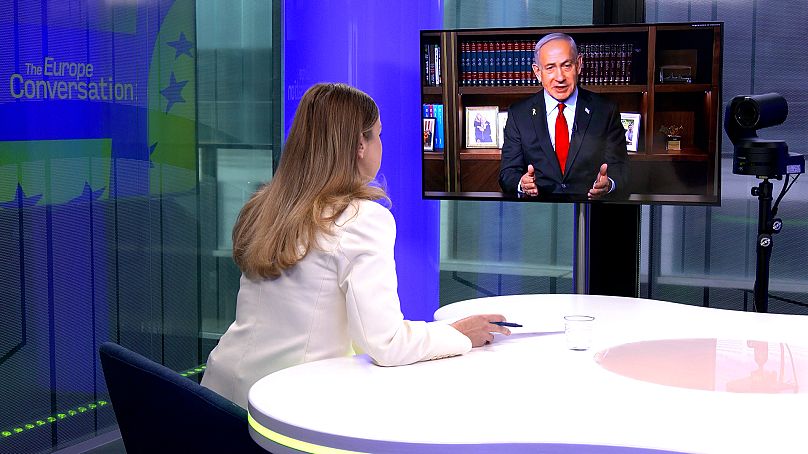
When questioned about whether the deal would lead to lasting peace or just a temporary pause, Netanyahu insisted that the deal must be fully accepted, particularly the release of hostages. He argued that without this, the conflict would continue. He compared the need to de-radicalize Gaza to post-World War II efforts in Germany and Japan, suggesting that such steps could lead to long-term stability in the region.
He also mentioned the possibility of expanding the Abraham Accords, which he helped establish with Trump and Arab leaders, to include more countries in the Middle East and beyond. However, he stressed that the first priority is ensuring that Hamas releases all hostages and ceases its violent activities.
Euronews raised concerns about the lack of European involvement in the process, noting that some regional actors view the plan as a short-term solution. Netanyahu criticized Europe for what he described as a failure to stand against terrorism, arguing that their reluctance to confront radical groups has weakened their influence.
He also addressed the recognition of Palestine by several EU countries, stating that it risks rewarding terror by granting statehood to those responsible for attacks on Israel. He compared this to giving a state to Al-Qaeda after 9/11, calling it a dangerous precedent.
Netanyahu concluded by emphasizing the importance of standing firm against terrorism and working with allies like the U.S. to ensure lasting peace. He expressed hope that Europe would reconsider its approach and support a realistic path to peace that prioritizes security and stability.

Related posts:

Mother Suffers Daily Allergic Attacks After Drinking Contaminated Coffee Syrup


Challenges of Climate Change in Africa and Lessons from China’s Green Revolution

Senate joint committee finally holds hearing on Ivanhoe deal

True measure of leadership lies not in power, privilege, pageantry – Tinubu at book presentation