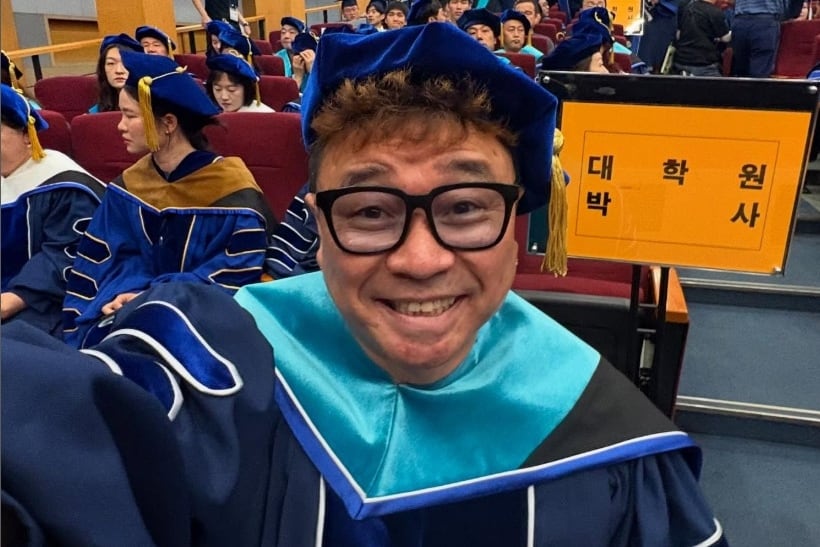
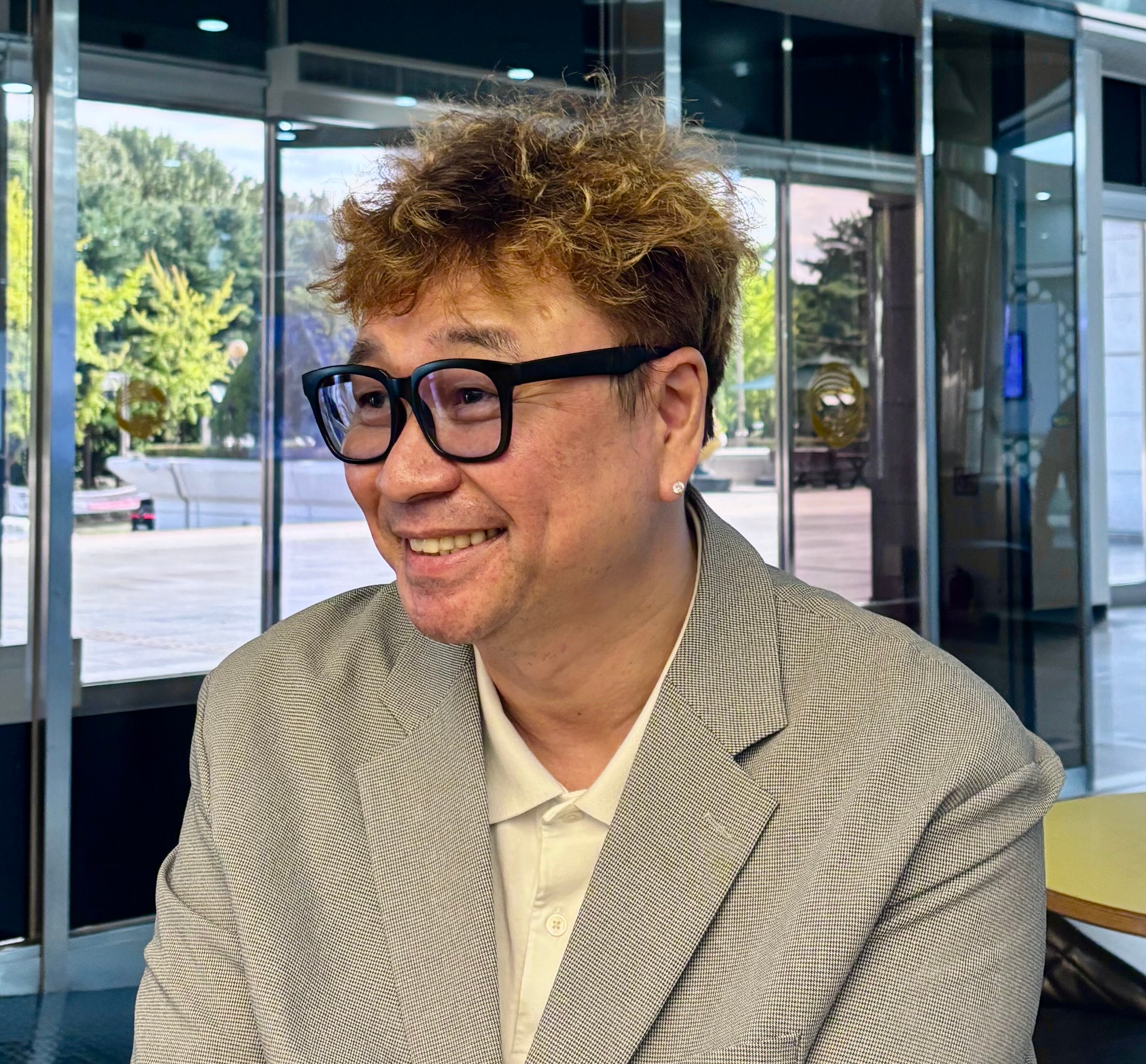
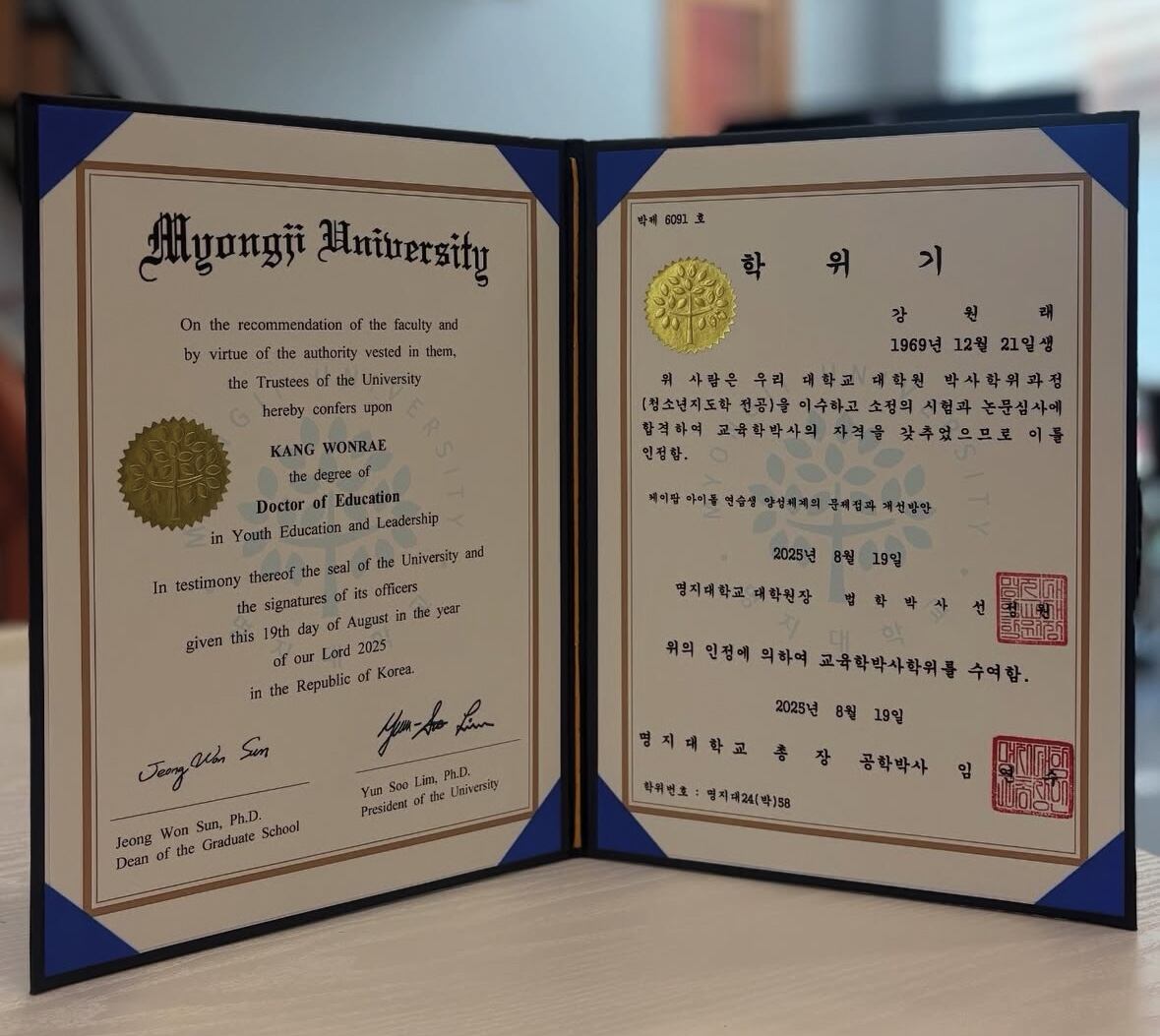
Kang Won-rae, a 56-year-old man who once ranked last in his class at Gangnam’s prestigious Kyunggi High School, earned his doctoral degree from Myongji University Graduate School on August 19 of last year. His thesis focused on Problems and Improvement Plans in the K-pop Idol Trainee Training System. On the 23rd of last month, he met with reporters at the KBS headquarters in Yeouido, Seoul.
“Did you study well during your school years?”
“Not really. I was the worst in my class.”
“But how did you become a doctor in just three and a half years?”
“Because I’ve been studying since middle school. It was like doing random studies.”
Kang made his debut in June 1996 as a member of Clon with his Kyunggi High School classmate Koo Joon-yup. With the song “Kkung Dari Shabara,” he defeated top singer Kim Gun-mo to claim the number one spot on the music chart Gayo Top 10, and every song he released became a hit. His music captivated audiences across the continent, making him the first Hallyu (Korean Wave) star. He was particularly popular in Taiwan. At the peak of his career, an accident occurred: On November 9, 2000, Kang, who was riding a motorcycle in Banpo-dong, was hit by a Sonata making an illegal U-turn, resulting in a complete paralysis diagnosis below the third thoracic vertebra.
Kang’s wife, Kim Song, and Koo Joon-yup stood by him as he hit rock bottom. Thanks to their support, he continued his dance career from a wheelchair—rolling its wheels instead of stepping. He picked up a pen again and began studying. He earned a master’s degree by writing a thesis on K-pop dance and continued into a doctoral program.
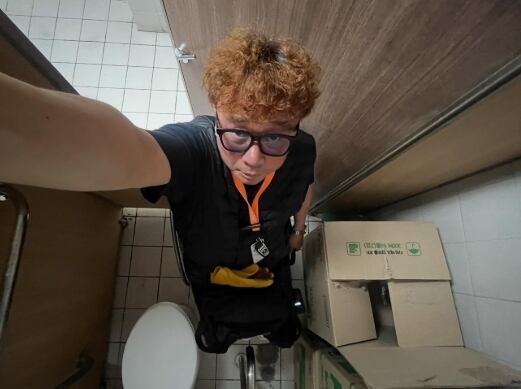
It has been 25 years since he became disabled. Now, when inconvenienced, he openly expresses his frustration. Posts on his Instagram, such as “Is the disabled restroom a cargo hold?” and “Wheelchairs are not allowed in movie theaters,” have sparked public attention multiple times. He is also a long-running DJ, hosting KBS 3 Radio’s Kang Won-rae’s Song Gift for 19 years. When asked about his busy schedule, he gave a cool response.
“Don’t do what’s annoying. Only do what I want and find fun.”
◇ “Lee Soo-man enforced control over autonomy but was ahead of his time”
Kang attended Kangnung National University’s (now Gangneung-Wonju National University) Industrial Crafts Department for two years before dropping out to debut in the entertainment industry in 1988. In 2012, he transferred to the Digital Seoul University of the Arts’ Acting Arts Department and graduated with a bachelor’s degree. In 2020, he earned a master’s degree in practical dance from Myongji University’s Graduate School of Social Education. The following August, he switched his major to Youth Guidance at the same graduate school and began his doctoral course. Excluding leave periods, he completed his doctorate in about three and a half years.
-You were said to be the bottom of your class in school. Did studying suit you?
“I could do it because it was a field I liked. Not English or math. After my accident, I met many dancers, and as a mediator, I wanted to document the history of K-pop choreography. While studying, I took family counseling and youth psychology classes, which were fun. I never start anything I don’t want to do. I only dive into what interests me or is necessary. Now, I’m taking a class for a Level 2 Social Welfare Certificate. I felt it was needed as I lived.”
-Was writing your thesis difficult? Like sitting for long periods?
“It wasn’t hard. I’ve been sitting for 25 years now.”
-Why did you choose trainee systems as your doctoral thesis topic?
“Many youths want to become idols, but the trainee training system lacks standardization. Trainees are objects of envy and glamour, but if they don’t debut, they face uncertainty. There are also human rights issues during training. I thought mentors were needed to provide systematic education and direction. Having been at the peak of a singer’s career and fallen to the bottom, I could empathize with their situation. I also saw symbolic value as a researcher.”
In the conclusion of his thesis, Kang mentioned Lee Soo-man, former representative of SM Entertainment, who cast him. He wrote, “Lee Soo-man enforced control over autonomy with dormitory-style trainee systems while producing H.O.T. and S.E.S., a tradition that continues today,” but added, “If agencies are demonized as exploiters and only regulations are enforced, K-pop will struggle to develop positively.”
-You ‘dissed’ Lee Soo-man in your thesis.
“It’s not a diss. I wrote it because I wanted the person who started idol trainees to create a protective training system. I was SM’s first-generation singer with Hyun Jin-young and Wawa, and every meal was strictly accounted for. Back then, the concept of ‘friendship’ was strong, so it was shocking, but it taught trainees the concept of a company. Lee Soo-man was ahead of his time.”
-What do you think of today’s dancers as a ‘dance doctor’?
“They lack naturalness. Why do they frown, get angry, or cry on stage, which should be fun and joyful? It’s regrettable that they only try to look cool. Idol choreography is also too difficult—it feels like it’s made for challenges. Oh, this was tough while writing the thesis: forcing myself to watch unpleasant broadcasts or stages.”

◇ A high school teacher’s advice: “If you’re suited to being a delinquent, live as one”
-When did you start dancing?
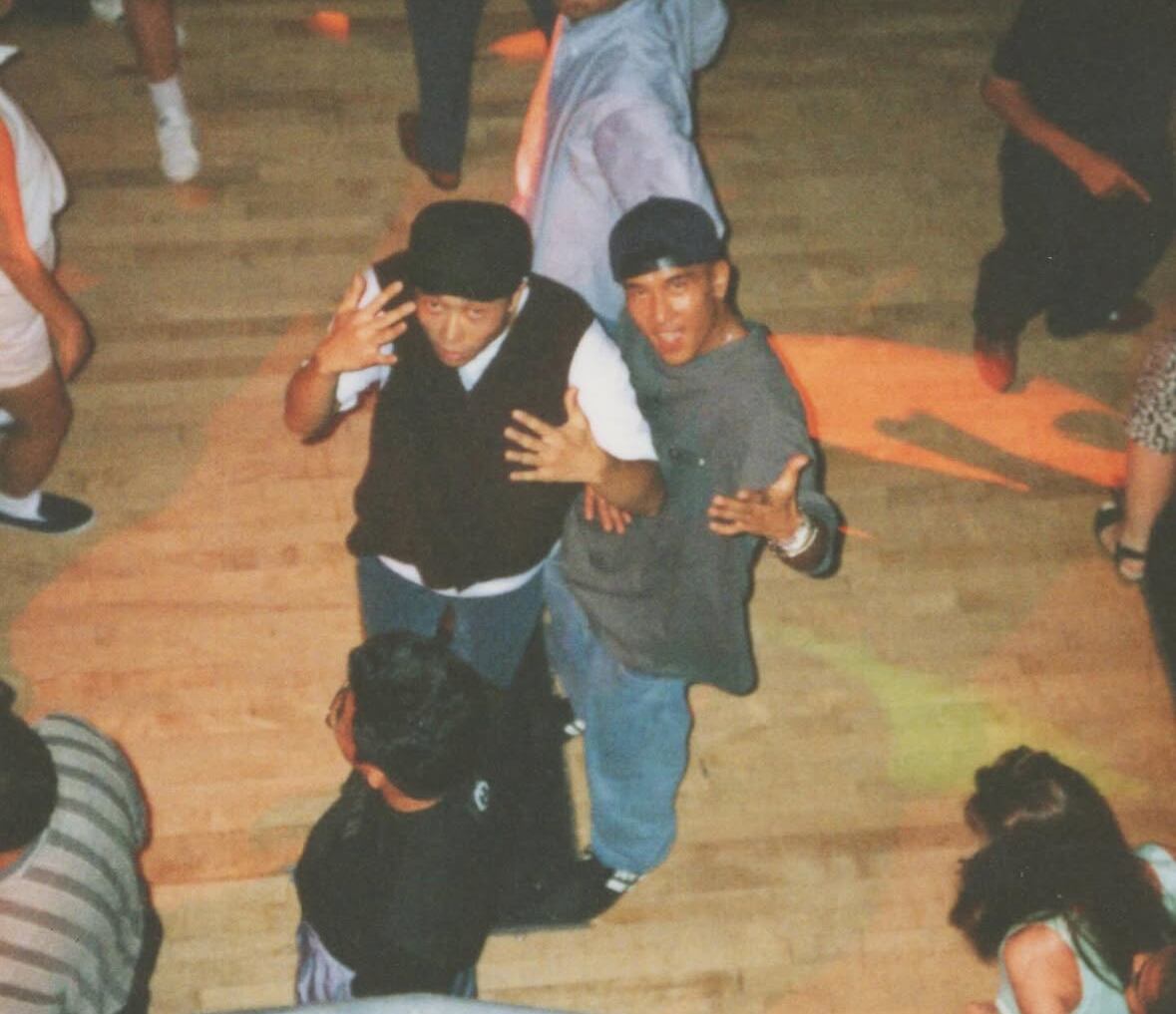
“Since elementary school. In 1981, at the University Song Festival, UCDC (United College Dancing Club) seniors performed hustle (a disco dance), and I was amazed. I followed my older brother, two years my senior, to learn dance, and in middle school, I danced at roller skating rinks. Back then, college students held ‘gotong’ meetings at nightclubs. Koo Joon-yup and I were in the art club at Kyunggi High, and when seniors asked us to dance, we’d perform and get a cola in return.”
-How did you learn dance without YouTube or academies back then?
“I imitated what I saw on TV. I practiced with dance-loving friends and learned by observing performances at university streets or nightclubs.”
Kang is from Gangnam’s 8th school district. Born in Pohang, North Gyeongsang Province, he moved to Gangnam, Seoul, in third grade. He graduated from Nonhyeon Elementary School, Unbuk Middle School, and Kyunggi High School. He emphasized that Kyunggi High was under the equalization policy when he enrolled.
-Your parents and teachers must have worried about you dancing.
“My parents never pressured me to study. My mother never asked to see my report card. My high school senior year teacher said, ‘If you’re suited to being a delinquent, live as one. Become a delinquent who is respected by many.’ So I focused only on dance.”
-You must have dreamed of becoming a singer.
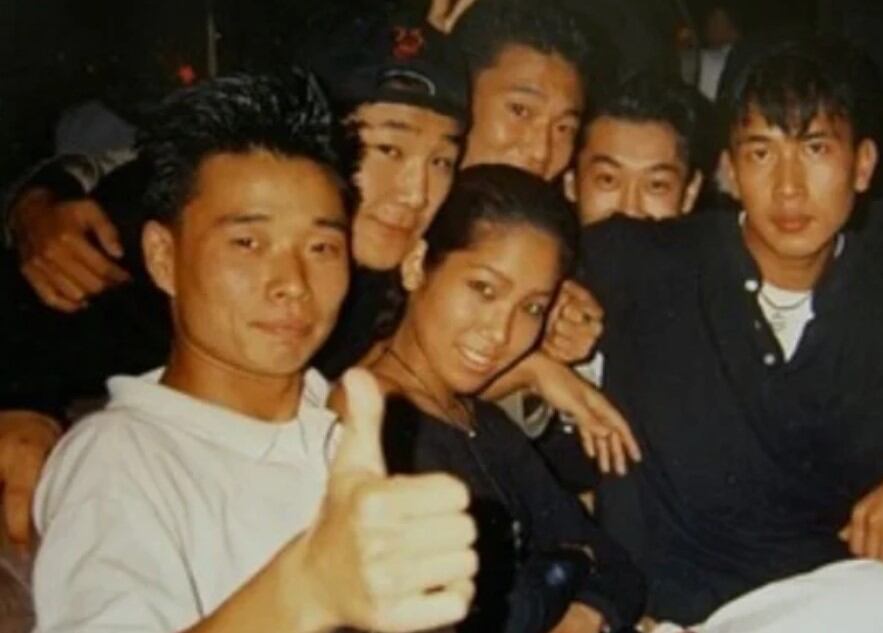
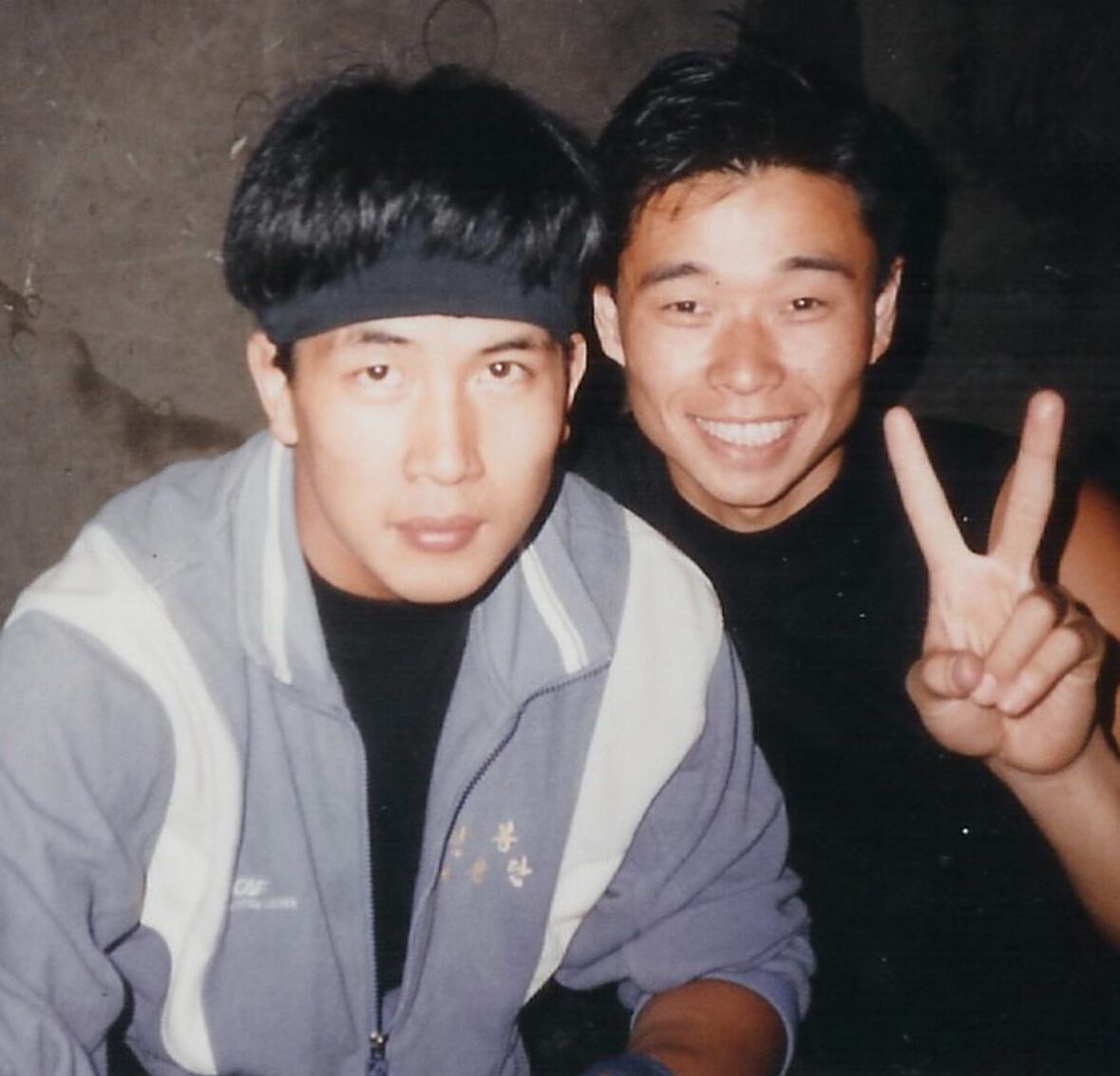
“I didn’t even have dreams. I just danced without any thoughts. In college, I won a dance competition at an Itaewon club, and SM offered a casting. But Koo Joon-yup had a dream: ‘Let’s try before enlisting.’ So we joined SM as Wawa’s first generation for a year and worked as choreographers at Line Music after discharge, debuting as Clon in 1996.”
-What does ‘Wawa’ mean?
“At the time, Sung Jae (the late Kim Sung-jae of Deux) often said ‘Wow.’ It sounded cool, so Hyun Jin-young and I named ourselves ‘Woo.’ But Lee Soo-man said, ‘Woo sounds weird—how about Wawa?’ So we became Hyun Jin-young and Wawa. Lee Soo-man loved naming things even back then.”
◇ Overcoming depression: “I won’t surrender to the world… If you can’t change the situation, change your attitude”
Kang entered the entertainment industry in 1990 as part of Hyun Jin-young and Wawa’s first generation. After military discharge, he re-debuted with Koo Joon-yup as Clon in 1996 and achieved massive success. Their first album ARE YOU READY?, featuring “Kkung Dari Shabara” and “I Can’t,” sold over 1 million copies. Hits like “Escape from the City,” “Come Back,” and “First Love” had the entire nation humming.
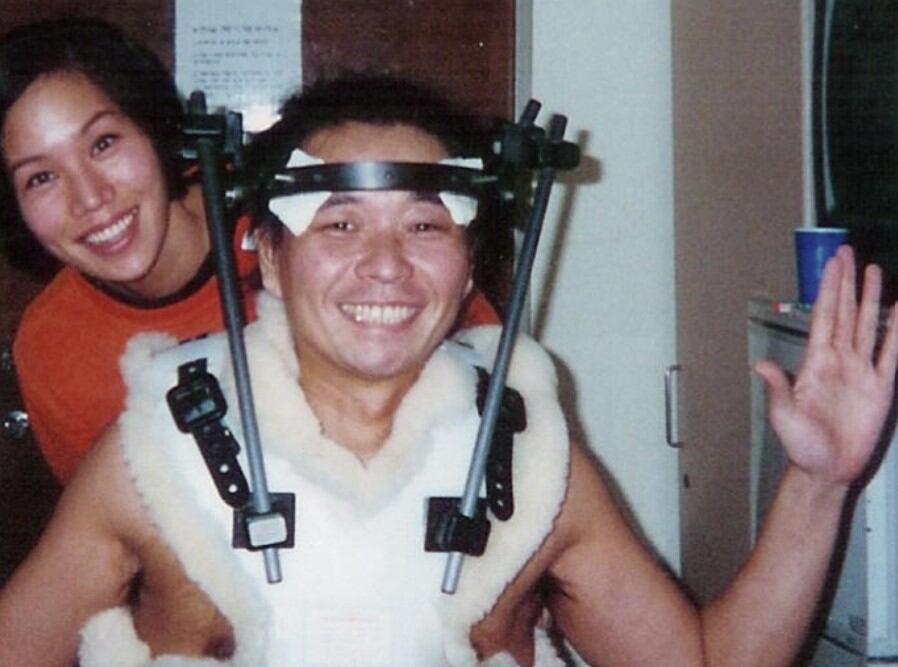
However, a traffic accident in 2000 left him paralyzed below the waist, ending his career as a dance singer. In 2003, he married his girlfriend Kim Song. It took five years after the accident to return to the stage. During rehabilitation, he appeared on KBS’s Yoon Do-hyun’s Love Letter in 2005 with a song for his wife, performing wheelchair choreography with Koo Joon-yup.
-You had depression after paralysis. What motivated you to return to the public eye?
“I realized that if I smile at the world, it smiles back twice, but if I get angry, it gets angry twice as much. While hospitalized, someone asked for my autograph, and I chased them away with curses. They shouted back, ‘Disabled bastard!’ I cried for two days. But after discharge, I changed my attitude: I happily accepted photo and autograph requests, and people praised me for maintaining a smile despite hardships. This isn’t about surrendering to the world. If you can’t change the situation, change your attitude.”
-Was your return on Love Letter with “My Love Song-i” due to this mindset?
“Koo Joon-yup persuaded me. He also struggled—while I rehabilitated, he worked as a solo artist and faced criticism: ‘How can you release a solo while Kang is paralyzed?’ We thought appearing together would clear misunderstandings.”
-How did you feel after the performance?
“I cried holding onto the toilet bowl. The tears had complex meanings. At the time, I didn’t know why I cried, but later I realized it was pent-up emotion since the accident. I had been suppressing it, pretending to be strong.”
-Your Instagram posts about inaccessible restrooms and movie theaters became news. Isn’t being an unintended speaker burdensome?
“I just said what needed to be said and don’t care. Jung Hwa-won, South Korea’s first visually impaired National Assembly member (17th term, Hannara Party), told me, ‘I’m glad Kang became disabled. Showing your wheelchair once helps change perceptions more than our hundred words.’ Anyone can become disabled, and I want to keep showing that one can live well even then.”
◇ “2026 is Clon’s 30th anniversary… I want to perform with Joon-yup in Taiwan”
-What are your future plans?
“I want to establish choreography copyrights. A few years ago, a company used ‘Kkung Dari Shabara’ choreography in an ad without permission. Songwriters get copyrights, but choreographers don’t, so I protested with the Korea Choreography Copyright Association. In the 1990s, the most I earned for choreographing Park Mi-kyung and Kim Gun-mo was 3 million won. That’s exactly what I received. I became the first choreographer to have copyrights recognized. K-pop is popular—we must act while the tide is high. Psy’s ‘Gangnam Style’ horse dance and BTS’s global success were possible because of dance. Choreography copyrights will grow in importance. We must also create Korean terms for K-pop dance. Only then will K-pop culture develop, and choreographers will create more original works without plagiarism.”
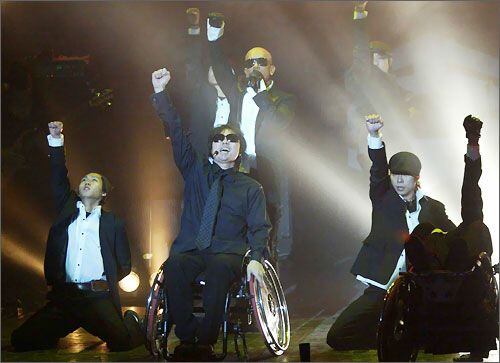
-Do you have plans to perform as Clon?
“Next year marks Clon’s 30th anniversary. I want to perform in Taiwan, where fans supported us during tough times, and show ‘Kkung Dari Shabara’ and ‘Bing Bing Bing.’ I also want a small concert in Korea. I want to tell fans directly what happened and how we’ve lived. Joon-yup and I have discussed ‘closing’ the group once. A long-term goal is making a Clon movie—we both have many stories.”
-Have you discussed this with Koo Joon-yup?
“We talked about performing for the 30th anniversary before. Now, he’s in Taiwan and doesn’t hear anything… We haven’t had concrete talks, but I really want to do it.” (Koo Joon-yup married Taiwanese actress Hsu Shi-yuan (Seo Hee-won) in 2022. After her death from pneumonia with flu complications in February, he reportedly remained in Taiwan.)


