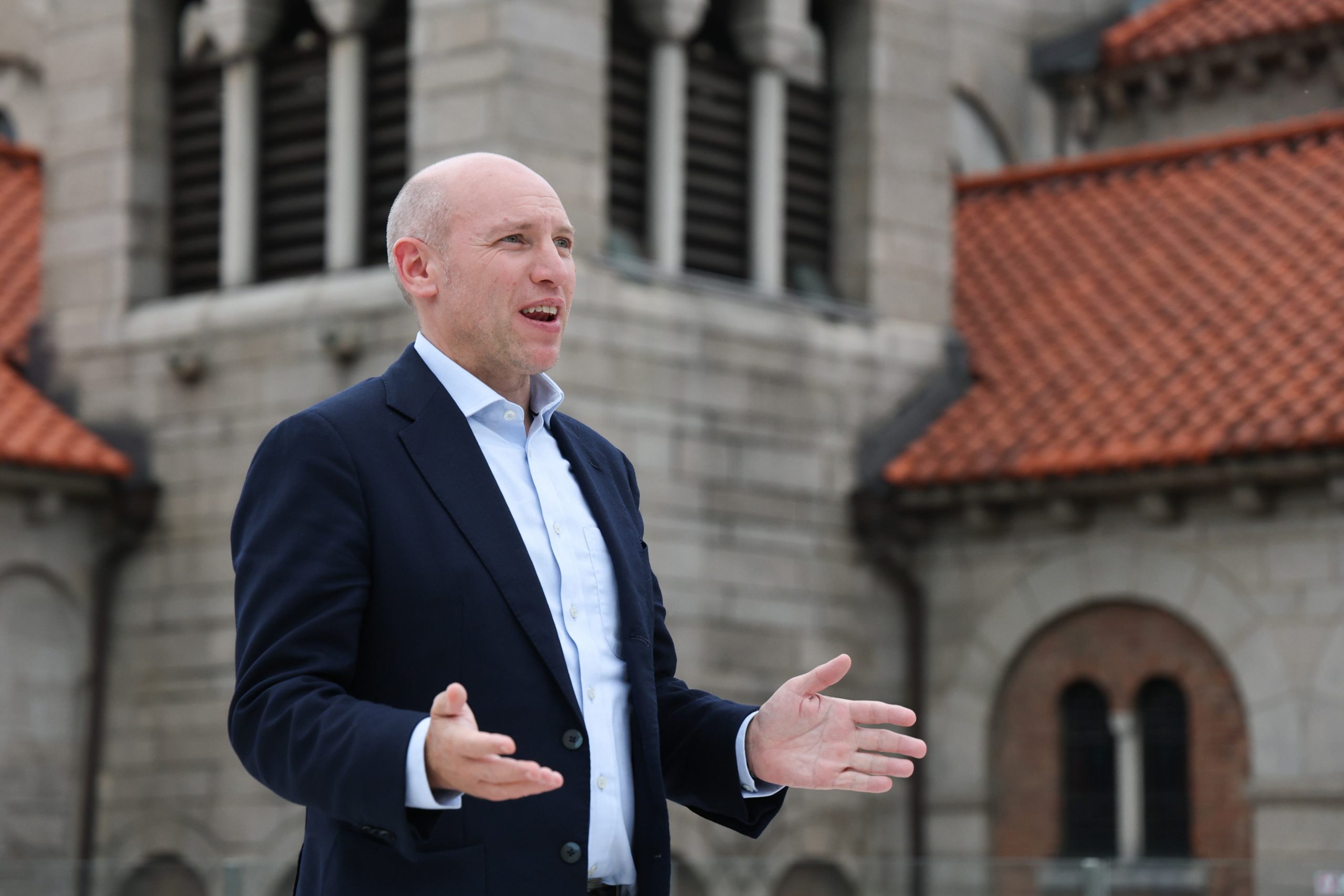
Hesse, a state in Germany where Frankfurt—the country’s largest city and home of the largest Korean community (14,000 people) as of 2025—is located. Manfred Pentz, 45, the Minister of International Cooperation for Hesse, smiled several times during an interview with this newspaper last month.
As the interview began, he said, “My teenage daughter is also a huge K-pop fan,” adding, “She knows much more about Korean dramas than I do.” Pentz, whose visit to Korea this time marks his first, stated, “The wave of K-culture is blowing fiercely in Germany as well. I am once again reminded that Korea, standing at the center of this, is a country brimming with energy and dynamism.”
Having officially assumed office in January of last year as the first minister in German state government history to come from a non-bureaucratic background, he asserted, “Bureaucracy is one of Germany’s greatest weaknesses,” and “Breaking down walls is my first and final mission.”
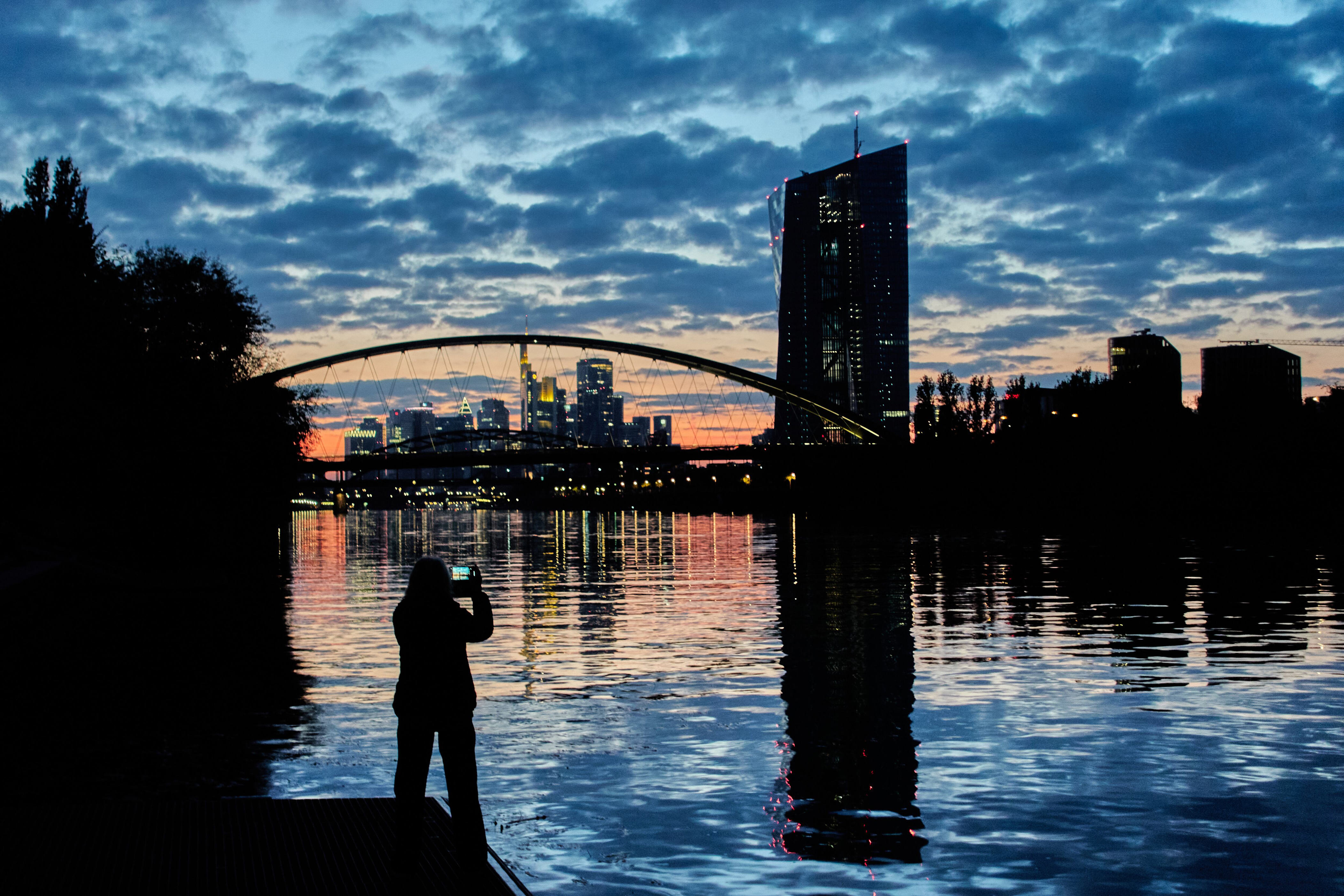
Hesse is called the heart of Germany’s economy and the capital of European finance. While the state capital is Wiesbaden, the de facto center is Frankfurt. Home to the European Central Bank (ECB) and the Deutsche Bundesbank, the city hosts over 2,000 foreign-based companies with their headquarters. Hesse’s gross domestic product (GDP) was 410 billion euros (approximately 680 trillion Korean won) as of 2024, accounting for 8–9% of Germany’s total.
The first thing he highlighted was the entry of Korean companies into Hesse. The keyword he emphasized during this visit to Korea was “3I”: Investment, Innovation, and International Cooperation. He stressed, “My goal is for Hesse to become a true friend and long-term partner of Korea.” Currently, more than half of the Korean companies in Germany are based in Hesse. When asked why, he immediately replied, “Because of Frankfurt Airport.” “It is Europe’s largest logistics hub. From major corporations like Samsung and Hyundai Motor to cosmetics and biotech companies, this is why they have chosen Hesse.”
He then used language befitting his reputation as a “non-bureaucratic minister.” “Investors must not be hindered by bureaucracy. That is why I am creating a fast-track system to speed up processes from construction regulations to visa issuance. It is a ‘two-track fast lane,’ literally opening paths for both investors and skilled professionals.”
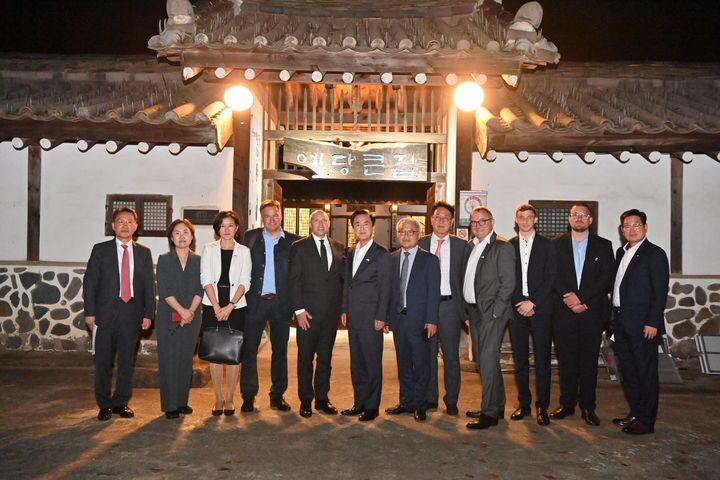
He also mentioned his visit to the Chungnam Provincial Government and Sudeoksa Temple during this trip to Korea. Hesse signed a memorandum of understanding (MOU) with South Chungcheong Province last year, focusing on corporate cooperation. He said, “Before signing the MOU, we thoroughly analyzed what South Chungcheong Province is like. In fields such as manufacturing, pharmaceuticals, and AI, Korea’s South Chungcheong and Germany’s Hesse share many similarities.” He noted that Hesse-based companies like Merck, a life sciences enterprise, and Piper Berkem, a vacuum pump manufacturer, already operate factories in South Chungcheong, marking the beginning of cooperation between Hesse and the province.
He also assessed, “Korea is one of the most reliable industrial partners in Europe,” adding, “There is significant potential for cooperation, especially in semiconductors, batteries, and AI.” Hesse is already expanding data centers and AI research infrastructure centered around the global IT cluster “Frankfurt Rhine-Main region.” The plan is that combining Korea’s technological prowess with Germany’s manufacturing base could establish a “Korea-Germany digital industrial belt.”
Hesse is also promoting a transition to eco-friendly industries in line with the European Union’s “Green Deal” strategy. He stated, “South Chungcheong’s decarbonization strategy is a model Hesse wants to learn from,” and expressed a desire to expand exchanges in areas such as creating carbon-neutral industrial complexes and hydrogen economy cooperation, showing a commitment to benchmarking Korea’s innovative models.
However, his voice softened when he spoke of history. “In the 1960s and 70s, 10,000 Korean miners and nurses helped build up German society. We cannot forget their sacrifices. Today, Frankfurt is home to the largest Korean community in Germany. In itself, it is a symbol of how strong the friendship between Germany and Korea is.”
Currently, approximately 14,000 Koreans are registered with the Frankfurt Korean Association, making it the largest such community in Europe. The Frankfurt Korean School, Korean Cultural Center, and the “Monument to Korean Miners and Nurses” are scattered throughout the city, continuing the history of bilateral relations.
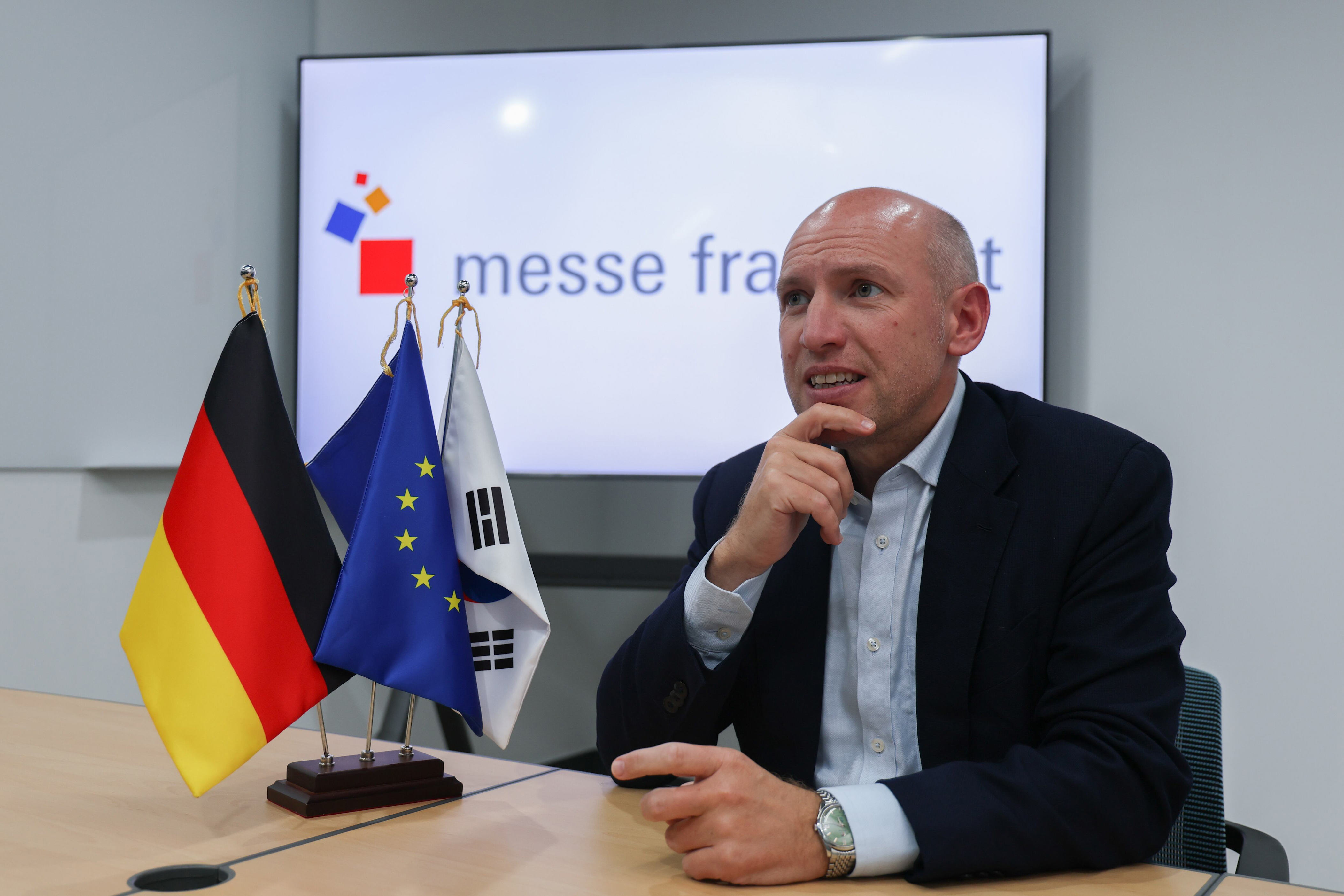
This interview was also conducted at the “Messe Frankfurt Seoul Office” located in the Anglican Church of Seoul in Jung-gu, Seoul. He said, “This space is a symbolic place where Germany and Korea are connected industrially and culturally,” and “Messe Frankfurt will be a platform where exchanges between the two countries lead to tangible results.” Messe Frankfurt is one of the world’s top three exhibition organizers, headquartered in Frankfurt, Germany, and operates industrial exhibitions and trade fairs worldwide.
The conversation then turned to international affairs. He said, “The free trade order is shaking due to the U.S.’ protectionist policies. Germany needs new partners,” and “I believe that partner is an Asian democracy like Korea.” He added, “In the defense industry alone, Korea is already changing European standards by exporting the latest tanks to Poland. We have much to learn.”
He also mentioned that his experience in the insurance industry before entering politics laid the foundation for regulatory reform. “The insurance industry is highly regulated. I realized back then that a culture enforcing regulations not at 100 but up to 180 stifles development. That is why I entered politics and set this agenda.” As the secretary-general of the CDU (Christian Democratic Union) for 10 years, overseeing election strategies and organizational operations, he added, “The issues voters asked about most were immigration, safety, and regulation.”
He particularly emphasized exchanges between the younger generations. The Hesse state government is currently building a research network with Korean universities. Joint seminars and internship programs between Goethe University Frankfurt and Technische Universität Darmstadt in Germany, and Seoul National University and KAIST in Korea are being discussed, and both sides are pushing to hold the Korea-Germany Youth Innovation Forum next year. “This is the era of social media. The younger generation is connected across borders. Hesse has AI research centers, and Korea is a technological powerhouse. Expanding joint research and exchange student programs will create significant synergy.”
He added, “Korea and Germany also share a painful history of division and war,” and “Such experiences can rather become the foundation of trust between us.”
After finishing his remarks, he smiled again at the end of the interview. “Hesse is always open to Koreans. Frankfurt is the gateway to Europe and a global hub. When you visit, you will feel the open and international atmosphere. I am convinced that Hesse’s future will be bright if we continue with dynamic Korea, our ‘good friend.’”
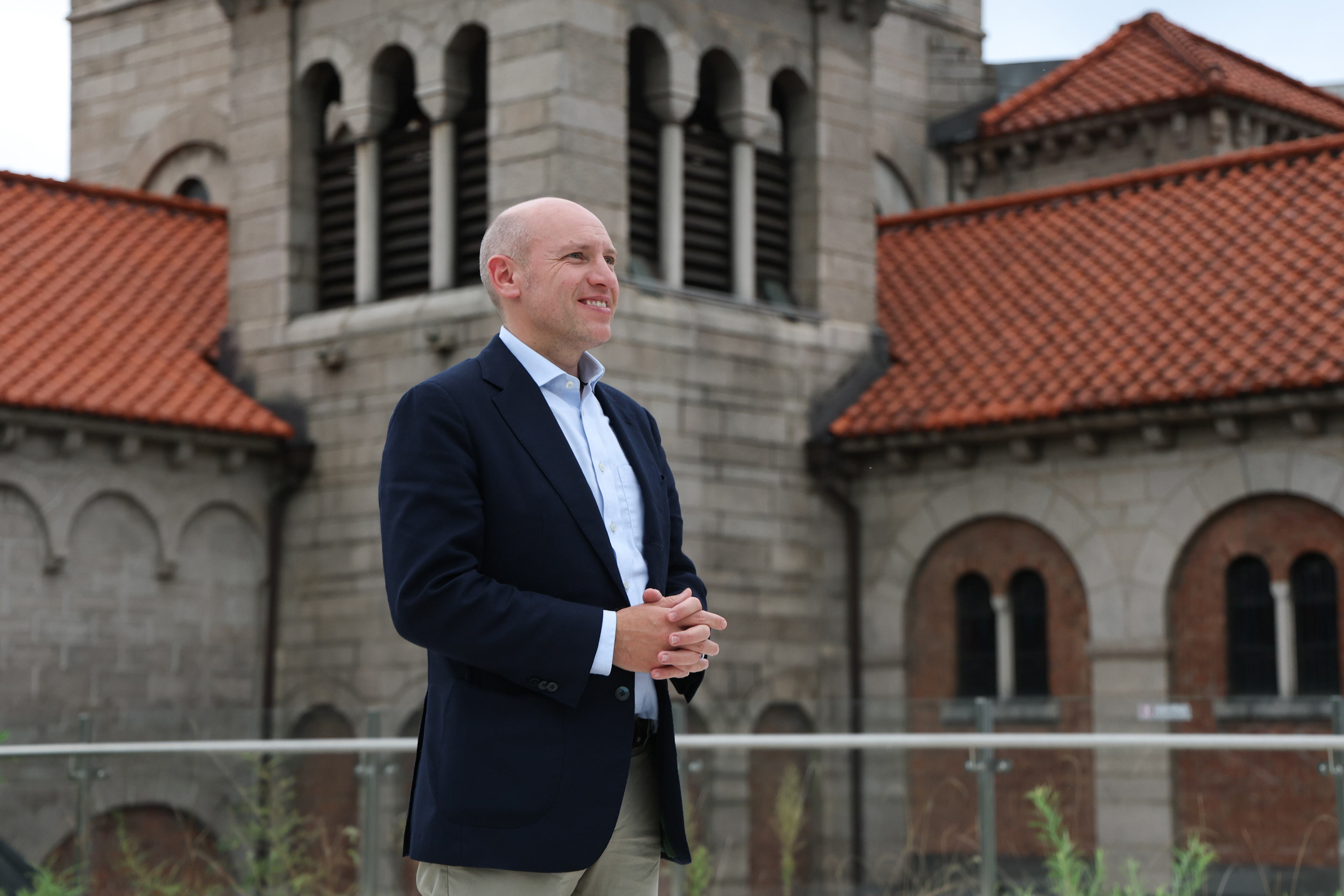
☞About Minister Manfred Pentz…
Born in 1980 in Darmstadt, Hesse, Germany. He worked in the insurance industry until the late 1990s before entering politics in the early 2000s. He has served as a member of the Hesse state parliament since 2010. From 2014, he served as the secretary-general of the CDU in Hesse for 10 years, overseeing election strategies and organizational operations. In January of last year, he was appointed as the first minister in German state government history to come from a non-bureaucratic background. He is in charge of federal and European affairs, international cooperation, and de-bureaucratization, strengthening Hesse’s cooperation networks with the European Union and Asian countries.

Related posts:

Mother Suffers Daily Allergic Attacks After Drinking Contaminated Coffee Syrup


Challenges of Climate Change in Africa and Lessons from China’s Green Revolution

Senate joint committee finally holds hearing on Ivanhoe deal

True measure of leadership lies not in power, privilege, pageantry – Tinubu at book presentation