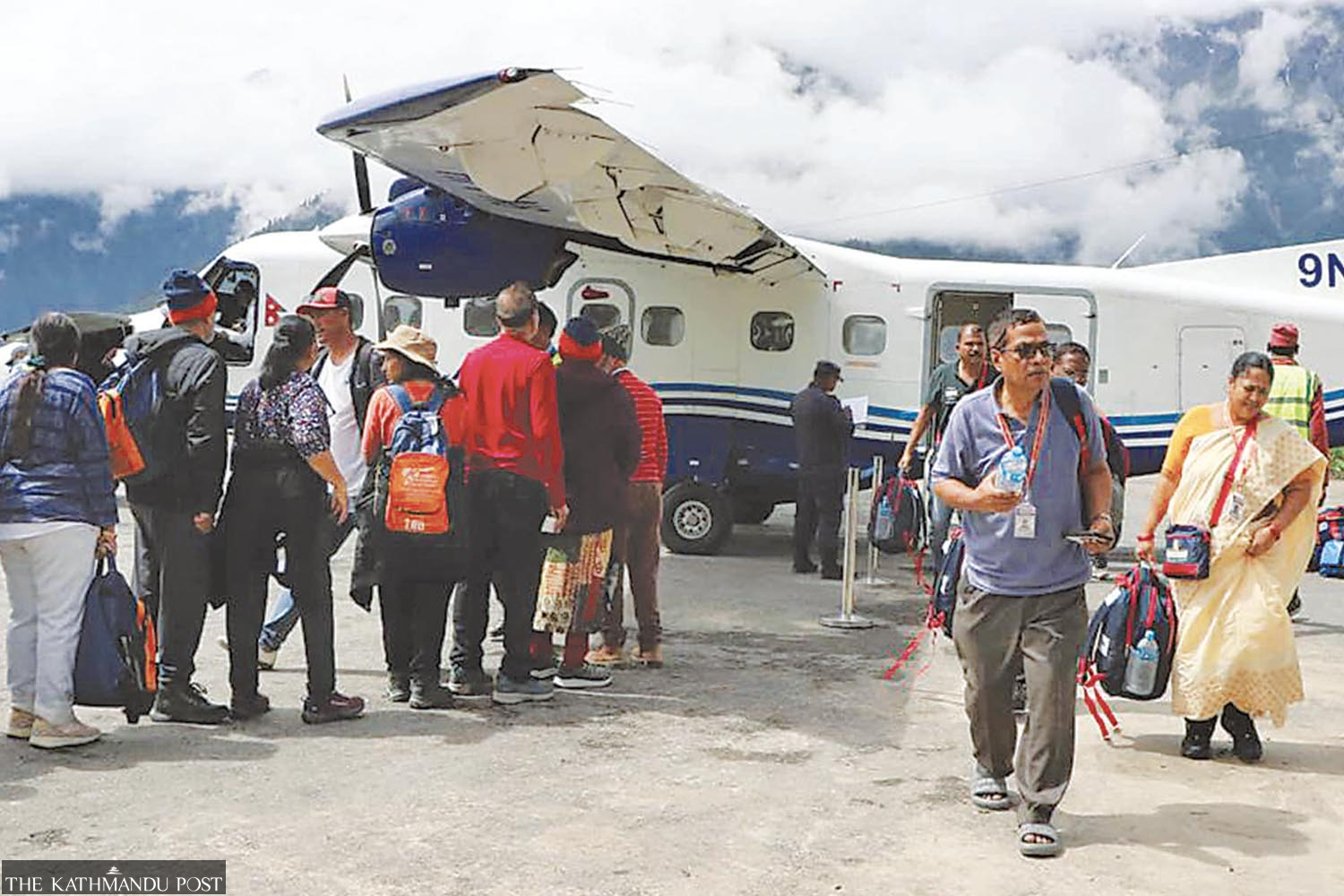
Economic Revival in Humla District
Surkhet, Oct. 19 – Humla, a remote mountain district in Karnali Province, has experienced an economic revival this year due to the reopening of the Kailash-Manasarovar pilgrimage route through Nepal. This route, primarily used by Indian devotees, was reopened after a five-year closure caused by the pandemic and subsequent geopolitical tensions.
The impact of this reopening has been felt across various sectors of the local economy, from porters and farmers to hotel owners and airline workers. The Simkot-Hilsa route has become a key pathway for pilgrims traveling to the sacred mountain and lake in Tibet, China.
According to the District Police Office in Humla, a total of 6,407 foreign visitors entered the district during this pilgrimage season, with 5,957 from India and 450 from other countries. Local authorities collected Rs72.27 million in revenue from these pilgrims, while businesses in Simkot and Hilsa reported record earnings.
Bijaya Bhandari, chairman of Simkot Rural Municipality, mentioned that the local government collected Rs1,100 per Indian pilgrim and Rs1,500 per visitor from other countries as sanitation fees. “From Indian pilgrims alone, we collected Rs6.55 million, while visitors from other countries contributed Rs675,000,” he said. “Altogether, the total revenue from this year’s Kailash-Manasarovar pilgrimage reached Rs7.27 million.”
Bhandari also highlighted efforts by local governments to collaborate with hotels and travel agencies to ensure better sanitation and safety measures. “After a three-year gap, we wanted to make sure visitors left with a positive impression of Nepal,” he added.
Hotel Industry Booms
Hotels in Simkot, the district headquarters of Humla, and in Hilsa near the Nepal-China border, were fully booked for nearly five months starting in late May. “We managed up to 80 guests a day, all bound for Kailash-Manasarovar,” said Bijay Lama, owner of a Simkot-based hotel. “Unlike in the years before Covid, no one had to sleep in tents this time. Every tourist was comfortably accommodated in proper rooms.”
A dozen new hotels opened in Simkot and eight more in Hilsa to meet the demand. Air traffic also surged. Nepalgunj Airport, the main gateway to Humla, saw as many as 83 flights to Simkot in a single day during the peak season, while five helicopters operated daily between Simkot and Hilsa to ferry pilgrims. Airline companies hired about 25 extra workers to handle the load and unloading of luggage.
“This is the busiest we’ve been since 2019,” said Mim Lama, who runs a mid-range lodge in Simkot. “Our hotel was packed for the entire season, mostly with Indian pilgrims. Others, including travel agency staff and flight crew, filled up the remaining lodges.” According to him, most hotels offered a Rs3,500 per day package including meals and accommodation. “Each pilgrim spent about Rs10,500 during their stay in Humla-two nights in Simkot and one in Hilsa before entering China,” he said. “The total turnover from hotels alone was around Rs77.2 million, with individual hotels earning between Rs1 million and Rs5 million.”
Agricultural Benefits
The tourism boom also benefited local farmers who supplied vegetables and fruits to the hotels. “Before the pandemic, most vegetables were flown in from Nepalgunj,” said Deepak Rawat, who manages Humla Resort. “But this year, almost everything came from local farms.”
Pilgrims also bought local products—Humla apples, walnuts, beans, buckwheat, millet, and the famous red ‘Marsi’ rice—as souvenirs to take home. Apples sold at Rs70 per kilo and walnuts at Rs10 per piece, while other crops fetched between Rs150 and Rs200 per kilo. “Farmers earned more than they ever have,” Rawat said, noting that local vegetables were selling for up to Rs250 per kilo at the season’s peak.
Job Creation and Economic Opportunities
According to tourism entrepreneur Tsering Lama, the pilgrimage has created hundreds of temporary jobs for local residents. “Even the porters who carried luggage from Simkot Airport to hotels earned up to Rs3,000 a day,” he said. “A porter who carried baggage for a group of ten tourists could easily make that much.”
Around 150 people worked as porters during the season, while airlines, hotels, and travel agencies hired more than 200 workers on daily wages. “For a district that struggles with outmigration and limited economic opportunities, this was a lifeline,” Lama said.
Future Prospects
China reopened the Kailash-Manasarovar route via Tibet on May 1, after keeping it closed since the start of the pandemic. Compared to India’s Lipulekh and Nathu La routes, the Nepal route through Humla is shorter and less strenuous, making it an increasingly popular choice for Indian pilgrims, especially senior citizens. Travel companies in Kathmandu and Nepalgunj report that most pilgrims now prefer the Simkot-Hilsa route due to better logistics and smoother air connectivity.
The route, however, remains vulnerable to weather disruptions. “Frequent cloud cover and unpredictable winds in Simkot can delay flights,” said Lama. “But despite occasional cancellations, the number of pilgrims was remarkable this year.”
With the pilgrimage season now over due to the onset of winter, local authorities are already planning for next year. “We need to expand hotel capacity and improve service quality,” Bhandari said. “There’s also an urgent need to upgrade the Simkot-Hilsa road so that tourists can experience local life along the way.”
The Kailash-Manasarovar pilgrimage season typically runs from May-June to September-October. According to Bhandari, Simkot Rural Municipality is investing in infrastructure to promote other scenic spots near Simkot, hoping to encourage pilgrims to spend more time in Humla. “If we can turn this seasonal influx into sustained tourism, Humla’s economy could change dramatically,” said Bhandari.
For one of Nepal’s most remote districts—where air travel is the only link to the rest of the country and livelihoods depend largely on subsistence farming—the Kailash-Manasarovar pilgrimage has emerged as a rare source of prosperity. “This season gave everyone—from farmers to flight operators—a reason to stay hopeful,” said hotelier Lama. “If managed well, pilgrimage tourism could keep Humla’s economy alive year after year.”


