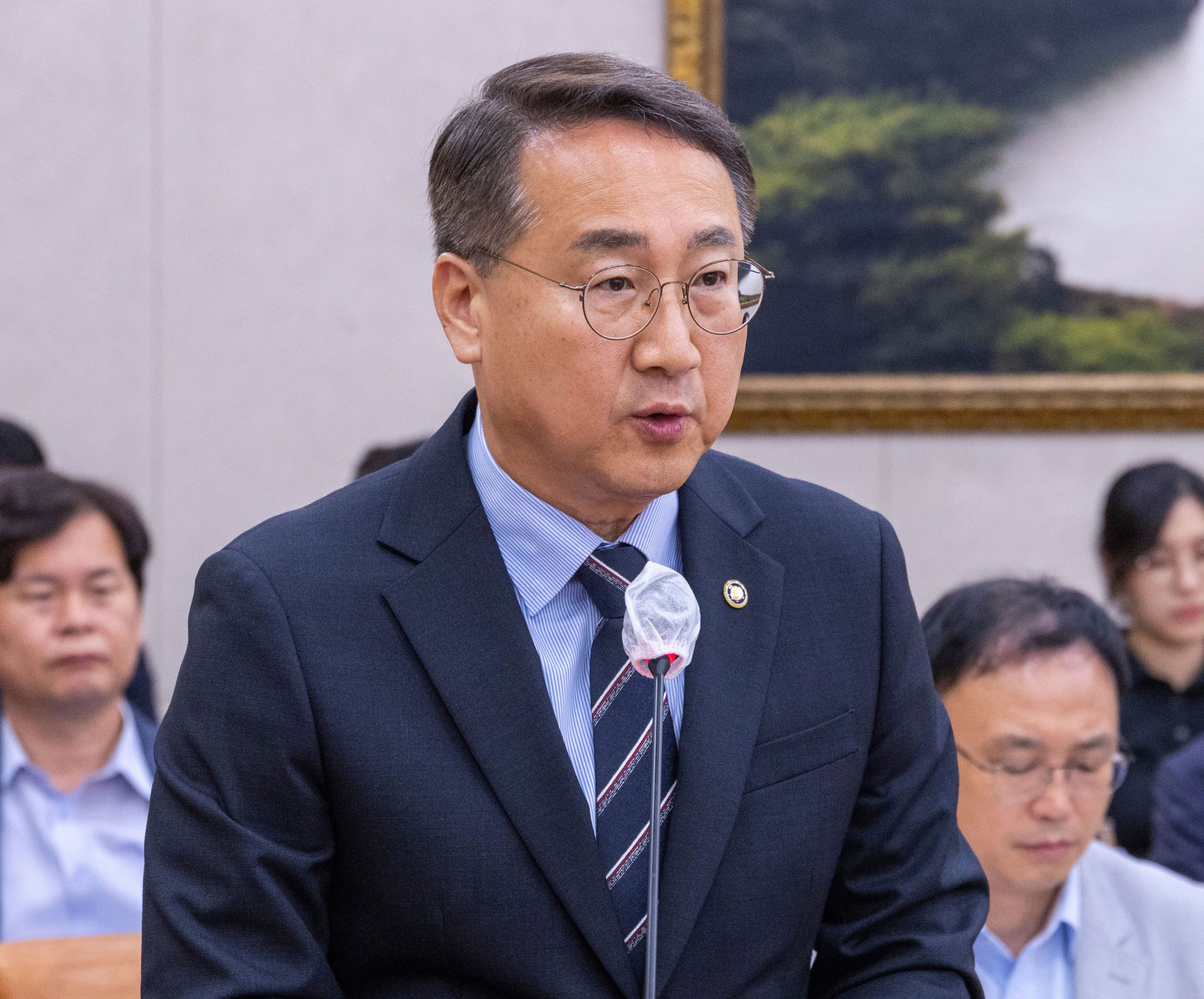
Kim In-ho’s Self-Recommendation Letter Sparks Controversy
It was confirmed on the 19th that Kim In-ho, the Commissioner of the Korea Forest Service appointed last August, registered a “self-recommendation letter” on the National Recommendation System website. The letter emphasized his career in Seongnam City and Gyeonggi Province during President Lee Jae-myung’s tenure as mayor and governor, before being appointed to the position. This has led to criticism that the “National Recommendation System for Ministers and Vice Ministers,” introduced by the Lee Jae-myung administration, is being operated contrary to its original purpose of discovering and recommending competent talent.
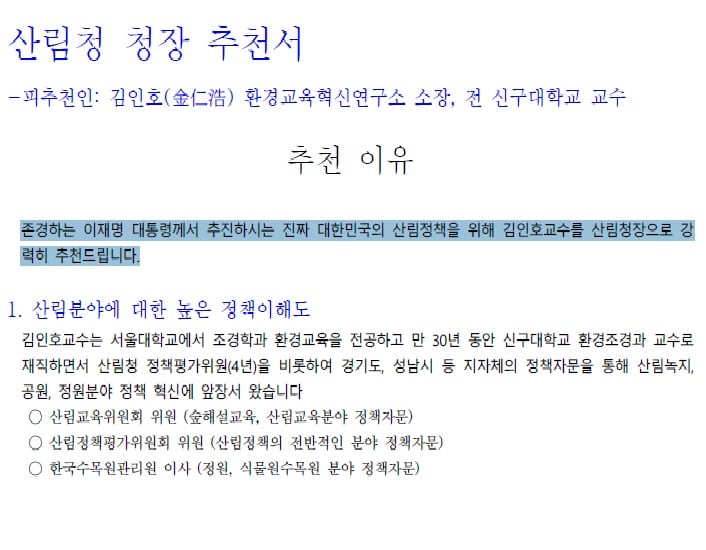
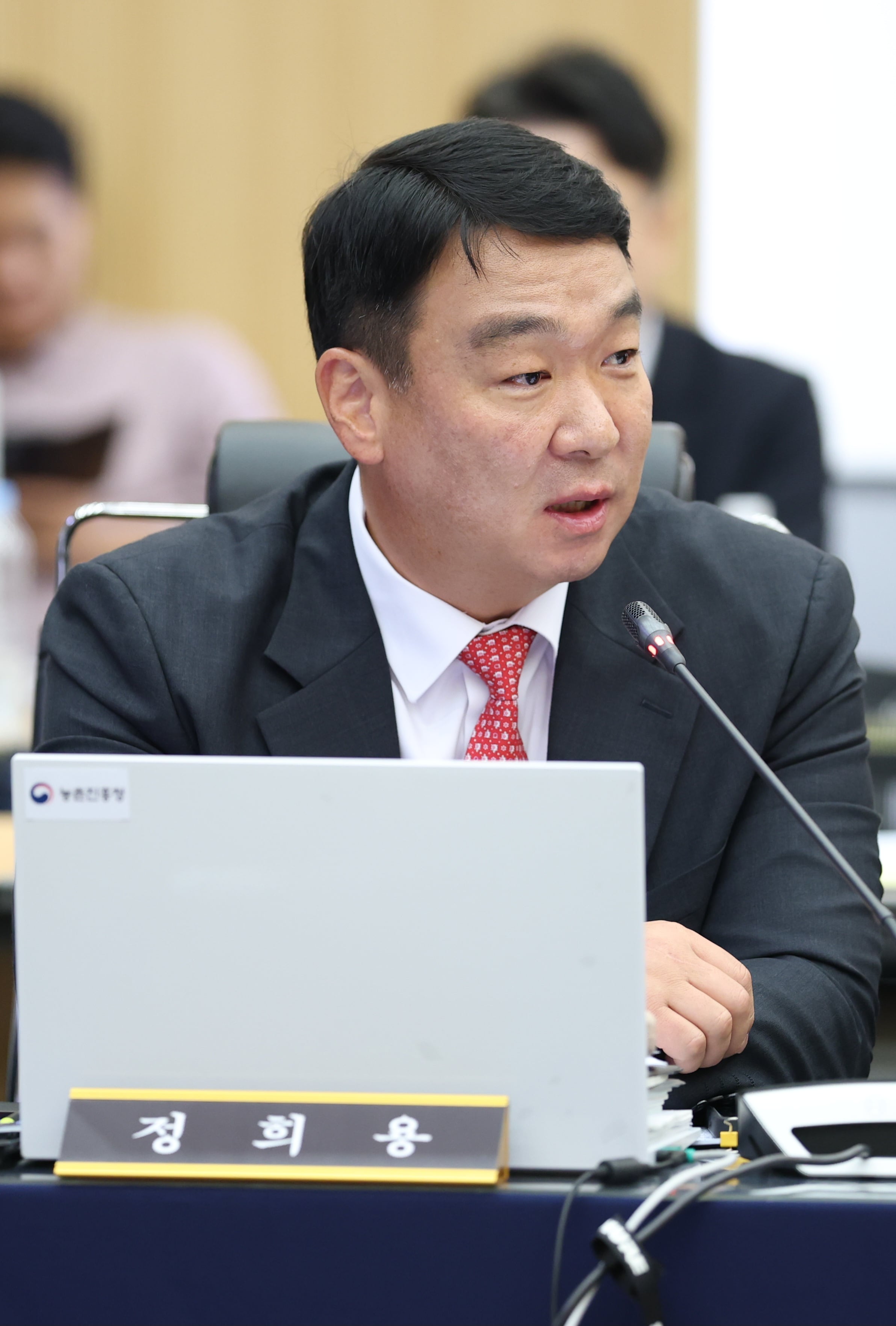
According to a self-recommendation letter obtained by this newspaper through the office of Rep. Jeong Hee-yong of the People Power Party, the document begins with the sentence, “I strongly recommend Professor Kim In-ho as the Commissioner of the Korea Forest Service to advance the genuine forestry policies of the Republic of Korea, which President Lee Jae-myung, whom I respect, is promoting.”
Commissioner Kim served as a professor in the Department of Environmental Landscape Architecture at Shingu College, a three-year technical college, for 30 years from March 1992 to February 2022. He joined the Democratic Party of Korea in April 2022 and served as the head of the National Environmental Education Center from August 2022 to July of last year. From March to August of this year, he was the vice chair of the Democratic Party’s Policy Committee.
Kim’s case has raised concerns that the system, created to move away from political connections, is instead being exploited as a channel for pro-Lee Jae-myung or ruling-party affiliations.
Self-Recommendation Letter Starting with “Dear President Lee Jae-myung”
According to Rep. Jeong’s office, Commissioner Kim submitted his self-recommendation letter through the National Recommendation System website operated by the Ministry of Personnel Management on June 15. Documents submitted by the Forest Service to the office show that the login screen for the system listed both the recommender and the recommended person as “Kim In-ho.”
The recommendation letter begins with the phrase, “I strongly recommend Professor Kim In-ho as the Commissioner of the Korea Forest Service to advance the genuine forestry policies of the Republic of Korea, which President Lee Jae-myung, whom I respect, is promoting.” In essence, he recommended himself while writing, “I strongly recommend.”
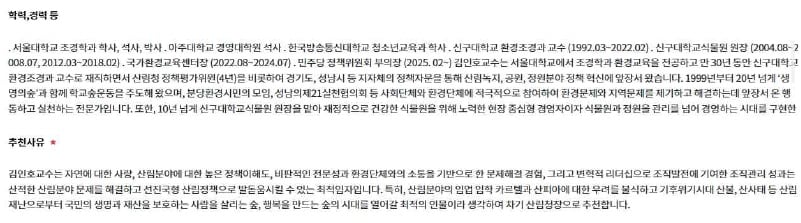
The letter lists his credentials, including a major in landscape architecture at Seoul National University, 30 years of professorship at Shingu College, 10 years as director of the Shingu College Botanical Garden, and roles such as a four-year policy evaluator for the Forest Service, member of the Forest Education Committee, and director of the Korea Institute of Arboretum Management.
Notably, it emphasizes his career related to Gyeonggi Province and Seongnam City. The letter highlights, “I have led policy innovations in forest greenery, parks, and garden sectors through policy advisory roles for local governments such as Gyeonggi Province and Seongnam City,” and details his activities as an operating and advisory committee member of the Bundang Environmental Citizens’ Group in Seongnam from 1998 and as chair of the Natural Environment Division, Policy Evaluation Committee, and Operating Committee of the Seongnam Agenda 21 Implementation Council from 1999.
Overlapping Career with President Lee Jae-myung’s Seongnam and Gyeonggi Tenure
Commissioner Kim’s emphasis on his Seongnam and Gyeonggi-related career is interpreted as overlapping with President Lee Jae-myung’s tenure. The president served as mayor of Seongnam from 2010 to 2018 and as governor of Gyeonggi Province from 2018 to 2021. Kim’s activities with the Bundang Environmental Citizens’ Group (since 1998) and Seongnam Agenda 21 (since 1999) significantly overlap with Lee’s time as mayor.

The opposition has raised suspicions that Commissioner Kim was appointed due to his connections with First Deputy Chief of Staff Kim Hyun-ji. Earlier this month, Rep. Kim Jang-kyum of the People Power Party claimed, “First Deputy Chief of Staff Kim Hyun-ji graduated from the Department of Environmental Landscape Architecture at Shingu College in Seongnam, and Professor Kim In-ho, formerly of the same department and recently appointed as Forest Service commissioner, was her mentor.” The Forest Service refuted this, stating, “It is untrue that First Deputy Chief of Staff Kim Hyun-ji is Commissioner Kim’s student.”
However, even if the two are not in a teacher-student relationship, they both held roles as secretaries and policy advisors during President Lee’s tenure as Gyeonggi governor and were part of the “Seongnam Agenda 21” group, leading to claims of a certain level of familiarity.
Rep. Jeong Hee-yong stated, “Commissioner Kim’s self-recommendation letter lists his roles as a policy advisor for Gyeonggi Province and Seongnam City, his activities with the Bundang Environmental Citizens’ Group and Seongnam Agenda 21, and his position as vice chair of the Democratic Party’s Policy Committee during the presidential election. This raises suspicions that he aimed to highlight past connections with President Lee and First Deputy Chief of Staff Kim Hyun-ji.”
National Recommendation System Becomes a “Gate for Pro-Lee Appointments”
Regarding the background of his self-recommendation, Commissioner Kim explained through Rep. Jeong’s office, “I applied based on my own reasons and convictions,” and added, “Forestry and logging cartels have faced significant criticism from the media and the public, and I believed it necessary to innovate and resolve these issues.” He also stated, “I thought it essential to lead systematic and scientific verification to address disasters, which is why I recommended myself.”
The National Recommendation System, which allowed Commissioner Kim to secure a public office through self-recommendation, was introduced by President Lee to realize his “popular sovereignty government” philosophy. The system allows citizens to recommend candidates for high-ranking positions such as ministers, vice ministers, and heads of public institutions, with the stated goal of making citizens the main drivers of national governance.
The first round of the system, conducted from June 10 to 16, received approximately 74,000 recommendations. The government accepted recommendations via the Ministry of Personnel Management’s website, requiring details such as position, institution, nominee information (name, career), recommendation reasons, and recommender information, with the nominee’s consent.
The Presidential Office stated, “Recommended individuals will undergo primary verification by the Public Service Ethics Secretariat and a public verification process before being considered for appointment.” It also announced plans to register candidates in a database for future use, even if not appointed immediately.
However, Commissioner Kim’s case has drawn criticism for contradicting the system’s original intent. Instead of discovering talent from civil society and the field to enhance democratic legitimacy, the system allowed him to recommend himself and highlight past connections to secure the commissioner position.
Rep. Jeong Hee-yong pointed out, “Public institutions, private employment, and even college admissions exclude personal background information to ensure fairness and eliminate discrimination. If a self-recommendation letter emphasizing past connections led to a commissioner appointment, this constitutes a violation of fairness and common sense.”
He added, “Commissioner Kim’s self-recommendation has turned the current government’s National Recommendation System into a farce. The Presidential Office must fully disclose the recruitment and verification process through the system, conduct a full investigation into similar cases, and clarify the facts to the public.”
The National Recommendation System has faced criticism for risks such as becoming a popularity contest, enabling organized recommendations by specific groups, serving as a means to avoid responsibility for personnel failures, and insufficient verification. Commissioner Kim’s case is seen as the first realization of these concerns, fueling calls for fundamental reforms to the system.