Artists have criticized a new
ChatGPT
An image generator capable of replicating various artistic styles — facing accusations from its developer for copyright infringement.
This week, tech behemoth OpenAI introduced its GPT-40 model, which has been praised by the company’s founder.
Sam Altman
As “a new benchmark for embracing creative liberty.”
In addition to its sophisticated image generation capabilities, this tool features considerably fewer safety measures compared to earlier versions, enabling users to produce images resembling famous personalities and copyright-protected material within seconds.
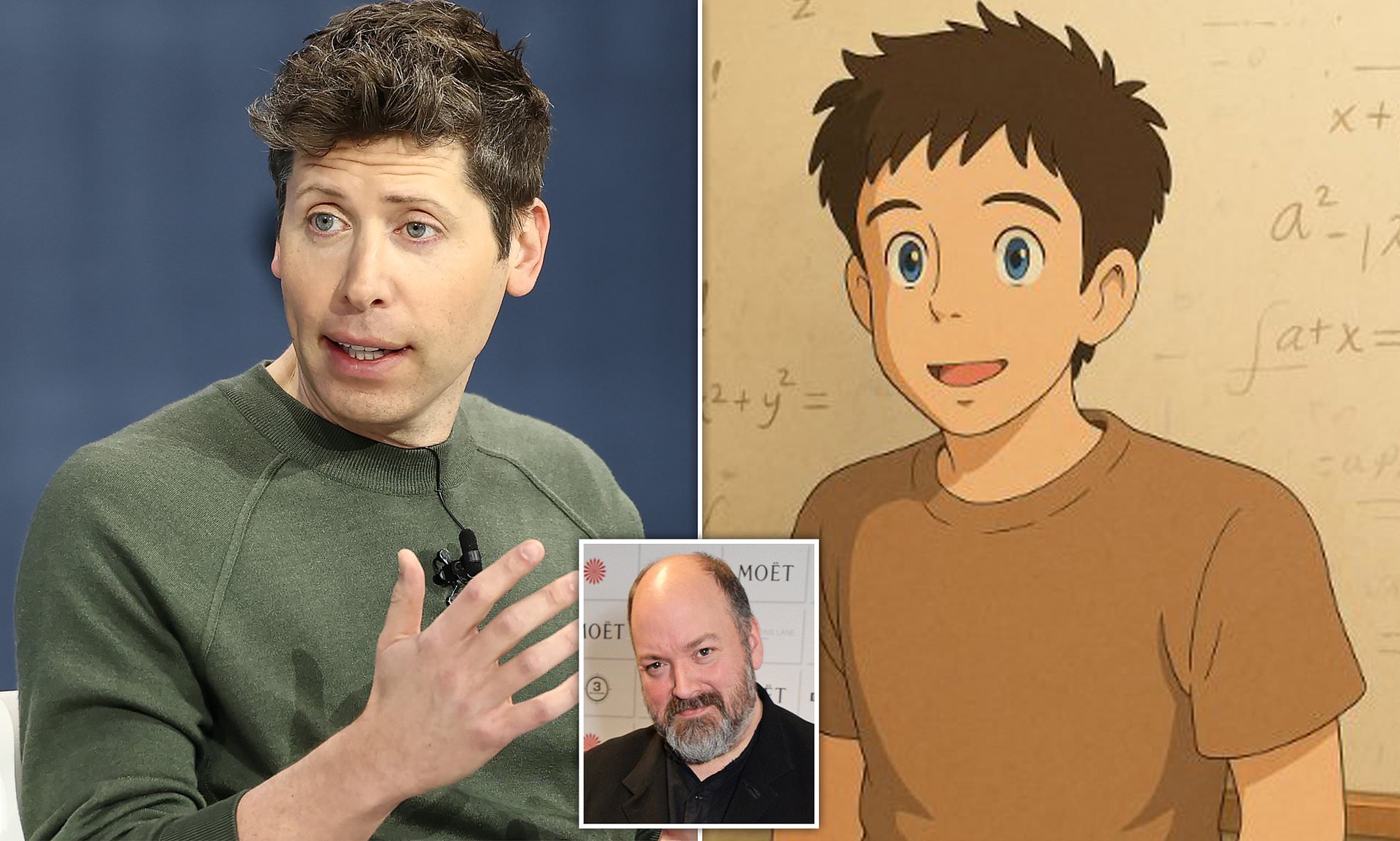
It rapidly gained popularity due to its capability to produce top-notch images styled after Wallace & Grimnit, The Simpsons, The Muppets, and Studio Ghibli’s Japanese animations.
Mr. Altman, who is 39 years old, went so far as to update his social media profile image to an AI-generated version styled like a character from Studio Ghibli films.
OpenAI anticipates its income will increase threefold to reach £9.8 billion ($12.7 billion) in 2025; however, the artists whose work is being replicated are not expected to see even a single penny from this.
British artist Dave McKean, known for his contributions to Batman comic series,
Alice Cooper
Album covers along with those of Stephen King books have witnessed his distinctive style being accurately replicated. He thinks that tools such as GPT-40 will lead to the downfall of the art industry.
Mr McKean, aged 61, stated: “I have no doubt that they will only become increasingly capable of reproducing this kind of thing.”


Why would anybody be willing to pay me for illustration when they could easily instruct a computer to create something in my style?
‘AI has the potential to achieve remarkable feats in scientific research, meteorology, and virology—but it should not infiltrate the realm of creative arts.’
If the government decides to eliminate all copyright obstacles, I’m finished as an artist.
He highlighted that AI lacks inherent talent — it can only produce ‘art’ by replicating works created by actual artists in real life.
The founder of Studio Ghibli, Hayao Miyazaki, who is 84 years old, has previously strongly opposed AI-generated art, describing it as “a dishonor to life itself.”
‘It seems as though we’re approaching the end,’ he stated. ‘Humans are beginning to lose trust in our capabilities.’
Luiza Jarovsky from the AI, Tech & Privacy Academy commented, “It remains uncertain if OpenAI has secured licensing agreements with Studio Ghibli and other artists whose styles are being replicated. In my view, these kinds of arrangements seem improbable. I anticipate that we’re likely heading towards a surge in copyright litigation.”
Keir Starmer’s administration aims to shield major technology companies from copyright restrictions, enabling them to utilize protected online content for enhancing AI offerings. Content creators would be required to opt-out if they do not wish their creations to be used in this manner.


The Mail is leading a campaign to safeguard Britain’s creative sectors from the looming threat.
Children’s author Chris Bradford is supporting the initiative after he found out that unauthorized versions of his bestselling Bodyguard and Young Samurai series were accessed by an AI in November 2023.
“You can now instruct ChatGPT to compose a story in the style of Chris Bradford, and it captures your work with remarkable precision,” he stated. “You have the option to request specific plotlines from the Young Samurai series, and it manages to replicate these details flawlessly.”
‘There should be compensation. Writers like myself are merely seeking equity.’
Mr. Bradford, aged 50 from Hove, East Sussex, noted that AI chatbots could not produce believable short stories about a year ago. However, these systems have since progressed to generate acceptable pieces of fiction. He anticipates that at this pace, AIs might be capable of writing engaging novels within the coming year.
Author Harriet Evans, aged 50, was taken aback and felt violated after asking ChatGPT to ‘create a novel by Harriet Evans’ — only to find that it generated a digital copy resembling her own work, including similar character names and plotlines.
The story’s title was “The Place of Lost Gardens,” combining elements from two of her top-selling novels—”A Place for Us” and “The Garden of Lost and Found.”
‘It felt as though I had been hit in the stomach,’ stated Mrs. Evans. ‘My role involves condensing my reflections, adventures, and feelings from half a century into written works. The idea of a machine replicating everything that I have poured into these books is terrifying.’
‘It doesn’t just endanger the incomes of countless authors, booksellers, printers, publishers, and librarians, but the thought of my kids reading books created by a computer fills me with dread.’
Ms. Evans, who has two children, stated that permitting AI firms to bypass copyright laws could be ‘extremely detrimental to Britain’. She also remarked, ‘It seems the government doesn’t fully grasp the implications of this situation.’
OpenAI stated that they avoid generating images in the style of living artists, but allow more general studio aesthetics which have been employed to create and disseminate numerous delightful and inspiring original fan works.
A spokesperson stated: “The objective is to provide users with maximum creative liberty. We continuously gain insights from practical usage and user input, and we will persistently refine our guidelines accordingly.”
Read more


