
Consumers and businesses across Asia are facing a growing crisis as the ongoing conflict in Iran disrupts oil and plastics supplies, causing prices to surge across a wide range of products. From everyday essentials like ramen noodles to luxury items such as cosmetics, the ripple effects of this supply chain disruption are becoming increasingly evident.
Choi Gun-soo, the manager of a 57-year-old South Korean factory that produces plastic films for agricultural use and television manufacturing, has seen firsthand how the situation is escalating. His suppliers have increased the cost of some raw materials by as much as 50%, while others have run out of stock entirely. This has forced his company to reduce production to just 20-30% of its usual output.
“This is the first time we’ve been hit this hard. We’re really shaken,” Choi said. The factory has had to shut down machines gradually, with the next one to two weeks expected to be critical. While the company has weathered past challenges, including previous oil shocks and the impact of the Covid-19 pandemic, the current crisis is unprecedented in its severity.
The Strait of Hormuz, a crucial waterway through which about one-fifth of the world’s oil and liquefied natural gas passes, is at the center of the supply chain disruption. Asia, which relies heavily on Middle Eastern crude oil, gas, fuel, and fertilizer, is particularly vulnerable to any interruptions in this vital route.
Currently, the most acute shortages are in oil derivatives such as naphtha, which is sourced mainly from the Gulf and used in refineries across Asia to produce plastics and other petrochemicals. These materials are essential for almost every manufactured product, from packaging to consumer goods.
Prices for basic materials like plastic and rubber have already reached record highs. South Korea’s Samyang Foods, known for its popular Buldak instant ramen noodles, warned that a prolonged conflict could lead to a shortage of packaging materials and increased costs. Ramen noodles, typically sold in packages or cups, depend heavily on polyethylene terephthalate (PET), a widely used plastic.
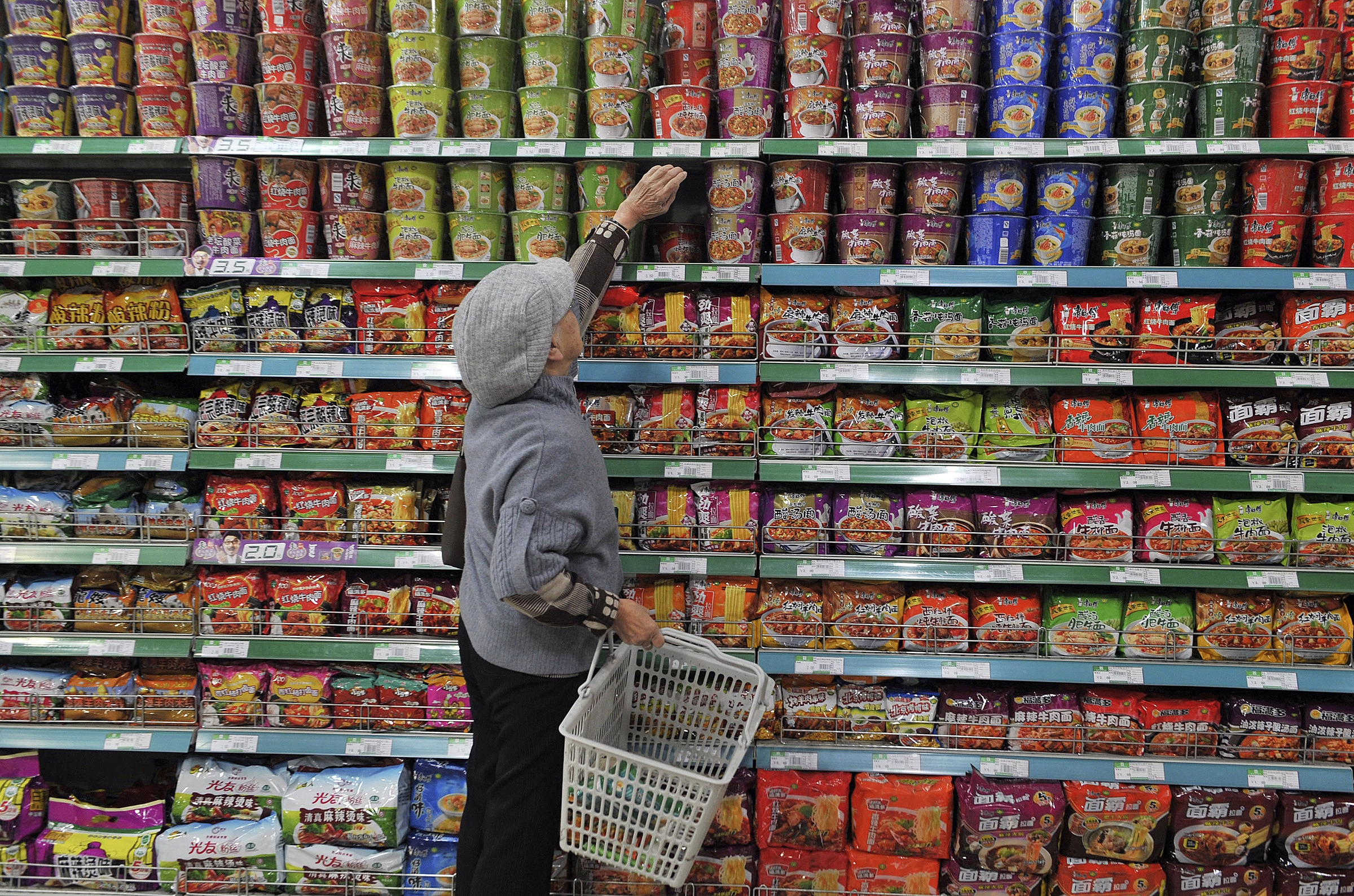
A customer selects instant noodles at a supermarket in China. Photo by Reuters
Rival South Korean ramen producer Nongshim reported having two to three months of inventory for packaging materials and preparing for the possibility that the war, which began with U.S.-Israeli strikes on Iran on Feb. 28, could continue. Yonwoo, a container maker for L’Oreal and K-beauty firms, told Reuters it was scrambling to secure stocks of plastic resin to manufacture skincare containers. The company noted that visibility into material availability beyond June was limited.
“The issue isn’t the price—if supply itself isn’t available, then without containers, you simply can’t sell the product,” a company official said, declining to be named. “We are stockpiling supplies, but beyond that, we don’t really have any substantial measures in place; we’re simply hoping that the situation would be resolved by May.”
The war has led to fuel shortages worldwide, affecting businesses from airlines to supermarkets and used car dealers. In Japan, department store operator Takashimaya warned that if the crisis persists, price increases and supply concerns could spread to clothing and household appliances.
Fans of Japan’s Wasabeef crisps panicked this month after manufacturer Yamayoshi Seika halted production, citing a shortage of heavy oil used in the frying process. Rising costs of raw materials are taking a toll on various industries. China, which produces nearly half the world’s synthetic rubber, is experiencing shortages of naphtha needed to make it, forcing manufacturers of goods like tires and gloves to consider raising prices or switching to natural rubber.
China’s output is projected to fall by about a third in April due to the war, according to Xinhua Jing, an analyst at SCI. Tyremaker Michelin told Reuters its supply chain teams were “fully mobilized” and managing deliveries to honor contracts “as much as possible.”
In India, bottled water has become more expensive due to surging prices of plastic bottles and caps. Global brewers operating there have also warned of price hikes and supply disruptions caused by a shortage of gas. High oil prices and supply chain shocks are also being felt in China’s southern manufacturing hub of Dongguan.
Liu Chaonan, whose toy company supplies U.S. retailer Walmart, said soaring raw materials costs were taking a toll. “The situation in Iran is having a very significant impact on our toy industry,” Liu said. “We will likely make price adjustments when quoting new products.”
Higher crude prices directly affect retail fuel prices, increasing the cost of petrol, diesel, aviation fuel, cooking gas, and business and manufacturing operations globally. Supply concerns have triggered panic buying, with consumers hoarding goods like rubbish bags. South Korean supermarkets have reported shortages and imposed purchase limits.
South Korean student Ryu June-ho, 24, recently bought ten 20-liter bin bags and lots of ramen noodles. “I was worried that garbage bags would get more expensive, so I bought them. I also bought lots of ramen… because the cost of plastic packaging probably accounts for a big part of the product’s price.”

Related posts:
From Madina Old Road to the marketing boardroom: This is Dinah Asabea Darko

My 33-Year Battle with Idumota Marketers: The Unfiltered Journey of Queen Oluwa

What Governments Must Do Before Transitioning to the 12-Year Compulsory Education Model – Analysts


Beyond the Bill: Can Nigeria’s States Forge Effective Police Forces?