Impact of the Academic Strike on Students and Local Businesses
The ongoing strike by the Academic Staff Union of Universities (ASUU) has significantly affected academic activities across several universities in Nigeria. This development has left thousands of students preparing for their examinations in a state of uncertainty, while local businesses have experienced a sharp decline in patronage.
Background of the Strike
ASUU initiated a two-week warning strike on Monday to protest the Federal Government’s failure to sign the renegotiated agreement reached by the Federal Government Tertiary Institutions Expanded Negotiation Committee led by Yayale Ahmed, a former Secretary to the Government of the Federation. The committee concluded its sittings over eight months ago, but the government has yet to finalize the agreement.
Dr Adefemi Afolabi, the chairman of ASUU’s University of Ibadan chapter, highlighted that the union was forced into the warning strike due to what he described as the government’s “delay tactics” and disregard for collective bargaining principles. He mentioned that the union had waited patiently for eight months and even organized protests to raise awareness about the need for the government to sign the renegotiated agreement. However, the government responded by forming a new committee to restart the entire process, which Afolabi criticized as a waste of time and resources.
Effects on University Campuses
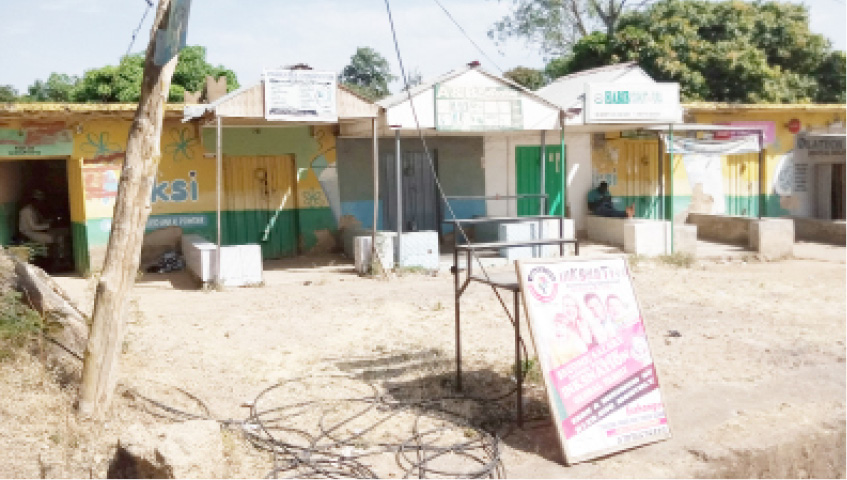
Findings by Sunday PUNCH revealed that university campuses across the country have become deserted as lecturers boycott classes. Many local businesses around these institutions have also been severely impacted. Food vendors, commercial motorcyclists, hostel operators, and stationery sellers are among those most affected.
At the University of Ibadan, food vendor Tunde Ajayi noted a significant drop in sales since the strike began. He said, “Once ASUU began the strike, students stopped coming around. Yesterday, I sold less than half of what I usually sell.” Similarly, Bose Ogunleye, who runs a convenience store in the Agbowo area, described the situation as “a big blow.”
Disruption of Examinations
The strike has also disrupted examinations at Imo State University (IMSU). Very few students and lecturers were seen on campus, leading to a business lull. Kiosk owner Nkechi Okere lamented the difficulty of feeding her family due to the absence of students. She stated, “Ideally, I make a little about N4,000 profit daily from the sale of soft drinks, buns, doughnuts, fried meat, biscuits, chewing gum, and sweets. However, due to the strike, the students and their lecturers are not in school.”
Impact on Other Universities
Similar scenarios were observed at the University of Lafia, University of Uyo, and University of Jos. Business owners in these areas reported a significant decline in patronage. Ibrahim Ademola, a tricycle rider, expressed frustration over his inability to meet family financial responsibilities. Juliana Joshua, a cyber cafe operator, was forced to close her shop due to low patronage.
At the University of Uyo, Ekemini Akpan, a restaurant operator, lamented the impact of the strike on her business. She said, “We have been experiencing low patronage since the strike started and we pray that the strike should not continue in the future.” Christian Udo, a stationery seller, regretted opening his shop, and an anonymous medical store attendant expressed concerns about the recurring effects of strikes on their business.
Challenges Faced by Business Owners
Jude Izang, a business centre operator near the University of Jos, noted that the university’s closure had already affected business, with few students around. He added, “Now, because of the strike, lecturers who used to come to school whether they are in session or not are no longer coming, adding to the difficulty we face.”
Conclusion
The ongoing two-week warning strike by ASUU has created a ripple effect across various sectors, impacting not only academic activities but also the livelihoods of local businesses. As the situation continues, stakeholders are urging both the Federal Government and ASUU to resolve their differences to restore normalcy to the educational system and support the local economy.


