The Political and Security Implications of the Nigeria Religious Freedom Accountability Act
In a recent development in the United States Congress, a Republican-led initiative has sought to link Nigeria’s internal security crisis with America’s global religious freedom agenda. This move carries significant implications that extend far beyond diplomatic relations.
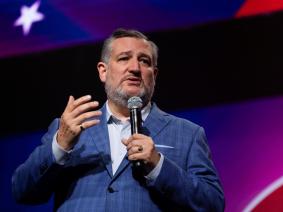
When U.S. Senator Ted Cruz introduced S.2747, also known as the Nigeria Religious Freedom Accountability Act of 2025, on the Senate floor of the 119th U.S. Congress in Washington earlier this month, Nigeria’s name was repeatedly mentioned, highlighting a grim situation. The bill aims to compel the U.S. government to redesignate Nigeria as a Country of Particular Concern (CPC) under the International Religious Freedom Act, citing what Cruz described as “the world’s deadliest persecution of Christians.”
In an 11 September press release, the Texas Republican stated his desire for the bill to move forward quickly. The statement outlines the basis for the legislation, asserting that religious persecution and violence against Christians and other religious minorities in Nigeria is endemic, driven significantly by Islamist jihadism and institutionalized sharia law in large parts of the country.
This move reopens a complex diplomatic conversation between Abuja and Washington, one that began over a decade ago when U.S. policy first linked Nigeria’s security failures to religious persecution. With Republicans now controlling both chambers of Congress and President Donald Trump back in office, the political and security implications for Nigeria are more pronounced than ever.
What Senator Ted Cruz’s Bill Says
Mr. Cruz’s legislation, officially titled S.2747 – Nigeria Religious Freedom Accountability Act of 2025, builds directly on House Resolution 594, a companion motion in the House Committee on Foreign Affairs, which, as of 8 October 2025, is co-sponsored by 18 Republican Party lawmakers. Previously, House Resolution H.Res.82, led by Congressman Chris Smith, explicitly names Nigeria:
“Whereas, in Nigeria:
(1) thousands of Christians are targeted and killed for their faith every year, such as in the attack on Palm Sunday, 2025, that left at least 50 Christians dead, and the attack on Yelewata, Benue State, in June 2025, that left at least 200 Christians dead; and
(2) the number of Christians killed in Nigeria is vastly more than the number of Christians killed in all other countries combined.”
The bill cites data from Open Doors’ World Watch List 2025, stating that “More than 380m Christians suffer high levels of persecution and discrimination for their faith,” and that Nigeria continues to account for the majority of global faith-based killings. According to Open Doors’ 2024 data, 82 per cent of the 4,998 Christians killed worldwide in 2023 were Nigerian.
Also referenced in the bill’s fact sheet are findings by Vatican News and Genocide Watch, showing that between 2009 and 2023 over 52,000 Christians—and at least 34,000 moderate Muslims—were killed in faith-based attacks led by Islamist extremists in Nigeria, while about five million people were displaced.
At a recent hearing before the U.S. House Subcommittee on Africa, Nigerian faith leaders and diaspora witnesses delivered written testimonies describing entire rural communities in Plateau, Benue, and Southern Kaduna states as “living under nightly siege.” Representatives of the Christian Association of Nigeria (CAN) and Intersociety, a civil rights group, said attacks by “non-state armed actors” are often dismissed as “banditry” but, under U.S. law, meet the Title 22 definition of terrorism—acts of violence against non-combatants for ideological or political ends.
From Bill to Law: The Road Ahead
For readers unfamiliar with U.S. legislative mechanics, a bill like Mr. Cruz’s follows a structured path:
- Introduction in the Senate by a member (here, Mr. Cruz).
- Referral to a committee—in this case, the Senate Foreign Relations Committee—for review, debate, and possible amendment.
- Full Senate vote once it clears committee.
- Companion approval by the House of Representatives.
- Reconciliation of both versions into one final text.
- Submission to the President for signature or veto.
If the president signs it, the measure becomes federal law. If he vetoes it, Congress can override the veto with a two-thirds vote in both houses.
Given the alignment between Mr. Cruz’s campaign and Mr. Trump’s foreign policy commitments, analysts in Washington see this bill as having a high probability of passage. The Senate now counts 52 Republican seats, with the House holding a similarly conservative majority—simply put, Republicans have most seats.
Trump’s Likely Position: Alignment on Faith and Security
President Trump has long framed the protection of Christians globally as a moral priority. In his campaign and subsequent inauguration briefing, Mr. Trump reaffirmed his administration’s stance to be on the side of persecuted Christians wherever they are, including in Africa. At the 80th session of the United Nations General Assembly, the American leader said, “Together, let us defend free speech and free expression. Let us protect religious liberty, including for the most persecuted religion on the planet today—it’s called Christianity.” Key elements of his speech were published on the White House website on 23 September 2025. This suggests he would almost certainly sign Mr. Cruz’s bill if it reaches his desk.
On his X (formerly Twitter) account, Mr. Cruz said, “Officials in Nigeria are ignoring and even facilitating the mass murder of Christians by Islamist jihadists.” This signals that U.S. religious freedom advocacy will increase.
The Terror Group Context: Key Historical Markers
The policy debate cannot be separated from Nigeria’s formal terrorist designations—by the United States—over the past decade:
- In November 2013, the U.S. State Department designated Jama’atu Ahl as-Sunnah li-Da’awati wal-Jihad (Boko Haram) as a Foreign Terrorist Organization (FTO).
- In February 2018, Washington similarly designated ISIS-West Africa Province (ISIS-WA) as an FTO.
Both designations legally oblige the U.S. to monitor financing, training, or travel related to these groups. The Global Terrorism Trends and Analysis Center (GTTAC) found that “Nigeria accounted for 17 per cent of all terrorism events that occurred across more than one day in 2022—the highest share of any single country.” The report added that “the upward trend in 2023, marked by a 34 per cent increase in terror deaths, was driven by intensifying clashes between Boko Haram and ISIS-WA.”
Nigeria’s Reality, Data, and Testimony
The Observatory for Religious Freedom in Africa (ORFA) observed in a 2023 report that attacks on Christian-majority areas cause displacement and insecurity.
According to a 12 March 2025 press release by U.S. Representative Chris Smith (NJ-04), chairman of the House Foreign Affairs Subcommittee on Africa, there was a congressional hearing on religious freedom violations in Nigeria. The statement said, “Genocide Watch has called Nigeria ‘a killing field of defenseless Christians.’”
Testifying at the House hearing, entitled “Conflict and Persecution in Nigeria: The Case for a CPC Designation,” were witnesses, including the Catholic Bishop of the Diocese of Makurdi, Nigeria, Bishop Wilfred Anagbe, and Oge Onubogu, who was at the time the director of the Africa Programme at The Wilson Center.
In testimony before U.S. lawmakers, Mr. Anagbe said, “A long-term, Islamic agenda to homogenize the population has been implemented, over several presidencies, through a strategy to reduce and eventually eliminate the Christian identity of half of the population. This strategy includes both violent and non-violent actions, such as the exclusion of Christians from positions of power, the abduction of Church members, the raping of women, the killing and expulsion of Christians, the destruction of churches and farmlands of Christian farmers, followed by the occupation of such lands by Fulani herders. All of this takes place without government interference or reprisals.”
Local Nigerian groups reinforced these assertions.
Intersociety’s 2023 report documented 1,041 faith-related killings in the first 100 days of that year and over 5,000 in 2022. Their report argued that “most victims are rural Christians identified by their faith,” not random victims of banditry.
The Christian Solidarity Worldwide (CSW) report of October 2025 noted that “religious persecution in northern and central Nigeria remains widespread, systematic, and largely unpunished.”
These testimonies have been central to shaping the approach now reflected in Mr. Cruz’s and Smith’s Congressional advocacy.
Interpreting the Bill Through an International Security Lens
A PREMIUM TIMES analysis of the security situation in Nigeria shows that the state fails to protect its citizens amidst a proliferation of armed groups in five of the six geopolitical zones of the country. The armed groups all have diverse interests, and the majority of the victims, overall, can be said to be Muslims.
The Nigerian government has also debunked Mr. Cruz’s claim, with the Nigerian president’s office saying, “While Nigeria, like many countries, has faced security challenges, including acts of terrorism perpetrated by criminals, couching the situation as a deliberate, systematic attack on Christians is inaccurate and harmful. It oversimplifies a complex, security environment and plays into the hands of terrorists and criminals who seek to divide Nigerians along religious or ethnic lines. Muslims, Christians, and even those who do not identify with any religion have suffered at their hands,” it said.
However, from an international security perspective, it can be argued that the issue is as much about state capacity as ideology. Nigeria’s inability to secure its citizens in the country’s northwest and central zones has allowed terrorism [under the U.S. Congress legal definition in Title 22 code] to redefine violence along religious lines. Under the U.S. Title 22 standard, such acts qualify as terrorism, not mere local criminality.
Scholars describe this as a phenomenon of “state de-legitimation through non-state coercion.” In simpler terms, when the government cannot control violent non-state actors, international actors begin to frame its crisis as a global security threat, justifying foreign legislative or diplomatic interventions. The Cruz bill represents precisely such a step.
Possible Consequences If the Bill Passes
If enacted, Mr. Cruz’s bill would require the State Department to reimpose consequences and restrict certain defense and economic cooperation programs with Nigeria until “credible progress” is shown in preventing anti-Christian killings. This could affect security assistance, visa privileges for senior officials, and Nigeria’s access to some U.S. training and counterterrorism funds.
Diplomatic relations may face a fresh strain. Nigeria was first listed as a Country of Particular Concern in 2020, during President Trump’s first term in office, and then delisted in 2021. Reinstatement in 2025 would symbolize America’s loss of confidence in Abuja’s authority over its internal non-state, armed group violence.
Moreover, the labeling of Nigeria as a “CPC” may carry reputational damage beyond Washington. It could shape EU or UK humanitarian funding assessments and embolden advocacy groups at the UN Human Rights Council to push for an international inquiry—a move Nigerian diplomats have historically resisted.
A Defining Crossroads
Whether or not Mr. Cruz’s bill ultimately becomes law, it brings new attention to Nigeria’s internal, irregular armed violence—and places it under a foreign moral microscope. For a country seeking international investment and security cooperation, being named in the same breath as religious persecution and mass killings is damaging enough.
The deeper lesson, international security experts say, is that uncontained non-state violence becomes globalized. When local tragedies are left to fester, more powerful countries may begin to legislate over them.
In Washington’s eyes, the battle for Nigeria’s Christians has become not just a human rights concern, but a question of international terrorism—and the Trump Administration’s American faith-based conscience.