SERAP Demands Transparency on Missing N18.6 Billion for National Assembly Complex
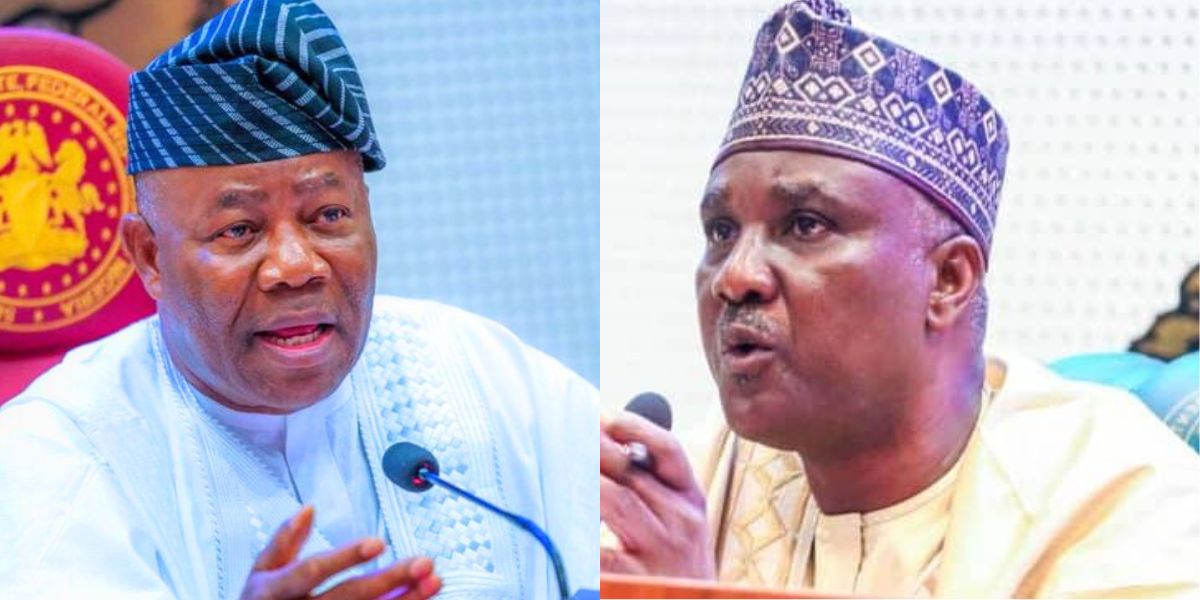
The Socio-Economic Rights and Accountability Project (SERAP) has raised serious concerns regarding the unaccounted N18.6 billion allocated for the construction of the National Assembly Commission Office Complex. The organization has called on key officials, including the Senate President, Godswill Akpabio, and the Speaker of the House of Representatives, Tajudeen Abbas, to provide a detailed explanation of the missing funds.
SERAP emphasized that the funds were meant for the construction of the complex, as documented in the 2022 annual report by the Auditor-General of the Federation. The organization urged the officials to disclose the name of the alleged “fictitious construction company” that reportedly collected the N18.6 billion, along with details such as the directors, shareholders, and address of the company.
In addition, SERAP requested an explanation for the failure to adhere to the Procurement Act. This includes not conducting a needs assessment before awarding the contract, failing to advertise the bidding process, issuing a contract agreement, or providing bidders’ quotations before the construction company was paid N18.6 billion.
Allegations of Contract Inflation and Lack of Approval
SERAP also asked for clarification on the rationale behind the “inflation of the contract by N6.9 billion for the conversion of the roof garden to office space.” The organization questioned why no approval was obtained for the upward review of the contract and demanded information on the project’s implementation status.
The allegations were outlined in the 2022 annual report published by the Auditor-General of the Federation on 9 September 2025. In a letter dated 18 October 2025, signed by SERAP deputy director Kolawole Oluwadare, the organization stated that these allegations suggest violations of public trust, the Nigerian Constitution, and national and international anticorruption obligations.
Importance of Transparency and Accountability
SERAP stressed that the National Assembly must demonstrate exemplary leadership to investigate the allegations of corruption and mismanagement involving the National Assembly Service (NASS) commission. According to the organization, the National Assembly must uphold transparency, accountability, and the rule of law to effectively perform its oversight and anti-corruption roles.
The letter noted that addressing the allegations would enhance public confidence in the National Assembly’s ability to fulfill its constitutional responsibilities. It also emphasized that the National Assembly should act in the best interest of the people, not for personal gain.
Urgent Actions Required
SERAP requested that the recommended measures be taken within seven days of receiving the letter. If no response is received, the organization warned it would take all appropriate legal actions to compel compliance with its request in the public interest.
According to the 2022 audited report by the Auditor General of the Federation, the National Assembly Service Commission paid over N11.6 billion to an unknown construction company for the construction of the Commission’s Complex within 24 months. The payment was reportedly made on 11 August 2020, but the contract was inflated by over N6.9 billion for the conversion of the roof garden to office space, with the money paid on 29 November 2023.
The contracts were awarded without a Bill of Quantity (BOQ), and the BOQ for the N11.6 billion contract was not priced. Both contracts were awarded without any needs assessment, newspaper advertisements, bidding process, contract agreement, bidders’ quotations, or approval by the Federal Executive Council (FEC). Additionally, there was no Bureau of Public Procurement’s Certificate of “No Objection.”
Implications of Mismanagement
The Auditor-General expressed concern that the N18.6 billion budgeted for the construction of the Commission’s Office Complex and the conversion of the roof garden may be missing. SERAP fears that the funds may have been misappropriated, diverted, or stolen, reflecting the National Assembly’s continued failure to uphold transparency and accountability.
Explaining the whereabouts of the funds, publishing details of the construction company, and ensuring the prosecution of those involved would serve the public interest. Poor and vulnerable Nigerians continue to bear the economic and social costs of corruption, which traps them in poverty and deprives them of opportunities.
Legal and Constitutional Obligations
SERAP highlighted several constitutional provisions that require the National Assembly and its commission to abolish corrupt practices and ensure proper management of public resources. Section 15(5) of the Nigerian Constitution mandates public institutions to eliminate corrupt practices and abuse of power. Section 13 imposes responsibility on the National Assembly to conform to the constitution’s provisions.
Under Section 16(1)(a)(b), the National Assembly is obligated to harness national resources for prosperity and secure the welfare of every citizen. Section 16(2) further states that national resources should be distributed for the common good.
Nigeria has legally binding commitments under the UN Convention against Corruption to ensure accountability in managing public resources. Articles 5 and 9 impose legal obligations on the National Assembly to manage public affairs and funds properly.
Call for Investigation and Recovery
SERAP urges the referral of these violations to appropriate anticorruption agencies for investigation and prosecution, as well as the recovery and remittance of the public funds into the treasury. The organization emphasizes that Nigerians have the right to know the whereabouts of public funds and the details of the construction company involved.