The Challenges and Importance of the Refining Sector in Nigeria
The refining sector in Nigeria is facing significant challenges, with industry leaders expressing concerns about the lack of attention from the Federal Government and its regulators. Mr. Momoh Oyarekhua, President of the Crude Oil Refinery Owners Association of Nigeria (CORAN), has highlighted that the sector is often neglected compared to upstream and downstream operations. He emphasized that refining is a “new and misunderstood industry” in Nigeria, which continues to suffer from a lack of understanding and support.
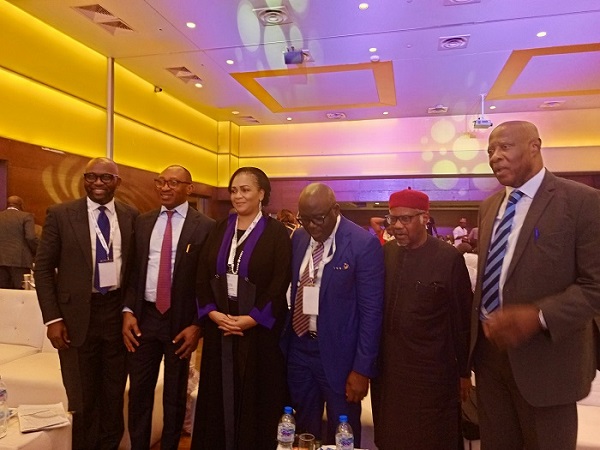
At the second Nigeria Refining Summit held in Lagos, Oyarekhua spoke about the importance of refining in achieving energy security. He pointed out that while many people are eager to associate with the successful upstream and downstream sectors, the midstream sector remains overlooked.
“Success has a lot of friends because everyone wants to identify with success. Upstream is mature; downstream is also mature, because people have been in the upstream and in the downstream for several decades. But refining is very new in Nigeria. So, it’s difficult sometimes to even convince people that refining is important,” he said.
Oyarekhua noted that even government agencies and regulators have shown limited interest in understanding the challenges of refining operations. He described the difficulty in getting refiners to engage in meaningful conversations with the government, as many do not understand the complexities of the industry.
One of the key issues raised by Oyarekhua was the Petroleum Industry Act (PIA). While the PIA was designed to support local refining, he argued that it has complicated crude supply arrangements through conflicting clauses. Specifically, the “willing buyer, willing seller” clause has made it challenging to enforce the domestic crude supply obligation.
“You cannot have an obligation and also put a condition, which is ‘willing buyer, willing seller’. When you say this is an obligation, this person must meet it. You don’t say, ‘In case this person thinks like this or doesn’t want it.’ You should meet it. Let them go and discuss,” he said.
The Dangote Refinery and Midstream Dynamics
Oyarekhua also addressed the challenges facing the Dangote refinery, noting that many Nigerians do not understand the scale and realities of refinery investment. He explained that criticism against the refinery’s operations often stems from a lack of understanding of midstream dynamics.
“You see what’s happening to Dangote today. When people try to talk to me, I say, You don’t understand what is happening. Imagine a man putting a billion litres of product in a tank, and you are expecting the man to rely on somebody else to help him to distribute it. Because the man, in the value chain of what he’s doing, does not want your failure to affect his business.”
He added that refiners like Dangote operate under strict financial and contractual obligations, unlike the government. “A refiner perhaps may have been financed by a bank. Given that he’s financed, he’s not going to tell his banker, ‘Because I could not refine, because I could not move my product, I cannot pay you.’ There are benchmarks that he has agreed to. So, you must fulfil those benchmarks.”
The Need for Coordination and Understanding
Oyarekhua stressed that without a consistent crude supply, Nigeria’s refining dream cannot be sustained. He called for a more coordinated approach among upstream, midstream, and downstream operators to eliminate friction and promote shared prosperity.
“Why is upstream not actually supplying the midstream? Why is the man on the downstream side thinking that he’s being strangulated or his business will collapse? No business should collapse. It should be a victory for everyone that refineries now exist in Nigeria.”
He urged Nigerians to understand the midstream sector to appreciate the ongoing struggles and contributions of local refiners. “Nigerians still don’t understand the midstream. So, it’s only when we understand the midstream that people are able to begin to see when a Dangote thinks it is being frustrated or an OPAC thinks it is being frustrated; you begin to feel and think like them.”
Government and Regulatory Efforts
Meanwhile, the Chief Executive of the Nigerian Upstream Petroleum Regulatory Authority, Gbenga Komolafe, stated that the NUPRC was doing its best to make crude available to local refiners. He mentioned that the NUPRC works with the Nigerian Midstream and Downstream Petroleum Regulatory Authority to get the crude requirements for local refineries, and this is done on a half-yearly basis.
“The oil supply obligation is not a request; it is a regulatory obligation to help improve our energy security in Nigeria. When we get the allocation, we distribute it accordingly to the companies, and we use parts of their production forecast and other indices to determine the volume that we allocate to the companies.”
Government Commitment to Energy Security
The Minister of State for Petroleum Resources (Oil), Heineken Lokpobiri, announced that the government would end Nigeria’s dependence on imported petroleum products. He pledged sustained crude supply, policy incentives, and full regulatory support to indigenous refiners to achieve national energy security and regional market dominance.
Lokpobiri emphasized the importance of ensuring feedstock security for all licensed refineries and strengthening the Domestic Crude Oil Supply Obligation. “No nation can claim energy independence if it cannot refine its own crude. The Federal Government is therefore committed to ensuring that every barrel produced in Nigeria contributes to meeting both our domestic and international obligations.”
He also announced that the naira-for-crude sales policy would be sustained to cut production costs, limit exposure to foreign exchange volatility, and strengthen local operators’ competitiveness.


