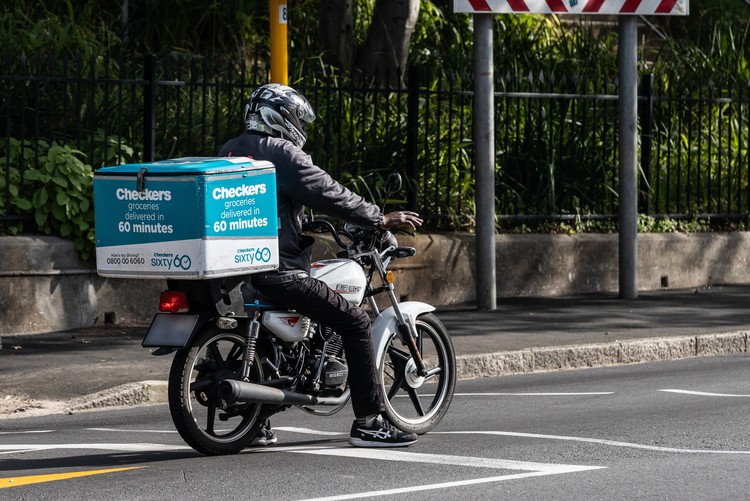
On every street in Bangkok, at every red light and alley, you will see motorcycles with colourful canvas boxes and banners attached to the drivers. The riders wear matching jackets, and those without boxes often have a passenger behind them. These are the application-based delivery workers known as Riders.
Delivery apps in Thailand serve customers in two ways: delivering food (GrabFood, LineMan, foodpanda or ShopeeFood) and transporting passengers to their destinations (Grab, Bolt, LineMan Ride or Uber).
How long have we accepted this as part of our daily routine, and how long have we adapted our lifestyles for good?
During Covid-19
The coronavirus 2019 (Covid-19) pandemic, which spread to Thailand in January 2020, marked a crucial turning point. Bangkok became one of the most affected cities, experiencing a surge in infections. Curfews and lockdowns were enforced, and restaurants were limited to delivery services only. Social distancing measures halved the passenger capacity on buses and trains, resulting in a high demand for online food delivery but a reduced need for ride-hailing services.
Food delivery
By Aug 8, 2020, eight months into the pandemic, the demand for food delivery had surged by 150% compared to the same period in 2019. It was projected that by the end of the year, there would be 66 million to 68 million delivered orders, a rise of 78 to 84% from 2019, according to kasikornresearch.com.
During this period, a survey by the Electronic Transaction Development Agency (ETDA) showed that 80.37% of respondents did not want to dine in at restaurants. ‘I did not want to go to any restaurants at that time. My family stocked up on food and relied on delivery services,’ said Amy, an employee at a movie theatre. Apinya, a food delivery rider with eight years of experience, noted that she had plenty of work during the pandemic.
Ride-hailing services
In contrast, ride-hailing demand dipped dramatically during the early pandemic. According to Grab Thailand, Bolt and LineMan Ride, reduced demand stemmed from curfews, work-from-home policies, lockdown restrictions and the “Stay home for the nation” campaign issued by the government’s Department of Health. Suwit Hpalajun, a ride-hailing driver with six years of experience, recounted, ‘It was tough during Covid-19 because people avoided going outside.’
After Covid
Food delivery
In 2021, online food delivery soared as Bangkok residents adapted to the pandemic. Food delivery increased by 62% – a peak high. However, in 2022, the food delivery market slowed down as Covid-19 restrictions eased, and people resumed their normal activities.
Research shows that the food delivery market continued to drop in demand in 2023 and 2024 compared to 2021, according to Kasikorn Research Centre.
By 2025, market growth will continue, but not at previous levels, as noted by LINE MAN Wongnai.
Ride-hailing services
From 2022 to 2025, the demand for ride-hailing services steadily increased due to the return of tourists and major city events, with a 127% overall rise in four years. Key factors included the reopening of tourist attractions, government incentives for electric vehicles (EVs) and new laws aimed at enhancing trust and safety in services.
How lifestyle has changed
Since the rise of delivery apps, Bangkok’s lifestyle has transformed into what is dubbed the “Delivery Lifestyle.” Everything is just a click away, whether for food or ride-hailing services.
Consumers’ behaviour post-Covid
People have grown accustomed to staying indoors, ordering food for home consumption and avoiding crowded places. As modern consumers, they seek convenience, making food delivery and ride-hailing services ideal.
Expansion of delivery apps and restaurant collaboration
Currently, delivery apps cover nearly all tourist attractions and major city areas, enhancing the quick and convenient lifestyle. Local restaurants, street food stalls, and popular eateries are now just a click away.
Competition between delivery apps
This market is not yet monopolised, requiring each delivery app to develop special promotions to attract users. These include discount codes, “buy more, save more” offers and loyalty points systems, driving increased usage and advancing the market.
Looking ahead
From my perspective, having lived in Bangkok since 2021, both food delivery and ride-hailing services have significantly saved me time. I use food delivery services almost daily for dinner. Instead of queuing at popular restaurants, I relax at home on my sofa after a long day at work. I also frequently use ride-hailing services to get to my destinations, enjoying the flexibility to choose my departure time-something not possible with public transportation.
However, I am concerned that the convenience offered by delivery apps may come at a significant cost in the long term.
Bangkok has faced air pollution for decades, but it reached a health crisis in recent years, especially in 2023 during the peak of delivery services. As Thailand fully rebounded from the Covid crisis and many restrictions were lifted, the demand for delivery services surged. Consequently, the capital city is experiencing an excess of cars and motorcycles that emit PM2.5. The air pollution problem will likely worsen if there is no limit on the number of riders.
Proposed solutions
I believe the number of riders should be capped to reduce the excess of vehicles on the road, thereby decreasing traffic congestion and PM2.5 emissions. This initiative should be accompanied by improvements to public transportation, such as making bus applications more user-friendly and reducing inaccuracies.
A common issue I encounter while using these apps is GPS errors, which can make the service unreliable for time-sensitive commuters.
In addition, bus services should be promoted more for international visitors. Although I have been using the bus for four years, I rarely see foreign users. Importantly, we must replace older buses that emit PM2.5 with EV buses and increase the use of eco-friendly vehicles.
Bad eating behaviour
My second concern is unhealthy eating habits. According to Thai PBS, 61% of customers using food delivery services order fast food items such as fried chicken, hamburgers, pizzas and sugary drinks. Imagine if consumers continue to easily access fast food over the next three, five or 10 years. Bangkok’s population could face higher risks of diabetes, hypertension, obesity and heart disease due to excess cholesterol from fast food.
Suggestion
I believe it would be beneficial for delivery apps to display the nutritional information for every dish prior to ordering. For instance, one serving of pad Thai contains 800 kilocalories, 80 grammes of carbohydrates, 10g of protein, 30g of fat and 800mg of sodium.
These apps should track daily order data, analysing calories, cholesterol, and sodium intake. Consumers would receive alerts if their intake exceeds healthy levels. While this may not change everyone’s habits, it could help raise awareness.
In addition, I had the opportunity to speak with several riders about their careers. Suwit Phala (six years of experience), Slawut Janlee (four years), Apinya (eight years) and Aug (two years) noted that while they had plenty of work during the pandemic, the current demand is moderate.
They expressed confidence in continuing their work, with Athapinya (five years) recommending riding as a viable career. However, most mentioned that working as a part-time rider is more advantageous, offering flexibility.
User opinions
Pure and Kapao, office workers, stated that they use ride-hailing services daily for their commutes. “It’s convenient. If I need to punch in at 10am, I can relax and leave at 9.30am compared to waiting for the bus starting at 8.30am,” Pure added. They both affirmed that delivery apps will remain integral to our lives, as Kapao pointed out, “People have already become addicted to it.”
Amy, a movie theatre employee, and Baimon, ground staff, also said they prefer food delivery over going to restaurants. “It’s convenient, especially with all the discounts on delivery apps,” Baimon noted. They agreed that delivery apps will continue to serve us as long as possible.
For me, the rise of delivery apps started like a light snowfall, eventually becoming an avalanche that many cannot imagine living without.
The convenience provided by these apps feels addictive. Once you try it, you will likely do it again. Waiting an extra 15 minutes to cook or going out starts to feel like a major inconvenience compared to the speed of the app.
You stop planning meals in advance or preparing to use public transport, relying on the apps as your default choice. It becomes an invisible aspect of your routine and lifestyle.
But that is not a big deal. The apps were designed for our convenience and have done an excellent job.
We embrace these services because humans naturally seek efficiency and comfort. If easier or more convenient options exist, we gravitate toward them. This is normal behaviour.
In summary
Now that we have come this far, turning back is no longer an option. My intention is not to discourage the use of delivery services, but I want to promote a healthier and more sustainable approach to utilising these services. We can still enjoy them while minimising their negative impacts, allowing us to coexist with them for the long term.
Provided by SyndiGate Media Inc. (Syndigate.info).