Community Torn Apart by Unlawful Demolition in Onitsha Main Market
The Anambra Civil Society Network (ACSONet), a prominent citizens’ advocacy group, has raised serious concerns over the recent demolition of parts of the Onitsha Main Market by the Anambra State Government. This action is taking place despite an existing court order that prohibits such activities. The situation has sparked widespread anxiety and anger among traders and local residents.
A Controversial Demolition Begins
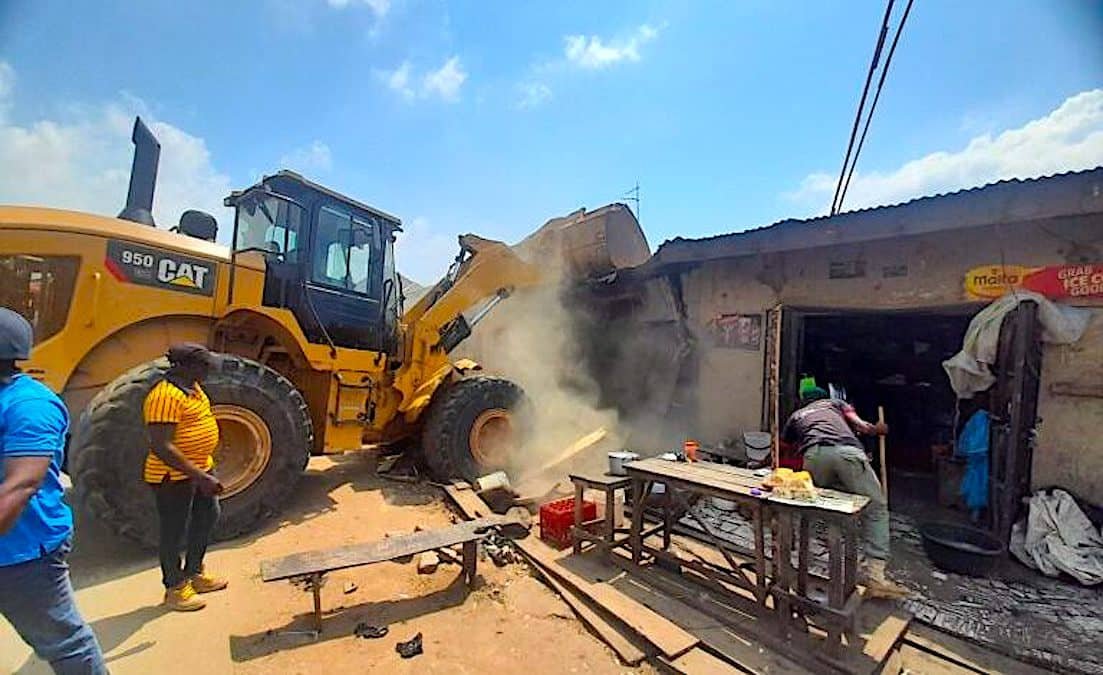
On Sunday, the Onitsha North Local Government Area (LGA) initiated the demolition of alleged illegal structures at the Onitsha Main Market. The government claims this move is aimed at “restoring the original masterplan and improving trading activities” in the sprawling market. Weeks prior, traders and shop owners were given evacuation notices, but many felt unprepared for the scale of the operation.
The demolition began early on Sunday, with bulldozers tearing down marked structures in Park 1, Park 2, and Park 3, as well as in areas like Bright Street, Johnson Street, and Gwomgworo. The process continued into Monday, leaving the once-bustling market in disarray.
Security forces, including military personnel, Nigeria Security and Civil Defence Corps, and state internal security operatives, were deployed to barricade roads leading to the market before the demolition started. Some traders, however, had already taken matters into their own hands, engaging in self-demolition and evacuating their belongings ahead of the planned remodelling.
Concerns Over Rule of Law
In response to the developments, Prince Chris Azor, Chairman of ACSONet, issued a statement expressing deep concern. He emphasized that the group’s primary focus is on the rule of law, citing sections of the 1999 Constitution that vest judicial powers in the courts and require all authorities to obey court decisions.
Azor highlighted the economic significance of the Onitsha Main Market, noting that it serves as a major hub for thousands of families across Anambra State and the South East. He stressed that any intervention in such a critical space must be carefully managed, legally grounded, and discussed openly with stakeholders.
“The presence of armed security personnel and the pulling down of structures while some traders were still trying to salvage goods have created anxiety, anger, and a sense of helplessness,” he said. “Compliance with court orders is not discretionary—it is a constitutional duty.”
Human Cost of the Demolition
The human cost of the demolition has been devastating. Traders who lost their shops and livelihoods described the emotional and financial toll of the events. Rebecca Uche, a mother of two who sells textile materials, shared her story: “I just came back from the hospital; I have a spinal problem. I paid over N2 million for the shop less than six months ago. I had just finished renovating the place few weeks ago when the demolition notice came.”
Another trader, Ozoemenam Opara, explained how a court injunction was obtained to halt the demolition, but the government proceeded regardless. “We thought the court order would stop the exercise, only to wake up and see the demolition in progress,” he said.
Okeke Akasim recounted his experience of being asked for N500 by a security officer before being allowed to approach his demolished shop. “When I got close to my shop, it was already demolished with the wares there, and I collapsed. I later left without a pin from my shop.”
A 58-year-old widow, Francesca Ezeh, expressed her despair: “For the time being, what should we do? How do we feed our children? The most painful aspect of my tragedy is the loan I just took to fortify my business, which I need to repay within a year. We are not averse to developmental projects, but it should come with a human face.”
Calls for De-Escalation and Legal Compliance
ACSONet has called on the Anambra State Government to halt further demolition activities until the matter is resolved in court. The group emphasized that respecting the judiciary will help calm tensions and reaffirm the state’s commitment to constitutional governance.
The situation has left many traders in a state of uncertainty, with no clear path forward. While the government claims it provided ample time for traders to remove their goods, many feel they were not adequately supported or informed.
As the community continues to grapple with the aftermath of the demolition, the call for legal compliance, transparency, and respect for the rights of traders remains urgent. The incident underscores the need for more inclusive and lawful approaches to urban development and infrastructure upgrades.