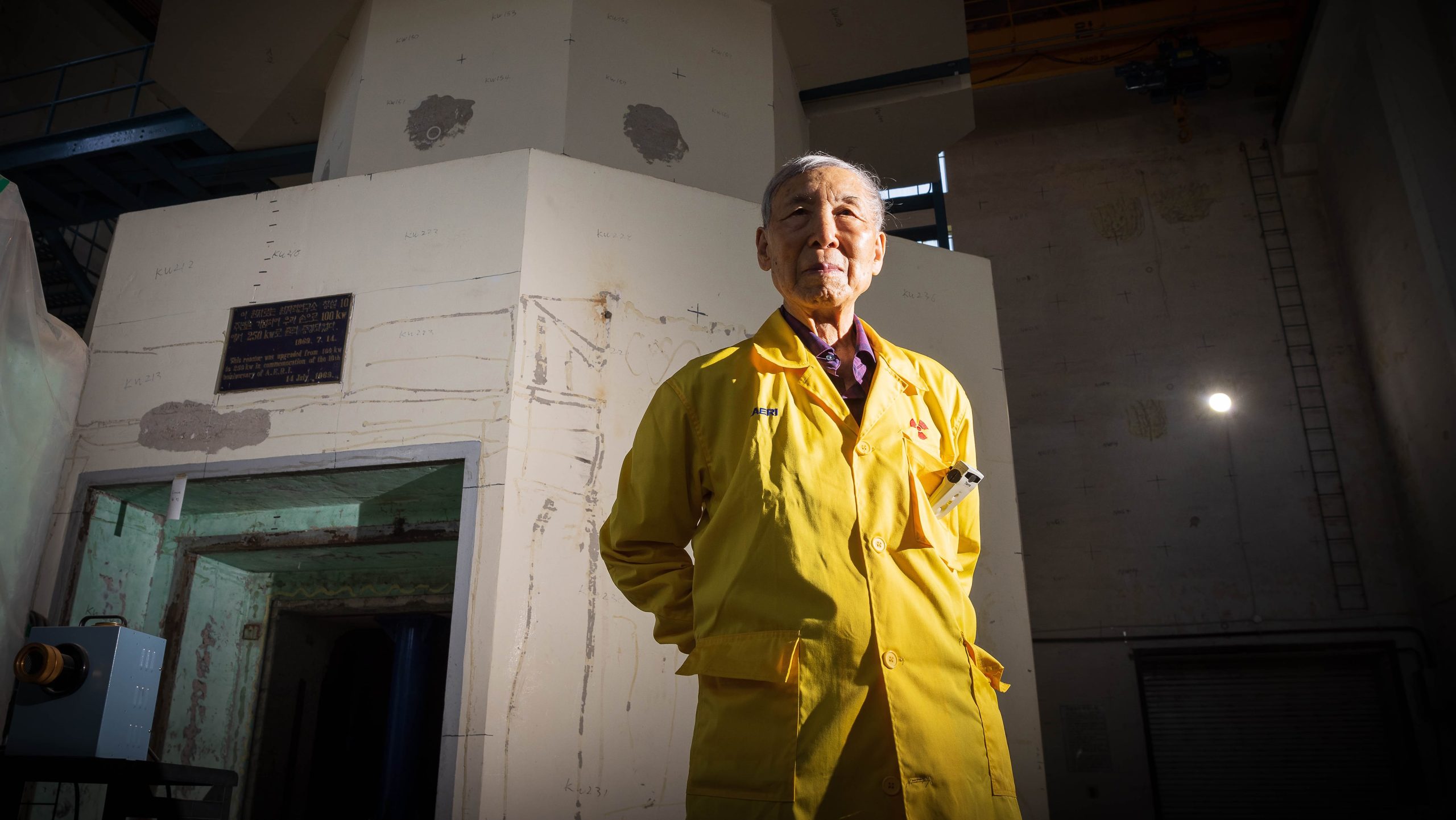
The Life and Legacy of Lee Chang-geon, the “Father of South Korean Nuclear Energy”
Lee Chang-geon, a pivotal figure in the development of nuclear energy in South Korea, passed away on the 6th at the age of 96. Known as the “father of South Korean nuclear energy,” his contributions spanned from the operation of the country’s first nuclear reactor to the selection of the first nuclear power plant site and the development of small reactors. His journey was not only one of technological innovation but also one of personal sacrifice and dedication.
Born in 1930 in Cheonju, North Pyongan Province, Lee moved south with his family in 1947 and settled in Seoul. He attended Paichai High School and enrolled in the Department of Electrical Engineering at Seoul National University in 1949. However, his studies were interrupted by the outbreak of the Korean War in 1950. A senior who felt pity for him while he was starving on the evacuation route recommended he join the Kello unit, an irregular intelligence unit created by the U.S. military to gather intelligence and conduct guerrilla warfare in North Korea.
In this role, Lee received and decoded messages from agents infiltrated into North Korea and sent instructions back in code. He was also responsible for commissioning professors and technicians to design equipment and speedboats needed for infiltration operations. During this time, he lost several comrades, a loss that remained with him for the rest of his life.
Lee’s connection with nuclear energy came by chance. In 1953, after the armistice, a senior at his university led him to study. He met people studying nuclear technology by sharing an English original book in a corner of a warehouse. As the youngest member, he typed the only book all night and made multiple copies. This group, known as the “Nuclear Study Group,” later became key figures in enacting the Atomic Energy Act and establishing the Atomic Energy Research Institute.
Despite the country’s low per capita national income, the Syngman Rhee government invested heavily in sending students abroad for studies, spending 6,000 dollars per person. Lee was among them. In 1959, while preparing to return home after completing his studies at the International School of Nuclear Energy under the U.S. Argonne National Laboratory, he received an urgent order to obtain a driver’s license for the U.S. research reactor “TRIGA Mark-Ⅱ.”
The First Korean to Obtain a Reactor Driver’s License
Although the country decided to bring in this reactor as the first domestic nuclear reactor, there was no one to operate it. Lee postponed his return and focused on preparing for the exam, becoming the first Korean to obtain a reactor driver’s license. He often said, “The government spent as much money on overseas research officers as the weight of each person in gold, so we called each other ‘gold teachers.’” He added, “I worked with the determination and resolution to be an ‘ordinary tree’ that burns itself to bring warmth and light to the ‘gold teachers.’”
The TRIGA Mark-Ⅱ, which began operation under his hands in 1962, became the birthplace of South Korea’s nuclear power technology by training hundreds of nuclear experts. In 1969, it successfully increased the reactor’s output from 100 kW to 250 kW for the first time in the world, drawing significant attention.
Finding the site for South Korea’s first nuclear power plant was also his responsibility. He scoured the entire coastline to find the optimal location in terms of geology, weather, and water resources. Despite being mistaken for a spy due to his dialect and beaten, he finally found the site in Gori, Janganeup, Gijang-gun, Busan, after countless hardships. With the Kori-1 nuclear reactor entering commercial operation in 1978, South Korea became the 21st “nuclear power nation” in the world.
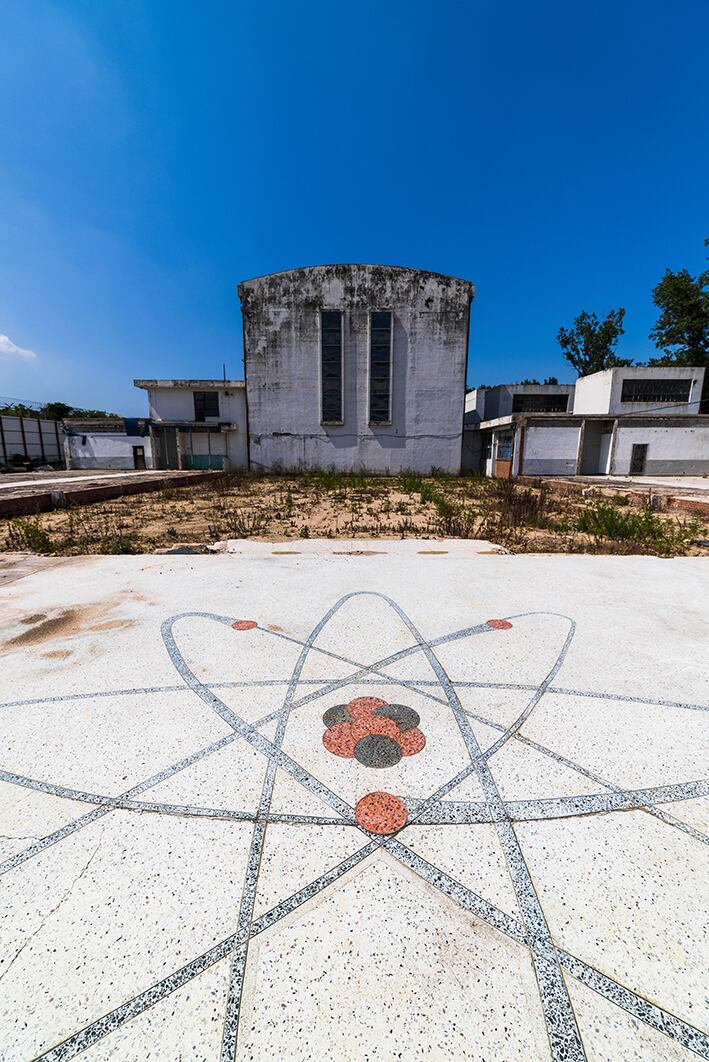
Contributions to Nuclear Power Technology
Later in his career, Lee served as the head of the Korean Nuclear Society, chair of the Korea Electric Power Industry Technology Standards (KEPIC) Executive Committee, and a member of the Atomic Energy Commission, leading the development of nuclear power technology. He laid the foundation for standardizing South Korea’s nuclear power industry, covering power plant design, manufacturing, construction, operation, and decommissioning.
He also contributed to advancing the technology of “SMART,” South Korea’s first domestically developed small reactor, broadening the foundation for the overseas expansion of South Korean nuclear power plants. In 2017, he was selected as a “Science and Technology Merit Person of South Korea” by the government and received the Hongjo Geunjeong Medal and the March 1st Cultural Award.
In 2009, when South Korea successfully secured an order to build four nuclear reactors at the Barakah nuclear power plant in the United Arab Emirates (UAE), marking the country’s first commercial nuclear power plant export, Lee visited the Seoul National Cemetery. At the grave of former President Syngman Rhee, he said, “The government-funded students sent to the U.S. led to today’s nuclear power plant exports.” At the grave of former President Park Chung-hee, he stated, “We planted four hibiscus trees (four reactors) in the Middle East desert.” He also mentioned, “Former President Kim Dae-jung, while serving as the opposition party leader, stated that nuclear power development was necessary despite opposition from inside and outside the party, allowing the nuclear energy project to continue.”
Membership Offers for Newspaper Readers
For newspaper readers, there are various membership options available. One such option offers a monthly fee of 5900 won, with a discounted rate of 2900 won for readers. Members can enjoy access to 8 different newspapers and magazines worth up to 55000 won. Additionally, members receive 7000 points that can be used like cash for shopping, making it an economical choice for avid readers.