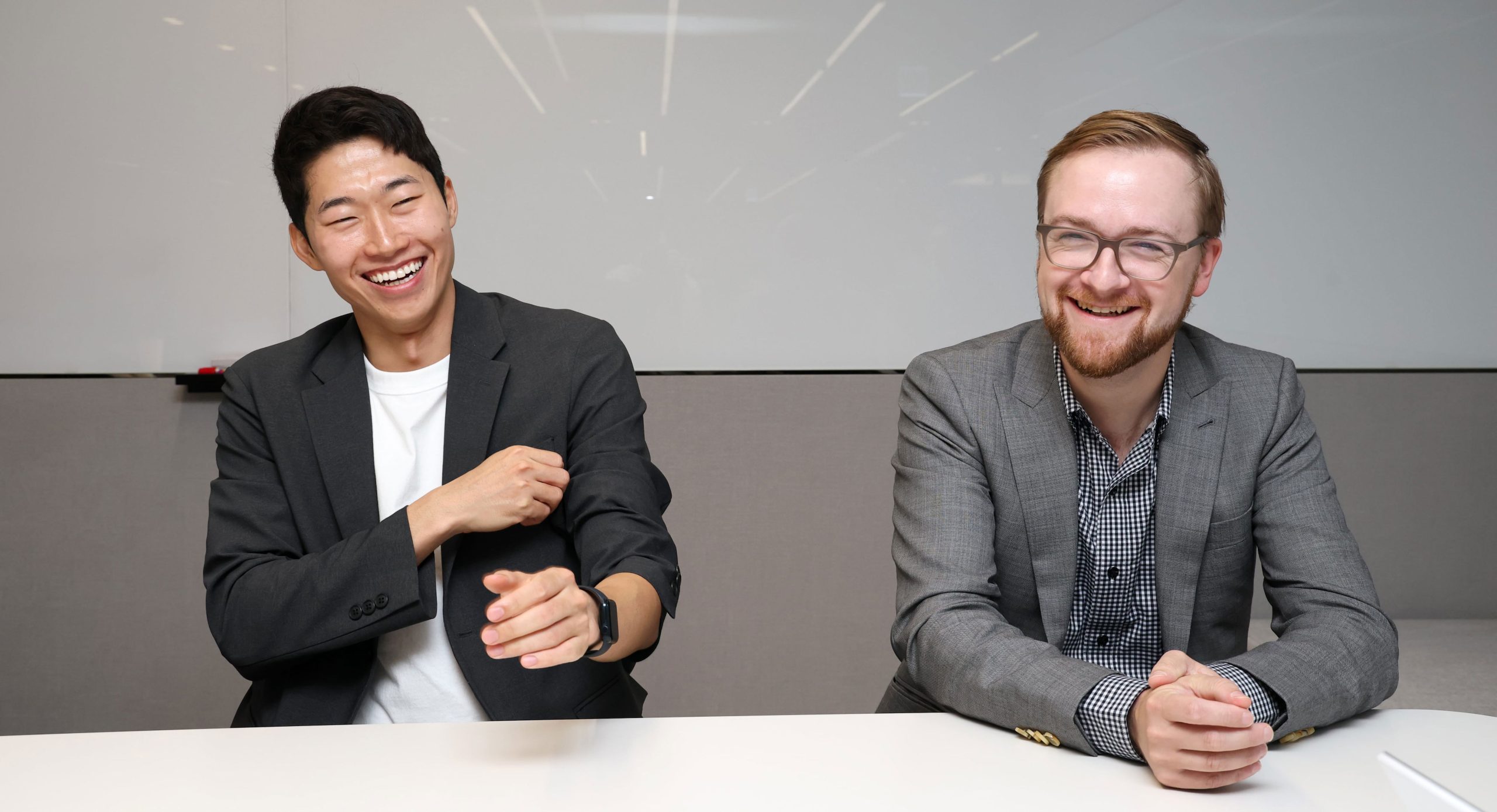
Pascal, a Boston-based cooling technology startup, is developing a technology to replace the gaseous refrigerants used in air conditioners and refrigerators with solid-state refrigerants. Some solid materials change temperature when pressure is applied, and this property is used for cooling. Pascal was founded in 2023 in the laboratory of Professor Jared Mason in the Department of Chemistry at Harvard University. Professor Mason, Adam Slavney, who was a postdoctoral researcher in the lab at the time and now serves as CEO, and Seo Jin-young, who was a doctoral student and now serves as CTO, co-founded the company.
In 2024, C&EN (Chemical & Engineering News), a prestigious journal in the fields of chemistry, materials, and energy published by the American Chemical Society (ACS), listed Pascal among the “10 Startups to Watch.” Seo, the CTO, was named to the ‘Innovators Under 35’ list selected by MIT Technology Review this month.
In 2024, the company secured its first investment of 8 million dollars from U.S. venture capital firm Engine Ventures. Recently, it additionally raised approximately 6.5 million dollars from domestic and international investors, including LB Investment and Sazze Partners. The Chosun Ilbo recently met with the two individuals who visited Korea. The following is a question-and-answer session.
◇Utilizing Solid-State Refrigerants in Refrigerators and More
– What is the purpose of this visit to Korea?
Slavney, CEO: “We are creating a new type of air conditioning and refrigeration technology. South Korea has a strong industry in this field. We came to build relationships. When we evaluated production capabilities and technological expertise, South Korea was the best fit compared to the U.S., China, and Japan. We met with companies across the board, from those producing core components like compressors, valves, and ducts to those manufacturing complete air conditioners and refrigerators.”
– What are solid-state refrigerants?
Seo, CTO: “Refrigerants are materials that change temperature when pressure is applied. Until now, gases like Freon, carbon dioxide, and propane have been used. However, gaseous refrigerants pose risks of fire, contribute to global warming, and raise health and safety concerns. They are also subject to heavy regulation. We use solids that similarly change temperature in response to pressure. When the solid is compressed and then allowed to expand, it becomes cold, and this cooling effect can be used to chill refrigerators or rooms. The same volume can store more energy than gases, making the process more efficient.”
– Can you explain this more specifically?
Seo, CTO: “Think of a laptop battery. We create solid-state refrigerant modules. Depending on how many modules are stacked, they can function as air conditioners, heat pumps (devices that transfer heat for both cooling and heating), or refrigerators. Although solid-state refrigerants may sound unfamiliar, they have a long history. NASA extensively researched them in the 1970s. However, at that time, there was less regulation and fewer environmental concerns, so there was no pressing need to commercialize solid-state refrigerants. Recently, many young scholars have taken an interest in this field.”
– This technology could be applied to data centers as well.
Slavney, CEO: “Data centers require significant cooling and must be highly efficient. They are an excellent market for us. However, data center equipment is quite large, and we have not yet developed such systems. Scaling up is a matter of time and capital.”
– Who are your competitors?
Slavney, CEO: “There are a few small companies in Germany, the U.K., and elsewhere working on similar technologies. Our strength lies in being able to achieve cooling at lower pressures. Instead of using massive presses, our team of 15 employees works seamlessly from materials to finished products using commercially available components. We are also filing patents.”
◇Connecting with an Investor Just One Stop Away
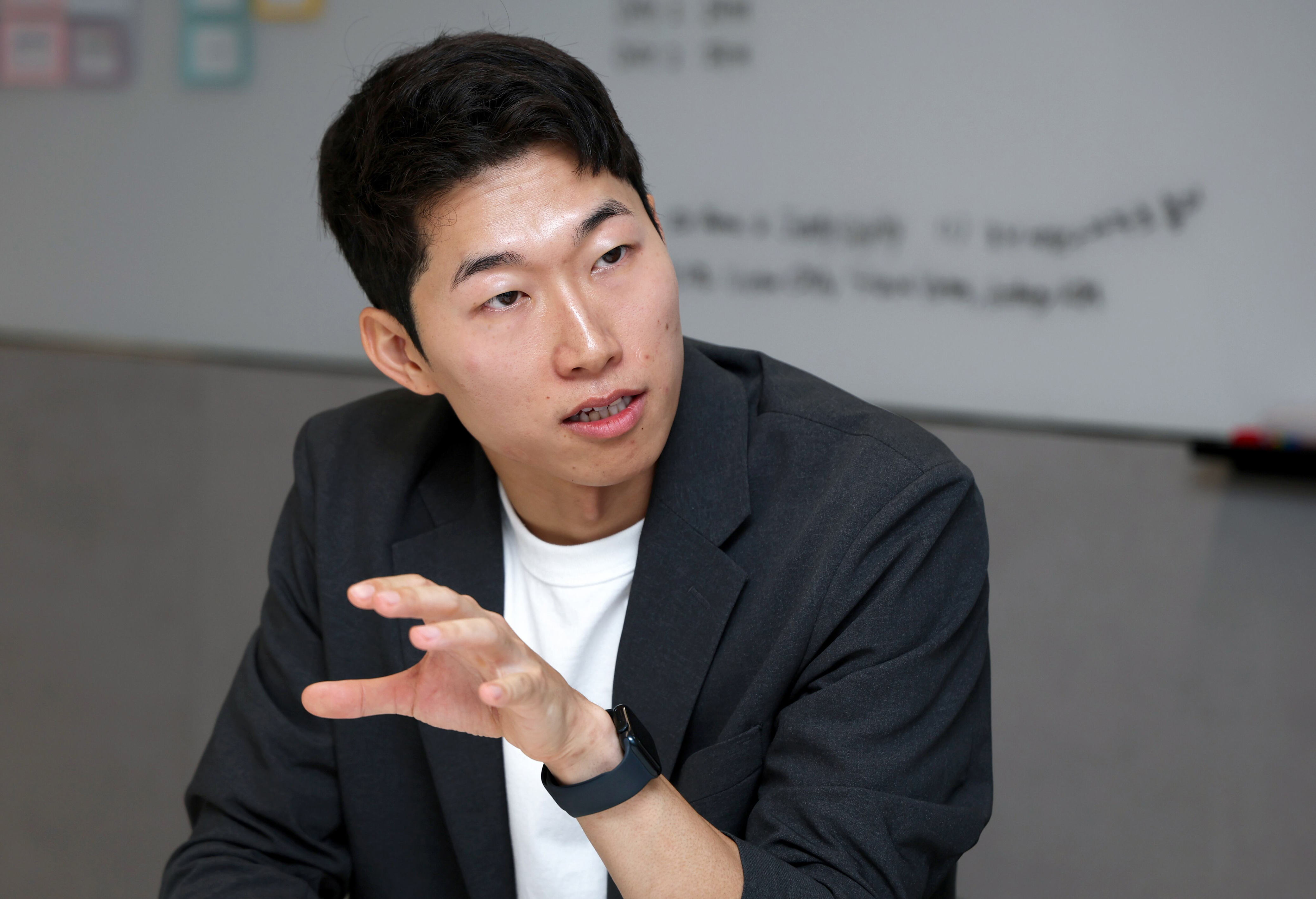
Seo, the CTO, completed elementary and middle school in Ilsan, Gyeonggi Province, graduated from the Korea Science Academy of KAIST in Busan, and earned a bachelor’s degree in chemistry from Seoul National University. He entered Harvard University’s doctoral program in 2018. After completing his Ph.D. in five years, he immediately co-founded the company with Slavney, the CEO.
– How did the two of you meet?
Seo, CTO: “I was one of the first students in Professor Mason’s lab. Slavney, the CEO, was one of the first postdoctoral researchers there and served as a mentor. During the COVID-19 shutdowns, we both struggled a lot, but we came to understand each other deeply and eventually co-founded the company.”
– Why did you start researching solid-state refrigerants?
Seo, CTO: “My Ph.D. thesis was on this topic, and initially, I had no intention of starting a company. The concept was interesting, and I researched the materials purely from a scientific perspective. The cooling principles in today’s refrigerators and air conditioners have remained almost unchanged for nearly 150 years. Their efficiency is also approaching physical limits. However, with the energy transition, the cooling market is growing, and the landscape is changing. I thought there was an opportunity to try something new with novel materials and methods.”
– How did you secure investments?
Seo, CTO: “Slavney, the CEO, wanted to build a refrigerator using this technology. We created the first prototype in the lab, but it didn’t work well at first. Harvard has staff who assist with technology transfer and entrepreneurship. They noticed our work and connected us with venture capitalists. Engine Ventures is just one subway stop away from Harvard. Being part of the same ecosystem helped us connect fortuitously. The timing aligned perfectly with when I was considering my career path before graduation.”
– What kind of firm is Engine Ventures?
Slavney, CEO: “They primarily invest in companies that emerge from MIT and Harvard. They are a significant player in Boston, managing over 1 billion dollars in assets and having established three funds. We are deeply grateful for their early belief in us and for leading our initial investment.”
◇“Korean Companies Are Fast and Direct”
– Does South Korea have the environment to nurture such technology?
Seo, CTO: “South Korea has many talented individuals in this field. Emerging mechanical engineering researchers have begun studying it. There are first-generation scholars who researched cryogenic cooling at institutions like KAIST. Government-funded research institutes, such as the Korea Institute of Machinery & Materials, are continuously exploring new cooling technologies. Pascal, being a U.S. company, can secure more and faster investments. Combining both strengths creates synergy. We recently began collaborating with Professor Sung-Kon Kim of Sungkyunkwan University’s Department of Mechanical Engineering. Results should start emerging around next year.”
– How has working with Korean companies been?
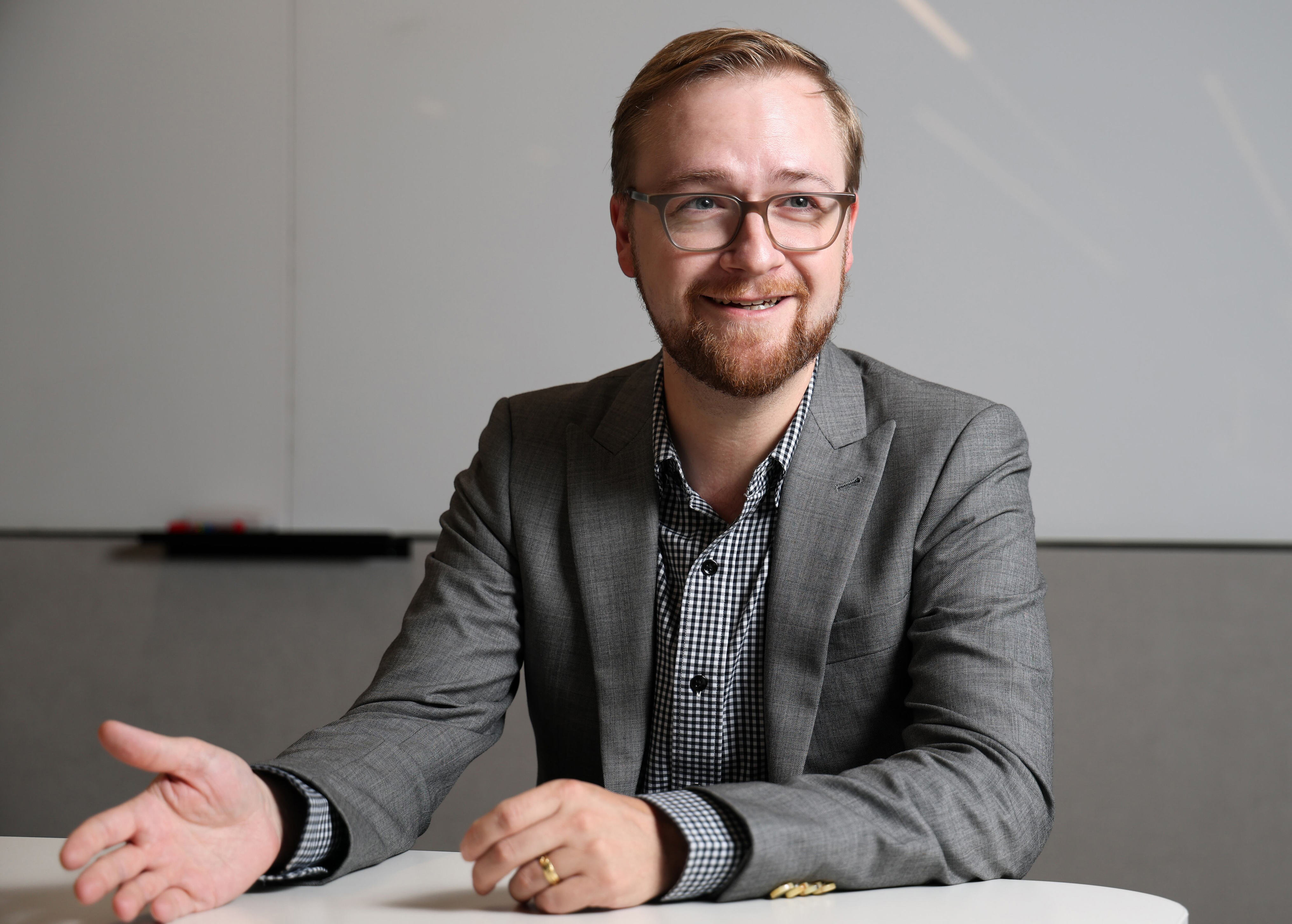
Slavney, CEO: “I am a very impatient person. Korean companies are the same. If they think something is important, they want to start immediately, or even yesterday. For a startup, time is the only resource we have. We must move as quickly as possible. Frankly, U.S. companies tend to drag their feet, but Korean companies do not. They are direct and communicate swiftly. We were able to save time by quickly identifying what was important.”
– What are your future goals?
Slavney, CEO: “Our technology deserves to be in the world. I asked myself, ‘If not us, then who?’ The answer was ‘no one.’ So we must do it. It would bring us great joy to see this technology used in as many places as possible.”
Seo, CTO: “I want to see technology that originated from materials science actually reach people’s hands. Personally, I am curious to see how far this technology can go. I wonder how it will contribute over the next 100 years.”
- 월 5900원 멤버십, 신문 독자에게는 2900원, 조선멤버십
- 55000원 상당의 신문-잡지 8종 마음껏 보기, 조선멤버십
- 현금처럼 쓸 7000포인트 받아 알뜰한 쇼핑, 조선멤버십

Related posts:

Film depicting first lady’s shooting sparks historical distortion controversy

Ambassador Roh Jae-hun optimistic on full-scale Korea-China cultural revival


Majorca vs Menorca vs Ibiza: Which of Spain’s Balearic Islands should you visit?

Hungary’s reckoning with Orban’s corrupt system picks up speed with high-profile arrests