The Growing Reluctance of Informal Businesses to Take Credit in Nigeria
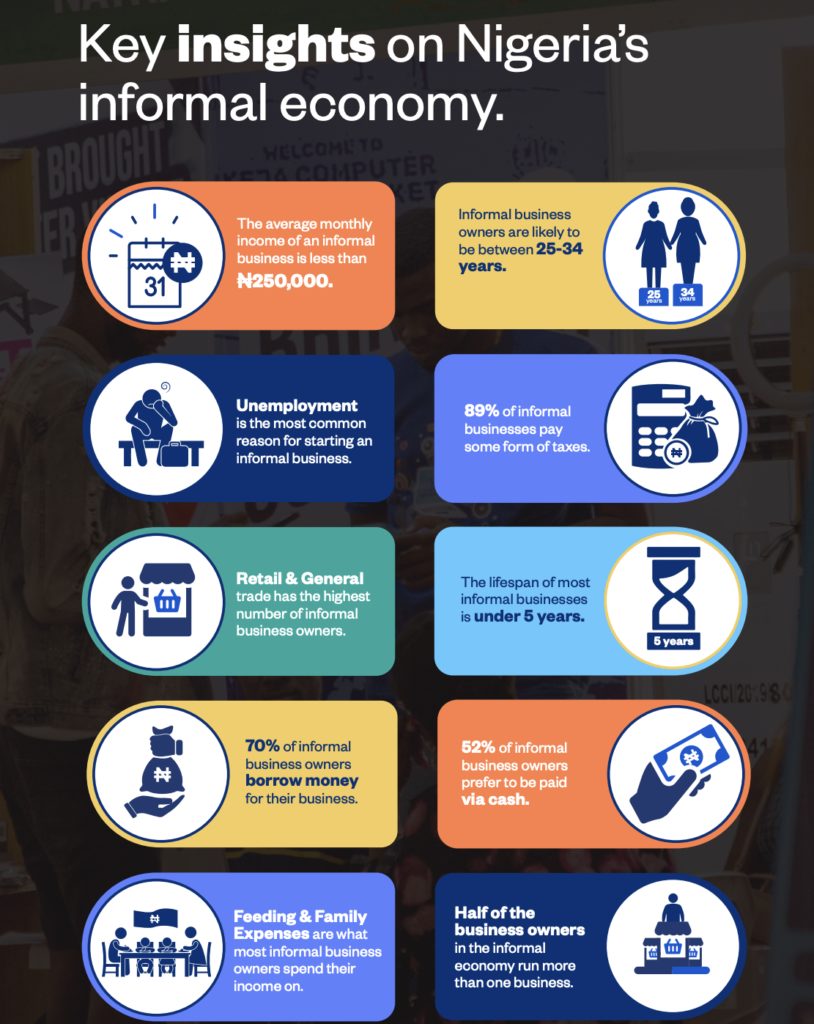
In recent years, more informal businesses in Nigeria have been steering clear of credit due to rising interest rates and stricter lending conditions. This trend is highlighted in the 2025 Informal Economy Report by Moniepoint, which reveals that 51 per cent of respondents have never taken a loan and do not intend to do so, a significant increase from 30 per cent in the previous year.
The report suggests that this shift indicates a decline in credit appetite across the informal and small business landscape. A primary factor behind this change could be the tightening of lending conditions and the overall higher interest environment. The report also emphasizes that fear of being unable to repay loans is the leading reason for avoiding borrowing, cited by 36 per cent of operators.
Other reasons include:
- About 26 per cent of respondents stated their businesses do not need loans.
- 13 per cent blamed high or unfavourable repayment terms.
- Another 11 per cent preferred to use savings or personal funds for business needs.
Women were found to be more likely than men to avoid borrowing due to concerns about repayment and interest costs.
Among businesses that access credit, most use it to expand operations. About 47 per cent of borrowers reported spending loans on equipment, renovations, or opening new outlets, while 28 per cent used funds to purchase stock. A further 12 per cent relied on credit to cover daily expenses, with smaller shares using it for emergencies or personal needs.
Sources of Credit for Informal Businesses
Microfinance banks are now the most common source of loans for informal businesses, accounting for 22 per cent of borrowing. Digital banks and lenders followed with 20 per cent, and commercial banks with 18 per cent. Cooperatives made up 13 per cent, while family, friends, thrift groups, and private lenders provided smaller shares.
The report noted that women continue to rely more on informal sources than men. Access to large loans remains rare, with one in three businesses stating the highest loan they ever received was N100,000 or less, while only 6 per cent reported loans above N1m. Male-owned businesses were found to be twice as likely as female-owned firms to secure loans above that level.
Government Support for the Informal Economy
Speaking at the launch of the event in Abuja, the Special Adviser to the President on Job Creation and Micro, Small, and Medium-sized Enterprises, Temitola Adekunle-Johnson, lamented the high costs of borrowing in the country. He urged other financial service providers to design products that ease access to finance for small businesses.
Also speaking, the Minister of Industry, Trade and Investment, Dr. Jumoke Oduwole, emphasized the government’s commitment to supporting Nigeria’s informal economy as a key driver of innovation, trade, and continental integration. She described informal businesses as the “heartbeat of Nigeria’s transformation” and central to the country’s economic resilience.
Oduwole praised entrepreneurs across the country for sustaining livelihoods and positioning Nigeria globally. She noted that over 39 million MSMEs contribute close to half of national output and employ more than 80 per cent of the workforce. The minister also highlighted the government’s efforts to expand access to markets and finance for micro, small, and medium enterprises.
Expanding Opportunities Through AfCFTA
Nigeria is positioning itself to harness opportunities in the African Continental Free Trade Area (AfCFTA), which represents a 1.4 billion-person regional market. The government has already integrated AfCFTA tariff concessions into trade routes and launched a dedicated air cargo export corridor to Uganda to fast-track Nigerian products into regional markets.
Oduwole also pointed to targeted interventions aimed at empowering small businesses, including the SMEDAN Enterprise Support Programme and the Women Exporter to Digital Economy Fund, a $50m programme launched in August to provide female entrepreneurs with tools, networks, and knowledge to participate in global value chains.
Challenges and Policy Interventions
The Director-General of the Small and Medium Enterprises Development Agency of Nigeria, Charles Odii, said that Nigeria’s informal economy remains central to livelihoods but noted that taxes and high operating costs continue to discourage formalisation. He explained that the first edition of the report sampled two million businesses, while the new study covered no fewer than five million.
Odii welcomed the recent tax law signed by President Bola Tinubu, which he believes will help more small businesses come into the formal net. He also disclosed that SMEDAN had launched new interventions to ease the cost of doing business, including co-working spaces equipped with machinery and subsidised logistics discounts of up to 50 per cent.
The Role of the Informal Economy
Speaking earlier, the Managing Director of Moniepoint Microfinance Bank, Mr. Babatunde Olofin, emphasized the importance of the Informal Economy Report as a vital tool for understanding Nigeria’s most defining economic sector. He described the informal economy as the “pulse” of the nation, stressing that it sustains millions of households despite often being overlooked.
Olofin explained that the report was not just a study but a mirror of economic reality, backed by the International Finance Corporation, the Federal Ministry of Industry, Trade and Investment, SMEDAN, and other partners. He called for collective action to transform the findings into lasting impact, ensuring that vulnerable households are not left behind.