A New Era for Nigeria’s Housing Sector
The recent validation of the National Mortgage Industry Policy and the National Housing and Built Environment Regulation Policy marks a significant step forward in addressing the challenges facing Nigeria’s housing sector. These policies aim to reposition the industry by introducing a range of reforms, including the reforming of the Federal Mortgage Bank of Nigeria (FMBN), expanding access to the National Housing Fund (NHF) for the informal sector, establishing a National Housing Industry Regulatory Commission, licensing developers and estate agents, ensuring escrow protection for homebuyers, and creating a National Housing Data Observatory.
These initiatives reflect a strong commitment to strengthening housing finance and restoring confidence in the sector. However, for these reforms to be effective, it is essential to take a broader look at the underlying constraints that have hindered progress in the past.
Understanding the Complexities of Housing Finance
Housing finance is a complex ecosystem, and lasting reforms require a comprehensive diagnosis of the issues at hand. As the saying goes, “the time spent preparing to do a thing is often more important than the doing of the thing itself.” A holistic assessment ensures that policy interventions address not only the symptoms of the housing deficit but also its root causes.
While the proposed initiatives are commendable, it is important to recognize that Nigeria’s housing deficit cannot be solved by government institutions alone. Public entities such as the Federal Mortgage Bank of Nigeria (FMBN), the Federal Housing Authority (FHA), Family Homes Funds, and the Nigeria Mortgage Refinance Company (NMRC) have distinct but complementary mandates within the housing value chain. They operate in an environment characterized by macroeconomic instability, unfavorable legal frameworks, cumbersome land administration, inadequate infrastructure, and limited access to long-term capital.
Strengthening Institutional Capacity
Strengthening institutional capacity remains a national priority. For instance, the FMBN’s paid-up capital stands at only ₦2.56 billion, which is a modest amount for an institution expected to support housing finance in a country with an estimated housing deficit of over 15 million units. This is particularly striking when compared to the Central Bank of Nigeria’s banking recapitalization program, which requires commercial banks with international licenses to maintain a minimum capital base of ₦500 billion.
Although FMBN and commercial banks have different mandates, the comparison highlights the scale of resources needed to support a modern financial system. Recapitalizing FMBN, strengthening other government housing institutions, and reviewing the minimum capital requirements for Primary Mortgage Banks would significantly enhance the industry’s ability to mobilize long-term funds and finance affordable housing.
Legal Reforms: A Critical Component
Legal reforms are equally critical. The Land Use Act of 1978 continues to impede housing delivery through cumbersome land administration and the requirement for Governor’s Consent. Mortgage perfection—the legal process through which lenders secure their interest in financed properties—often takes months or even years, increasing transaction costs and delaying mortgage disbursements.
Since a perfected mortgage constitutes the lender’s primary security, simplifying title registration and reducing the cost and time required for perfection would significantly improve access to mortgage finance. Nigeria also urgently needs a modern and efficient foreclosure law. Mortgage lending thrives where lenders can enforce security within a predictable legal timeframe while safeguarding borrowers’ rights. The absence of an effective foreclosure framework increases credit risk, discourages long-term investment, and ultimately raises the cost of mortgage lending.
Addressing Housing Affordability
Housing affordability remains one of the greatest obstacles to homeownership. Rising inflation, exchange-rate depreciation, high interest rates, and escalating construction costs have pushed decent housing beyond the reach of many Nigerians. The government can substantially reduce development costs by making serviced public land available for mass housing developments.
Providing land with roads, electricity, water supply, and drainage would significantly lower project costs and enable developers to deliver homes at prices that average Nigerians can afford. Beyond reducing costs, there is also a need to embrace affordable housing models that reflect the income realities of Nigerians.
Affordable Housing Models
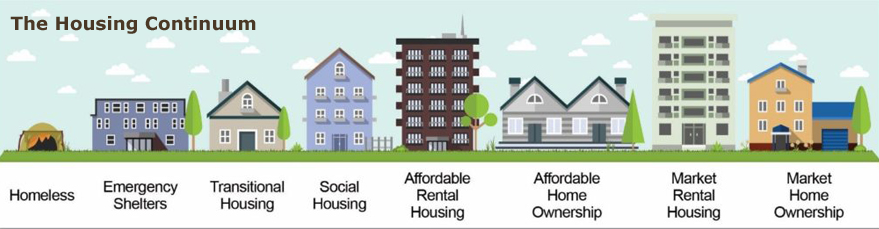
Incremental housing, rent-to-own schemes, cooperative housing, site-and-services developments, public-private partnerships, modular and prefabricated construction, and greater use of locally sourced building materials can all contribute to expanding access to decent housing. Affordable housing is not merely about building cheaper houses; it is about developing housing solutions that align with the purchasing power of different income groups.
A Supply-Side and Demand-Side Challenge
Ultimately, Nigeria’s housing challenge is both a supply-side and a demand-side problem. On the supply side, developers face expensive land, inadequate infrastructure, cumbersome land administration, weak legal frameworks, and limited long-term funding. On the demand side, households contend with declining purchasing power, inflation, affordability constraints, and high borrowing costs, making it difficult to qualify for or sustain mortgage repayments.
Sustainable homeownership therefore requires policies that simultaneously expand housing supply, improve affordability, and strengthen housing finance. Equally important is maintaining sound lending standards. Expanding access to mortgage finance should never come at the expense of prudent credit risk appraisal.
Conclusion
Careful assessment of borrowers’ repayment capacity, income stability, cash flows, collateral quality, and overall creditworthiness remains fundamental to protecting capital, preserving asset quality, and ensuring the long-term sustainability of a viable mortgage industry.
The Federal Government’s proposed reforms provide a promising foundation for repositioning Nigeria’s housing sector. Their ultimate success, however, will depend not only on the quality of the policies themselves but also on addressing the structural constraints that have long limited the effectiveness of the mortgage ecosystem. Strengthening housing institutions, reforming land administration, enacting an efficient foreclosure framework, improving housing affordability, expanding long-term funding, and creating an enabling environment for public and private investment must advance together.