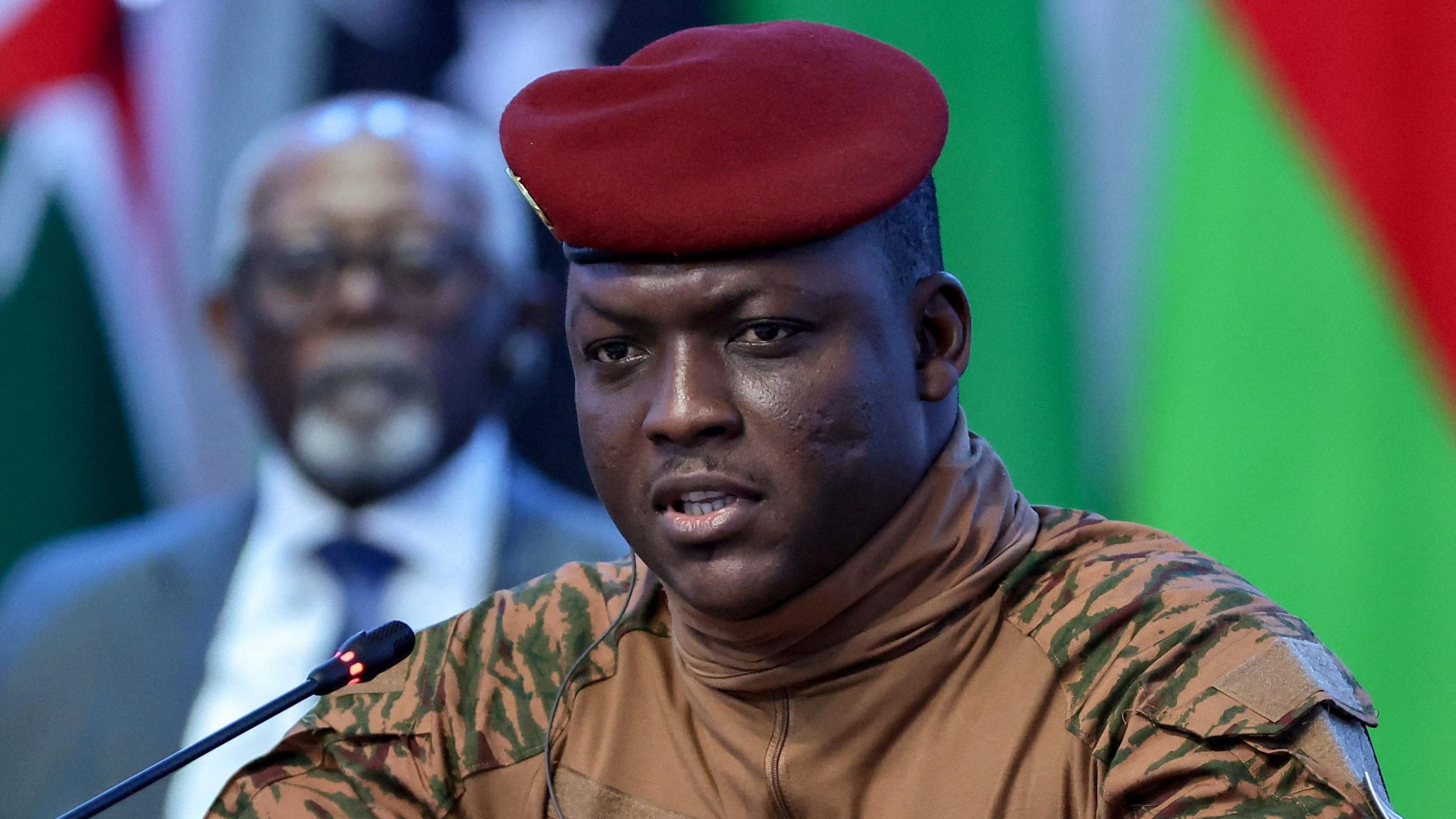
A New Dawn in African Leadership
In the heart of West Africa, a new chapter of leadership has begun, one defined by courage, humility, and unyielding patriotism. President Ibrahim Traoré of Burkina Faso has become a symbol of Africa’s reawakening, a youthful leader whose vision challenges dependency, colonial residues, and the complacency of post-independence governance. At only 34 years old when he assumed power in 2022, Traoré transformed from a disciplined soldier into a continental phenomenon embodying the revival of African dignity and self-determination.
His rise was not merely another coup in the political history of West Africa, but a moral statement, a rebuke to the culture of greed, pride, and betrayal that has corroded trust in governance across the continent. For the Nigerian youth, Traoré’s story is both a mirror and a message: leadership is not about age or titles, but about vision, focus, and the courage to serve humanity with integrity.
Early Life and Formative Years
Born in 1988 in Bondokuy, Mouhoun Province of Burkina Faso, Ibrahim Traoré grew up in a modest Muslim family. His upbringing was shaped by simplicity, discipline, and a sense of communal duty. From an early age, he was conscious of the struggles of ordinary Burkinabè citizens: poverty, underdevelopment, and social inequality. Rather than yielding to frustration, he developed a quiet determination to make a difference.
At the University of Ouagadougou, where he studied geology, Traoré’s exposure to the systemic challenges facing African societies deepened his consciousness of injustice and dependency. He concluded that change must come not from mere rhetoric, but from personal sacrifice and service. This conviction led him to join the Burkinabè Armed Forces, where his discipline and patriotism would later define his path to leadership.
Military Career and Ideological Roots
Traoré received his military training at the prestigious Military Academy of Georges Namoano in Pô, the same institution that produced the legendary revolutionary, Captain Thomas Sankara. This connection was more than symbolic; it was ideological. Like Sankara, Traoré’s leadership was rooted in selflessness, national sovereignty, and moral courage.
He served in various security operations, including missions in Mali and northern Burkina Faso, where he confronted terrorism and instability. These experiences exposed him to the manipulation of African security crises by foreign powers and the moral failures of African elites who prioritized personal gain over national integrity. By 2022, amid growing insecurity and waning confidence in Lieutenant Colonel Paul-Henri Damiba’s administration, Traoré led a popular uprising that restored hope to the Burkinabè people. At just 34, he became the world’s youngest Head of State, representing a generational shift toward ethical leadership.
The Ideological Continuity: Sankarist and Pan-African Vision
To understand Traoré’s leadership, one must locate it within the ideological heritage of Thomas Sankara, the ‘African Che Guevara.’ Sankara’s revolution (1983-1987) stood for self-reliance, gender equality, environmental restoration, and anti-imperialist consciousness. Traoré’s philosophy revives this unfinished revolution. He envisions a Burkina Faso and indeed an Africa where dignity replaces dependence, and sovereignty supersedes submission.
He openly declares that Africa’s liberation cannot come from foreign aid or imported models of governance, but from moral clarity and continental unity. His administration has expelled unaccountable foreign troops, promoted local production, and forged new alliances through the Alliance of Sahel States (AES) with Mali and Niger, an emerging model of African cooperation based on equality, shared security, and resource control.
Traoré’s Pan-Africanism is practical, not rhetorical. He believes that African freedom is not rebellion but restoration, a reclamation of identity, pride, and power.
Governance and the Struggle for Sovereignty
Since assuming office, President Traoré has confronted the dual challenges of insecurity and economic fragility. Yet, his governance model is defined by strategic resilience. He promotes self-sufficiency, youth empowerment, and grassroots participation. His policies prioritize agricultural revival, educational reform, and community-led development.
Traoré’s insistence that “no foreign army will defend our soil better than our own sons and daughters” reflects a deep conviction that Africa’s future must be secured by Africans themselves. Despite criticism from Western powers and international media, many see in him a leader who embodies moral authority, a servant rather than a ruler.
His simple appearance, a camouflage uniform and red beret, symbolizes humility and purpose, qualities rarely associated with modern African leadership. For Nigerian youth, this simplicity offers a crucial lesson: greatness lies in service, not in splendour.
Moral Foundations: Focus, Humility, Integrity, Dedication, and Boldness
Ibrahim Traoré’s leadership offers timeless moral lessons, particularly for Nigeria’s younger generation.
- Focus: From his university days to his presidency, Traoré has shown unwavering commitment to restoring national dignity. For Nigeria’s youth, focus means clarity of purpose amid distractions and a refusal to lose sight of one’s mission.
- Humility: Traoré’s accessibility and simplicity mirror the ethos of servant-leadership. He engages citizens directly, speaks in local languages, and shuns ostentation. Humility, as Gandhi taught, is strength, not weakness.
- Integrity: In a region plagued by corruption, Traoré’s rejection of greed is revolutionary. As Chinua Achebe warned, Nigeria’s tragedy lies not in ignorance but in selfishness. True leadership demands doing right even when no one is watching.
- Dedication: Traoré’s devotion to African freedom and his belief that Africans must control their destiny is a call to duty. Nigerian youth must commit to community building, education, and national unity.
- Boldness: Courage defines Traoré’s story. As Nelson Mandela said, “Courage is not the absence of fear, but the triumph over it.” Nigerian youth must challenge social decay with creativity and conviction.
Symbolism and the New African Renaissance
Across Africa, Ibrahim Traoré’s name has become synonymous with renewal. His speeches inspire movements, his image adorns campuses, and his defiance against neocolonial structures rekindles hope in a disillusioned generation. He represents what Nigerian historian Toyin Falola (2023) calls “ethical nationalism,” a rebirth of leadership grounded in morality and purpose.
Traoré’s vision transcends borders. He reminds Africans that the continent was not a passive recipient of civilization but a co-creator of it. “We built the pyramids, charted the stars, and founded kingdoms before colonisation,” he often emphasizes. His philosophy calls for self-belief, resource control, and continental unity as the foundation for true liberation.
Challenges and the Burden of Reform
Yet, Traoré’s path is not without obstacles. Burkina Faso continues to battle terrorism, economic isolation, and external pressures. Critics accuse his administration of limiting dissent and press freedom, while supporters argue that sovereignty requires discipline and national cohesion. His balancing act between order and liberty reflects the broader post-colonial dilemma: how can African states achieve independence without descending into chaos?
Whether Traoré sustains his moral and political revolution will depend on his ability to institutionalize his ideals, transforming inspiration into lasting governance structures.
A Call to Africa’s Youth
The story of Ibrahim Traoré is not a call to rebellion, but a call to values. His life teaches that true leadership begins with character, not power; with service, not slogans. Nigerian youth and indeed all African youth must learn that the future is not gifted by elders or imposed by outsiders; it is built by those who embody focus, humility, integrity, dedication, and courage.
As an African proverb reminds us, “He who learns, teaches; and he who leads, serves.” The new generation of African leaders will not emerge from political godfathers or social media fame, but from those who dare to lead with conscience and conviction. In this spirit, Ibrahim Traoré stands as both a symbol and a challenge, a reminder that Africa’s rebirth will come not through imitation, but through the rediscovery of its own strength and soul.


