The Tragedy and the Struggle for Peace
Thousands of people gathered in southern Israel on Tuesday to mourn the victims of the devastating attack that occurred two years ago, which marked the beginning of a war that has left deep scars on the region. While the country commemorates this tragic milestone, Israel and Hamas continue to engage in indirect peace talks in Egypt, seeking a resolution to the ongoing conflict.
The main memorial event is being organized by the bereaved families, separate from a government-organized ceremony scheduled for next week according to the Hebrew calendar. This division highlights the deep divisions within Israeli society regarding Prime Minister Benjamin Netanyahu’s leadership, with many blaming him for the failure to secure a ceasefire that would free the remaining hostages held by Hamas.
In the Gaza Strip, where Israel’s military operations have resulted in the deaths of tens of thousands of people and the destruction of entire towns and cities, those who can are fleeing another Israeli invasion of Gaza City. Others are choosing to stay in place, unable to make the arduous and costly journey south.
The Worst Attack in Israel’s History
Two years ago, thousands of Hamas-led militants launched a surprise attack on southern Israel, resulting in one of the worst attacks in the country’s history. They stormed army bases, farming communities, and an outdoor music festival, killing approximately 1,200 people, mostly civilians, including women, children, and older adults.
Approximately 251 people were taken hostage during the attack, with most of them released through ceasefires or other agreements. However, 48 hostages remain in Gaza, with around 20 believed to be still alive. Hamas has stated that it will only release these hostages in exchange for a lasting ceasefire and an Israeli withdrawal. Netanyahu has vowed to continue the war until all captives are returned and Hamas is disarmed.
This attack set off a chain of events that led Israel into conflict with Iran and its allies across the region, including Lebanon’s Hezbollah, which suffered major losses. The United States joined Israel in attacking Iran’s military and nuclear program in a 12-day war in June.
A Memorial at the Scene of a Massacre
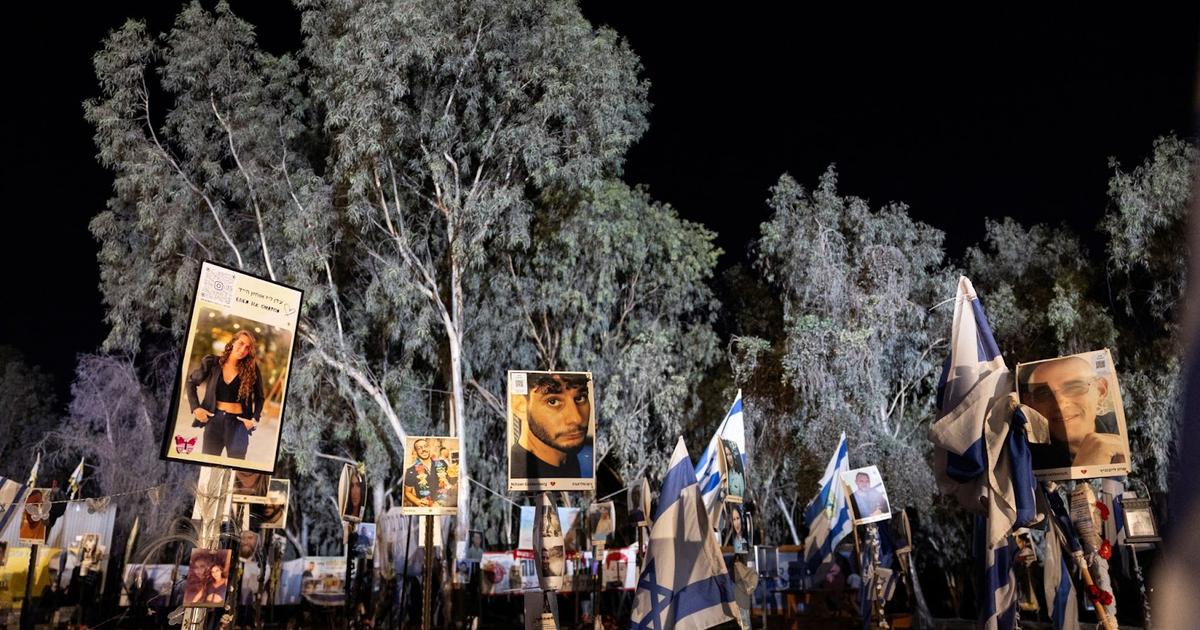
The Nova music festival, located in the border community of Reim, was one of the sites affected by the attack. Nearly 400 Israelis were killed and dozens abducted from the festival. Over the last two years, the site has become a memorial, with portraits of the kidnapped and fallen affixed to Israeli flags.
There is no official ceremony at the Nova site due to the Jewish holiday of Sukkot, which coincides with the anniversary. Nevertheless, scores of people gathered at the site to share memories of relatives and friends who were killed. They wove through hundreds of photos encircling the spot where the DJ booth stood. At 6:29 am, the exact time the attack began, the same track that revelers were listening to at the time was paused for a moment of silence.
People embraced and spoke of their loss. Alon Muskinov, 28, who was at the festival and lost three of his closest friends, said the survivors live with the horrors of that day. “We are reliving this every day anew, every day we remember them,” he said.
Yehuda Rahmani, whose daughter Sharon — a police officer at the festival — was among those killed, visits the Nova site daily, to be at the last place where she was alive. He continues to hope he will run into a survivor who could tell him about his daughter’s last moments. He is angry at the government for not launching an inquiry into security failures of that day.
Ongoing Conflict and International Tensions
Meanwhile, explosions echoed from Gaza and smoke billowed over the strip. The army reported a rocket was launched from northern Gaza in the morning, but no damage or injuries were reported.
In Tel Aviv, the main memorial ceremony got underway, organized by Yonatan Shamriz, whose brother Alon was among three hostages mistakenly killed by Israeli forces after they escaped captivity early in the war. Shay Dickmann, who lost her aunt outside her house in Kibbutz Be’eri on the day of the attack while her cousin, Carmel Gat, was taken hostage by Hamas and killed 11 months later, said all everyone wants is for the war to end.
“There is a deal on the table, there is an opportunity to end this war and bring everybody back home,” she said. “We all deserve it, we deserve it, our neighbors deserve it, we want this war to end and all to come back to their homes.”
Discussions on a Potential Peace Plan
In neighboring Egypt, in the resort of Sharm el-Sheikh, Israel and Hamas held indirect talks Monday to discuss U.S. President Donald Trump’s peace plan. The talks were to continue Tuesday.
The war has already killed over 67,000 Palestinians, according to Gaza’s Health Ministry, part of the Hamas-run government, which does not specify how many were civilians or combatants. It says women and children make up around half the dead, and many independent experts say its figures are the most reliable estimate of wartime casualties.
Israel’s offensive has displaced around 90% of Gaza’s population of some 2 million, often multiple times, and restrictions on humanitarian aid have contributed to a severe hunger crisis, with experts saying Gaza City is experiencing famine.
Experts and major rights groups have accused Israel of genocide, and the International Criminal Court is seeking the arrest of Netanyahu and his former defense minister for using starvation as a method of war. Israel vehemently denies the allegations, saying it is waging a lawful war of self-defense and taking extraordinary measures to avoid harming civilians. It blames Hamas for the death and destruction in Gaza because the militants are deeply embedded in populated areas.
Hamas portrayed the Oct. 7 attack as a response to decades of Israeli land seizures, settlement construction, and military occupation. But the attack has exacted a catastrophic toll on the Palestinians, whose dream of an independent state appears more distant than ever.


