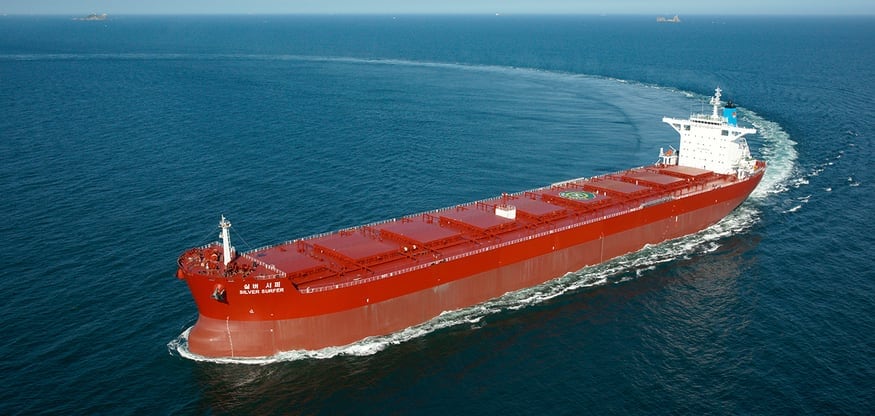
On August 31 (local time), news emerged that two oil tankers passing through the Strait of Hormuz were attacked by unidentified projectiles. Major international media, including the Financial Times, reported on September 2 that one of the targeted vessels, the Liberia-flagged *Senegal Prosperity*, was owned by Janggeum Maritime (Sinokor), an affiliate of South Korean shipping company Sinokor Merchant Marine.
According to Sinokor Merchant Marine and the Ministry of Oceans and Fisheries, the vessel was in a “re-chartered” state—leased by Janggeum Maritime and subleased to a third-party company—carrying crude oil from Saudi Arabia toward China. No Korean crew members were onboard, and the vessel was not under the South Korean government’s direct management. However, the incident has once again highlighted the presence of the Sinokor Merchant Marine Group in the volatile Strait of Hormuz, a critical route for oil shipments.
Sinokor Merchant Marine has drawn global attention in recent years due to its rapid growth. Though relatively unknown domestically, the group ranks 32nd in South Korea’s conglomerate rankings, with assets worth 21.01 trillion Korean won and 29 subsidiaries. Its ranking jumped 22 spots from 54th in 2020, when it was first designated as a major business group.
The group’s recent prominence stems from what appears to be prescient investments. Under Vice Chairman Jeong Ga-hyun, the second-generation leader, Janggeum Maritime acquired numerous very large crude carriers (VLCCs) just before the Iran war, which later yielded massive profits amid soaring tanker rates post-conflict.
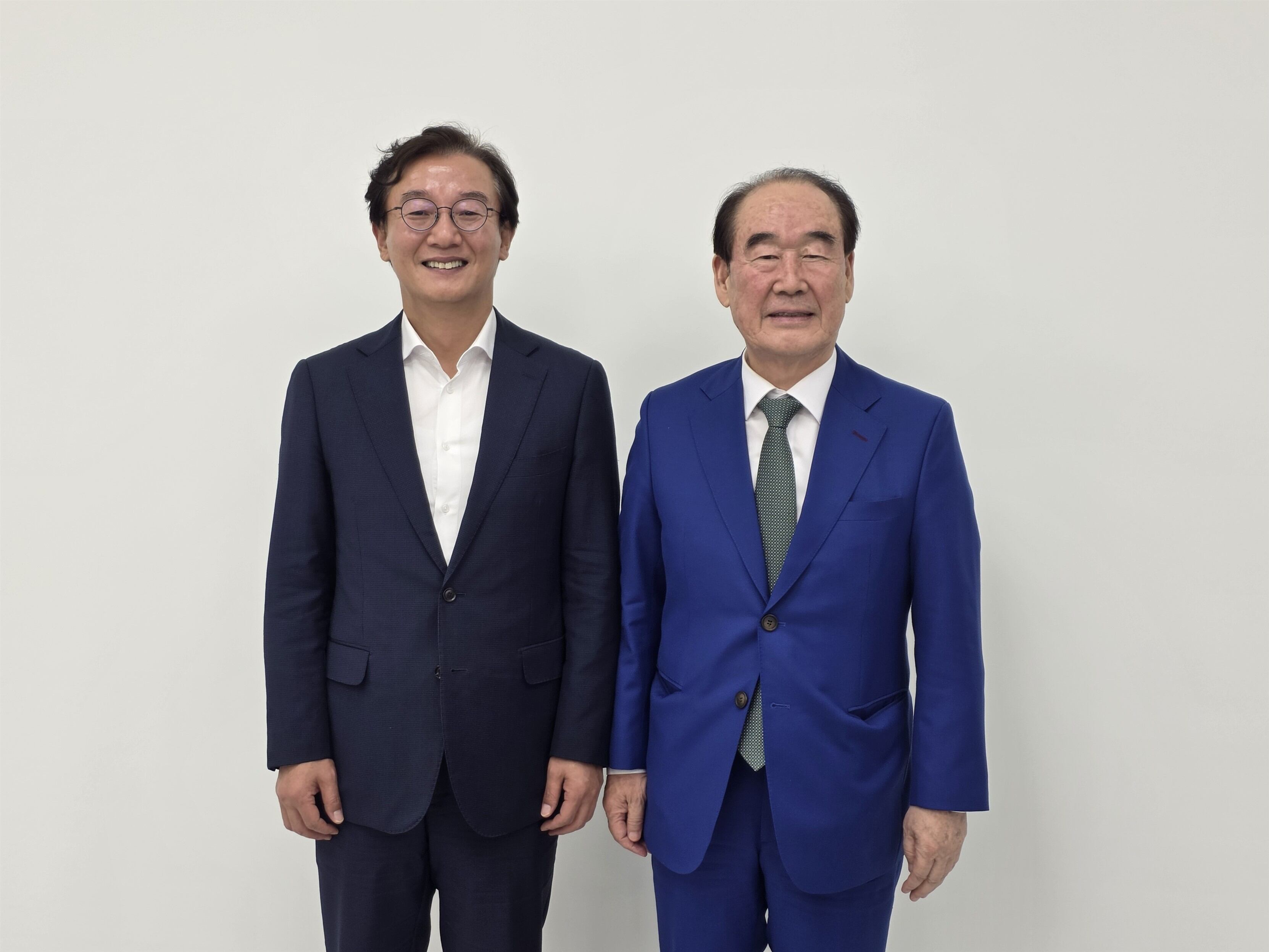
However, details about Jeong Ga-hyun’s management style and business operations remain scarce. Chairman Jeong Tae-soon, 78, also avoids public appearances, though he has held leadership roles in the Korea Shipowners’ Association (2019–2025) and the Asian Shipowners’ Association (2021–2022). He expanded his influence to the Korean Baduk Association, serving as vice president in 2024 and later as chairman.
Due to the group’s reticence, international media like the Wall Street Journal and Bloomberg rely on vessel-tracking data and industry insiders to report on Sinokor Merchant Marine’s investments and strategies. Domestically, the group is often described as a “mysterious shipping company” due to the limited public information relative to its scale.
◇ Origins as a Korea-China Joint Venture… Company Name Reflects 中·韓
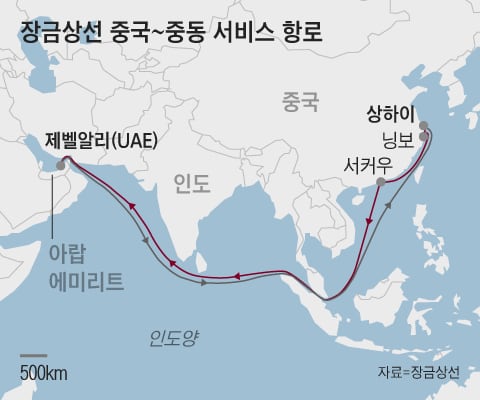
Sinokor Merchant Marine’s founding was unconventional. Its name combines “Jang” (長) from the Yangtze River (長江) and “Geum” (錦) from “Geumsu Gang-san” (錦繡江山, a poetic term for Korea). The English name “SINOKOR” merges “Sino” (China) and “Kor” (Korea). Established in 1989—before formal Korea-China diplomatic ties—it began as a 50:50 joint venture between South Korea’s Southeast Asia Shipping and China’s state-owned Sinotrans. It launched the first Korea-China regular container service the same year. During the Asian financial crisis, Jeong Tae-soon, then a professional manager, acquired the company and founded Sinokor Merchant Marine in 1999, becoming its owner. Though not a Chinese company, it was designed from inception to target the Chinese market.
The group’s ownership structure reflects this history. The largest shareholder is Hong Kong-based SINOKOR CO., LTD. (82.97% stake), with Jeong Tae-soon holding the remaining 17.03%. Since Jeong owns 100% of the Hong Kong entity, he effectively controls the entire group.
Sinokor Merchant Marine expanded by leveraging profits from Korea-China routes to enter Japan, Hong Kong, Southeast Asia, and Russia. In 2007, it entered the bulk carrier business, transporting raw materials like iron ore and coal. In 2019, it integrated container operations with struggling Heung-A Shipping, and in 2021, it acquired Heung-A’s core liquid cargo division. The pandemic-driven surge in shipping rates amplified returns from its expanded fleet and network.
The group now comprises 29 domestic subsidiaries, including Sinokor Merchant Marine (focused on container and bulk shipping, ports, and logistics), Janggeum Maritime (VLCC operations), and Heung-A Shipping (liquid cargo). Only Heung-A is publicly listed.
◇ Jeong Ga-hyun… The ‘Hidden Protagonist’ Behind the Tanker Empire
Recent global shipping attention has shifted from Sinokor Merchant Marine to Janggeum Maritime, led by Vice Chairman Jeong Ga-hyun. Founded in 2008 as a wholly owned private company, Janggeum Maritime grew its bulk carrier business using Sinokor’s resources and expanded aggressively into tankers around 2020. By 2022, it operated over 10 VLCCs, and by 2024, it became a major global VLCC player with dozens of owned and chartered vessels. Lloyd’s List noted difficulties in verifying transactions due to non-disclosure agreements (NDAs).
Janggeum Maritime’s prominence surged in late 2024 with a “tanker-buying spree.” According to VesselsValue, Sinokor Merchant Marine spent 5.98 billion dollars (8 trillion Korean won) to acquire 73 secondhand tankers this year—over five times the second-largest buyer’s expenditure. Clarkson Research reported that Sinokor’s VLCC fleet grew to 93 vessels by August 20. S&P Global noted that Janggeum controls nearly 30% of non-sanctioned VLCC spot charters.
The timing of these acquisitions drew scrutiny: Middle East wars erupted weeks later, paralyzing Strait of Hormuz traffic and causing VLCC rates to surge. Daily earnings for VLCCs from the Middle East to China jumped from 170,000 dollars on February 24 to 424,000 dollars (600 million Korean won) by March 2. Demand for “floating storage” (storing oil at sea) also spiked, with Sinokor’s VLCCs earning 500,000 dollars (700 million Korean won) per day in charter fees.
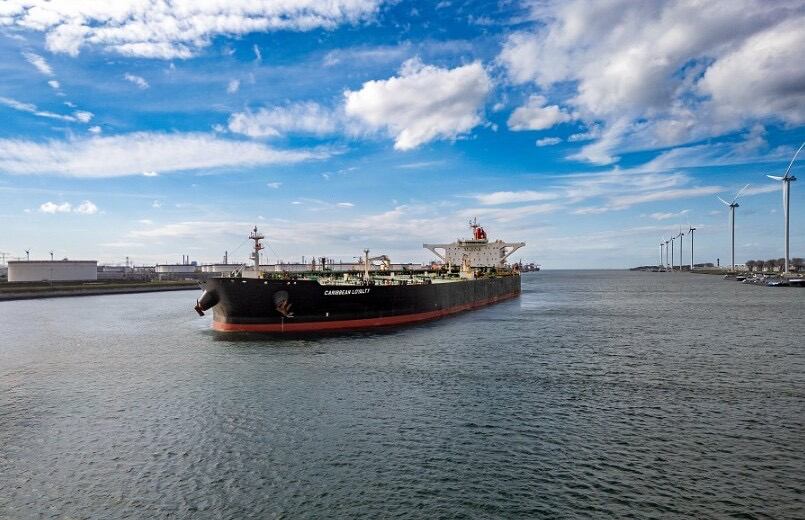
Industry experts argue that Janggeum’s success was not accidental. Kim In-hyun, director of Korea University’s Maritime Law Research Center, stated, “Janggeum had already secured long-term contracts and expertise in the tanker market before the war. Its proactive investments aligned perfectly with market conditions.”
◇ The Strait of Hormuz Crisis and Jeong Ga-hyun… A Bold Marketing Strategy
Jeong Ga-hyun, dubbed a “reclusive shipowner,” rarely appears publicly. Bloomberg reported that he was a central figure at Posidonia 2026, the world’s largest shipping event in Athens, where he aggressively negotiated VLCC sales. The Wall Street Journal described him smoking a cigar surrounded by security at a late-night party.
His bold style extended to operations during the Middle East war. When the UAE sought to bypass Hormuz via “dark transit” (disabling AIS and transferring cargo in the Gulf of Oman), Janggeum Maritime deployed at least 10 VLCCs for these risky operations. Bloomberg noted that by June 2024, nearly half of UAE oil shipments used Janggeum vessels.
Even after a ceasefire reduced rates, Janggeum continued aggressive marketing. Brokers reported receiving direct messages: “We can transit the Strait of Hormuz with cargo. Notify us of available shipments.” Bloomberg cited this as an example of Janggeum’s “bold marketing tactics.”
◇ Reclusive Shipowners Unite… MSC Behind Sinokor Merchant Marine
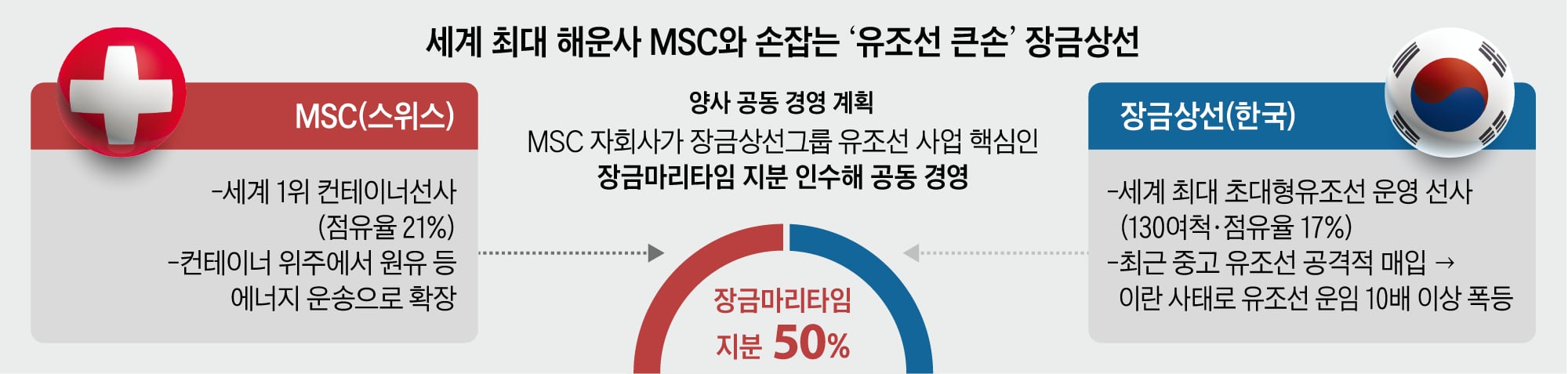
A mystery surrounds Sinokor’s massive ship purchases. In December 2024, MSC, the world’s largest container line, bought four Sinokor container ships, sparking speculation that MSC or its founder’s family funded Janggeum’s VLCC acquisitions. In March 2025, MSC’s subsidiary SAS Shipping Agencies Services announced plans to acquire 50% of Janggeum Maritime, creating a joint ownership structure with Jeong Ga-hyun. Cyprus regulators confirmed the filing, noting MSC’s aim to enter the VLCC market.
Both groups share opaque ownership: MSC is a privately held family business, and Sinokor has only one listed subsidiary (Heung-A Shipping). Their collaboration represents a high-stakes bet on the tanker market.
◇ Six Months Into the War… Tanker Boom Persists
Prolonged conflict has sustained Sinokor’s tanker profits. Reduced Hormuz transits and increased floating storage have extended vessel utilization. On August 28, VLCC daily earnings on the Middle East–China route hit a record 656,000 dollars (900 million Korean won).
In August, Reliance Industries chartered a Sinokor VLCC for 23–25 million dollars (32–35 billion Korean won) to transport 2 million barrels of Iraqi oil—12 times pre-war rates.
Analysts expect high rates to continue due to VLCC shortages and multi-year newbuild delays. However, post-2028, new vessels may ease supply pressures. A shipping insider noted, “Sinokor balances ownership and charters while collaborating with MSC on new VLCCs to replace aging fleets.”
To incentivize crews, Sinokor offered Hormuz-bound seafarers six months’ salary in advance—a month’s work for seven months’ pay.
Risks persist: Iran blacklisted 45 vessels, including five linked to Janggeum, for violating Hormuz transit rules, threatening fines, detention, or cargo seizure. Sinokor has not publicly addressed these claims, citing a lack of dedicated PR teams and limited oversight over its overseas affiliates.
- 월 5900원 멤버십, 신문 독자에게는 2900원, 조선멤버십
- 55000원 상당의 신문-잡지 8종 마음껏 보기, 조선멤버십
- 현금처럼 쓸 7000포인트 받아 알뜰한 쇼핑, 조선멤버십

Related posts:

Fiction park: He was the best in class. He still wasn’t good enough

Gagan Thapa takes oath as Congress president, vows to regain public trust

Inside knowledge that has locals gripped by fear after gran’s body found decomposing in cattle dip

New property purchase disclosure rule in Japan sparks fears it may curb foreign investment
Dino-mite treasures: inside Singapore’s Fort Knox storing playthings of ultra-rich