Legal Battle Over Deportation of Migrant Faces New Challenges
A 30-year-old undocumented migrant, Kilmar Abrego Garcia, is at the center of a legal and political storm after being detained by Immigration and Customs Enforcement (ICE) and facing potential deportation to Uganda. Garcia, who is accused of human smuggling, was released from custody on Friday but remains under scrutiny as he awaits trial. His case has sparked significant debate over immigration policy, due process, and the treatment of migrants in the United States.
Garcia’s legal team has been actively fighting against his deportation, arguing that sending him to Uganda would put his safety and freedom at risk. They have raised concerns about the conditions in Uganda, citing documented human rights violations and the lack of familiarity with the local language. This has led to questions about whether the U.S. government is using the threat of deportation as a tool to pressure individuals into pleading guilty.
The Trump administration has been vocal about its stance on immigration, particularly regarding those suspected of gang affiliations or criminal activity. In this case, officials have labeled Garcia as an MS-13 gang member and a human trafficker. However, Garcia’s lawyers have denied these allegations, emphasizing that he legally entered the U.S. at the age of 16 to escape violence in El Salvador.
In a recent development, the Ugandan government confirmed it has reached an agreement with the U.S. to accept citizens from third countries who are not granted asylum but do not wish to return to their home countries. This arrangement has added another layer of complexity to Garcia’s case, as it raises questions about the fairness of the deportation process and the criteria used to determine where individuals are sent.
Garcia’s legal team has also criticized the administration for allegedly trying to coerce him into pleading guilty by offering alternative options, such as deportation to Costa Rica, which is considered one of the safest countries in Latin America. One of his attorneys, Simon Sandoval-Moshenberg, described the situation as unconstitutional, highlighting the use of the immigration system as a means of coercion.
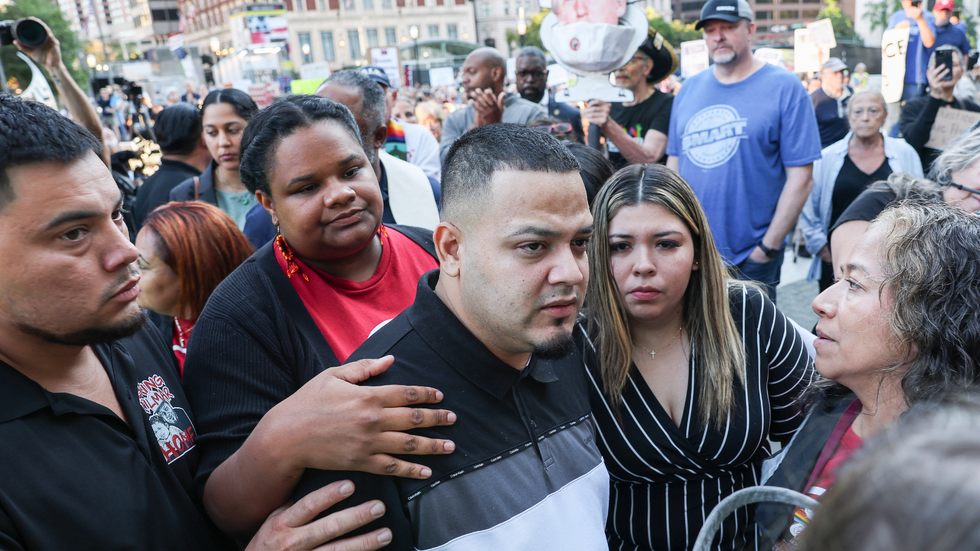
Despite the challenges, Garcia has expressed gratitude to his supporters and the community that rallied behind him during his detention. After being released from an ICE facility in Baltimore, Maryland, he made a public statement in Spanish, thanking God and the people who stood by him. He emphasized that his release was a “miracle” and urged continued support for his cause.
The initial accusations against Garcia stemmed from a traffic stop in 2022, when he was pulled over on a Tennessee highway with eight passengers in his vehicle. Although no luggage was found, officers were suspicious of his actions. The incident was captured on police body-cam footage, showing Garcia speaking in broken English with the responding officer.
As the legal battle continues, the case highlights broader issues within the U.S. immigration system, including the treatment of undocumented migrants, the role of gang affiliations in deportation decisions, and the ethical implications of sending individuals to countries where they may face danger.
With the possibility of further detention looming, Garcia’s story serves as a reminder of the complexities and challenges faced by migrants navigating the American legal system. His case is not just about one individual, but about the larger conversation surrounding immigration, justice, and human rights.


