Migrant Suspected of MS-13 Affiliation Faces Deportation to Uganda
A 30-year-old undocumented migrant, Kilmar Abrego Garcia, has been detained by Immigration and Customs Enforcement (ICE) and is now facing deportation to Uganda. The individual, who is suspected of being associated with the notorious MS-13 gang, was released from custody on Friday but remains under legal scrutiny for charges related to human smuggling.
Garcia’s legal team has raised concerns about the potential dangers he may face if sent to Uganda, citing the country’s documented human rights issues and his lack of language proficiency. His lawyers are actively working to prevent his deportation, arguing that his safety and freedom could be at risk in the African nation.
The Ugandan government recently confirmed an agreement with the United States to accept citizens from third countries who may not qualify for asylum in America but do not wish to return to their home countries. This development has added complexity to Garcia’s case.
Background and Previous Incidents
Garcia first gained attention earlier this year after being wrongfully deported to a notorious prison in El Salvador due to what U.S. officials described as an “administrative error.” He was later returned to the U.S. in June following a court order and subsequently indicted by a federal court in Nashville, Tennessee, on human smuggling charges.
His legal representatives have filed lawsuits to block his deportation to Uganda, emphasizing the risks involved. They argue that the Trump administration is using a strategy of offering Costa Rica as an alternative to pressure Garcia into pleading guilty. Costa Rica is considered one of the safest countries in Latin America, while Uganda is viewed as a less favorable option.
Simon Sandoval-Moshenberg, one of Garcia’s attorneys, criticized the administration’s approach, stating that it is unconstitutional to use the immigration system to coerce individuals into admitting guilt. He highlighted the absurdity of sending Garcia to a country where he does not speak the language and where there are documented human rights violations.
Legal Challenges and Public Support
Garcia’s legal team has also denied allegations that he is a member of the violent MS-13 gang. They claim he legally entered the U.S. when he was 16 years old to escape gun violence in El Salvador. This argument has been central to their defense against the charges.
The Department of Homeland Security Secretary, Kristi Noem, stated that ICE law enforcement arrested Garcia and is processing him for deportation. She emphasized that President Trump would not allow an illegal alien, who is allegedly an MS-13 gang member, human trafficker, and child predator, to harm American citizens.
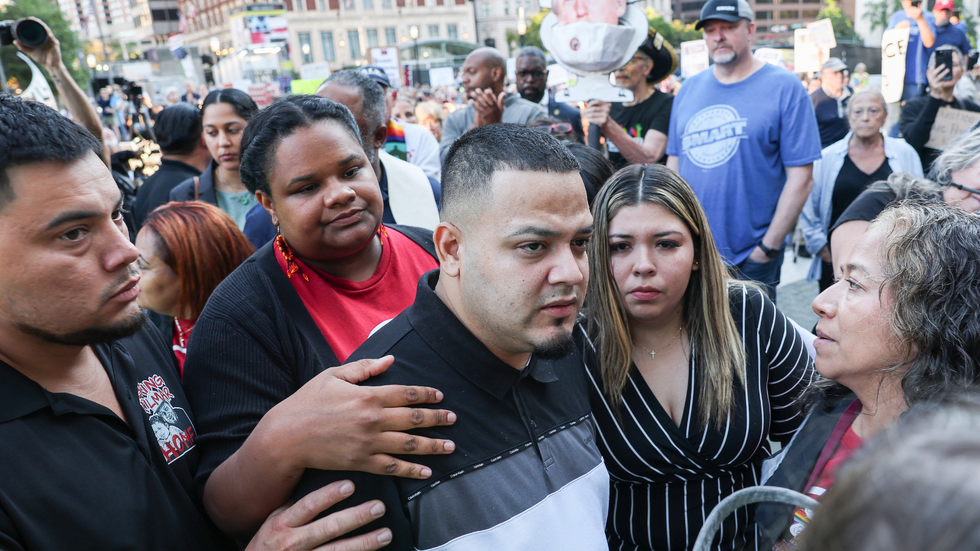
After his release from custody, Garcia spoke publicly outside an ICE facility in Baltimore, Maryland. In Spanish, he expressed gratitude to God and the community for his release, calling it a miracle. He also thanked those who supported him during his legal battle.
Legal Proceedings and Ongoing Issues
Garcia’s initial allegations of smuggling stemmed from a traffic stop in 2022, when he was pulled over on a Tennessee highway with eight passengers in his vehicle and no luggage. Officers were suspicious of his actions but did not charge him at the time. Body-cam footage showed Garcia speaking in broken English with the responding officer.
The situation surrounding Garcia highlights the complexities of immigration enforcement and the challenges faced by undocumented migrants. As his case continues, the legal and ethical implications of his potential deportation remain under intense scrutiny. The ongoing debate raises important questions about the treatment of migrants, the role of the immigration system, and the balance between national security and individual rights.


