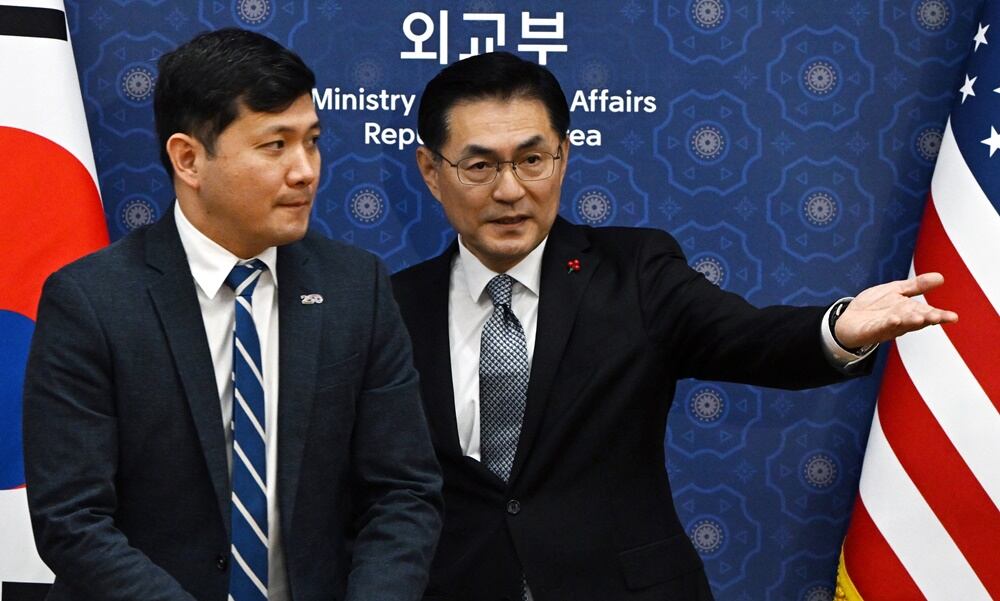
The Lee Jae-myung government is showing signs of shifting from a ‘pacemaker’ role—supporting U.S. President Trump’s North Korea policy—to a ‘peacemaker’ approach, prioritizing inter-Korean relations to pave the way for U.S.-North Korea dialogue. On the 16th, a meeting to coordinate North Korea policy was held at the Ministry of Foreign Affairs headquarters, attended by Vice Minister Jeong Yeon-doo, the ministry’s vice minister for strategy and intelligence, and Acting U.S. Ambassador to Seoul Kevin Kim as chief representatives. However, the Ministry of Unification did not participate. This followed Minister Chung Dong-young’s public opposition, who argued that the Ministry of Foreign Affairs-led South Korea-U.S. consultations would ultimately reflect American positions, and his decision to withhold ministry officials from the meeting.
Earlier, on the 15th, six former Ministry of Unification ministers from progressive governments—Lim Dong-won, Chung Se-hyun, Lee Jae-jung, Cho Myung-gyun, Kim Yeon-chul, and Lee In-young—issued a joint statement titled “Opposition to a Second South Korea-U.S. Working Group.” The former ministers criticized the previous working group under the Moon Jae-in administration, stating, “It did not serve as a productive forum to resolve issues but instead blocked inter-Korean progress and raised barriers to sanctions relief.” They added, “We cannot entrust North Korea policy to the Ministry of Foreign Affairs, which lacks expertise and fails to understand inter-Korean relations.”
The Ministry of Unification’s public refusal to participate in South Korea-U.S. policy consultations, coupled with the former ministers’ statement, is highly unusual. Ten lawmakers—including Democratic Party’s Lee Jae-gang, Rebuilding Korea Party’s Seo Wang-jin, Progressive Party’s Yoon Jong-oh, and Social Democratic Party’s Han Chang-min—also opposed the working group, while left-wing groups staged protests outside the Ministry of Foreign Affairs.
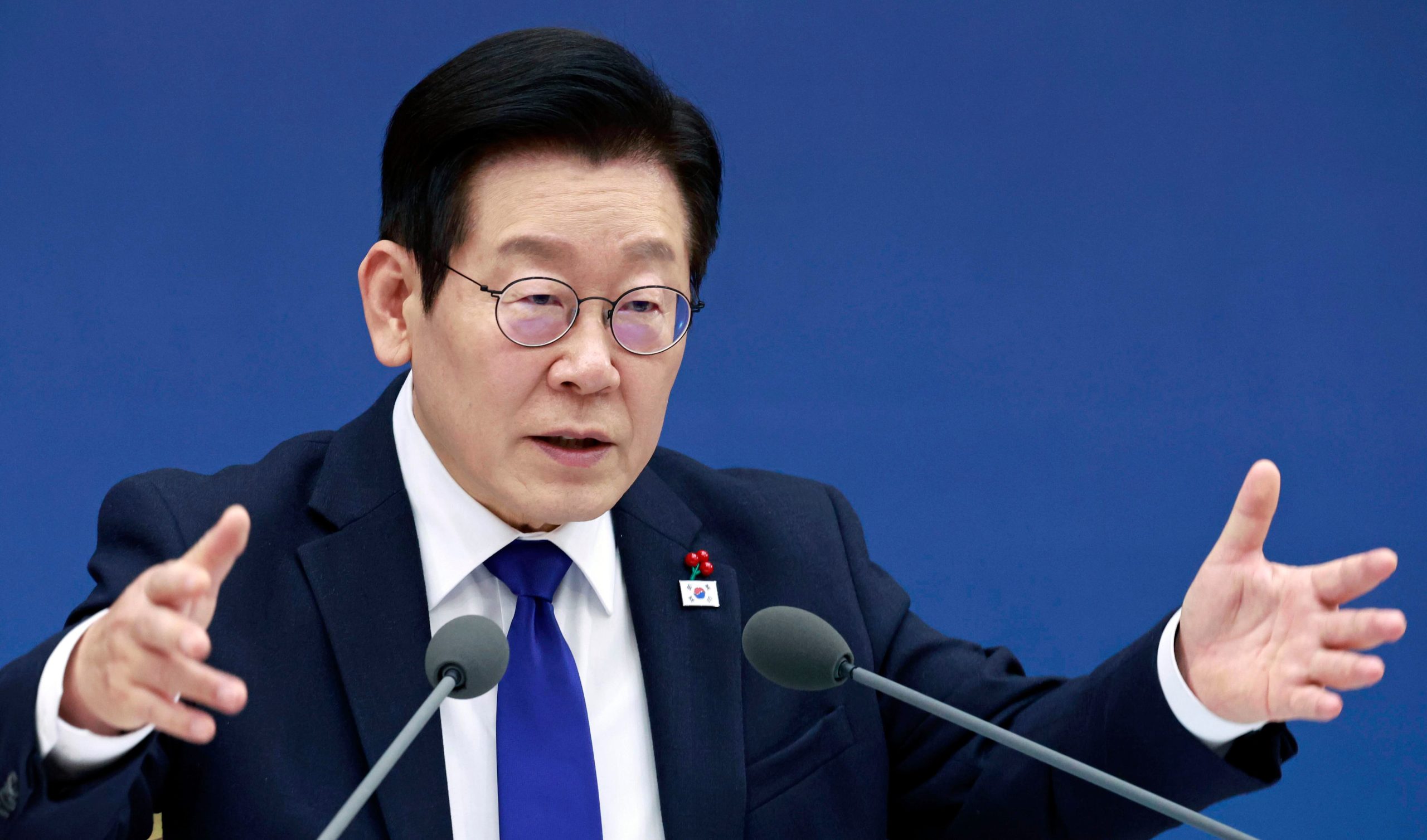
This reflects not only a rivalry between the Ministry of Foreign Affairs and the Ministry of Unification over North Korea policy leadership but also a broader shift in sentiment within and around the Lee Jae-myung government. Amid growing tensions between ‘alliance-first’ and ‘independence-oriented’ factions, there is a rising consensus that the South Korean government should lead the ‘race’ directly rather than merely follow the U.S.-set pace.
During his first summit with President Trump in August, President Lee Jae-myung pledged to act as a pacemaker on North Korea issues, effectively handing the ‘steering wheel’ to the U.S. National Security Adviser Wi Sung-lac emphasized ahead of his U.S. visit on the 16th, “President Lee and President Trump discussed the roles of ‘peacemaker’ and ‘pacemaker,’ and we will now coordinate details on how to adjust these roles and align our cooperation.”
Unrealized U.S.-North Korea Summit Marks Turning Point
However, as President Trump’s anticipated ‘peacemaker’ role failed to materialize, calls for policy changes have emerged, particularly from independence-oriented factions. A source close to the Lee Jae-myung government remarked, “In marathons, pacemakers sometimes win—perhaps the government is considering taking the lead if necessary.”
The turning point for this shift was the collapse of the Trump-Kim Jong-un meeting planned around the October APEC in Gyeongju. At the time, President Trump and the State Department had high hopes for the summit, with the U.S. Embassy in Seoul preparing contingency plans for a potential meeting at the inter-Korean truce village of Panmunjom. Despite Trump’s repeated public offers to meet Kim Jong-un, the talks never materialized. Trump suffered a blow to his pride, and the U.S. began rolling out stricter sanctions against North Korea.
Since then, independence-oriented factions within the government have grown skeptical of U.S.-led dialogue with North Korea. Minister Chung Dong-young has led this trend, stating last month, “Bureaucratic thinking that awaits U.S. approval cannot resolve Korean Peninsula issues.” He also argued, “South Korea-U.S. joint military drills are a means to peace, not an end.”
Dissatisfaction within progressive circles had already surfaced when President Lee mentioned the ‘pacemaker’ role in August: “Why should inter-Korean issues be entrusted to external powers?” Former Minister Chung Se-hyun targeted alliance-first factions, including National Security Adviser Wi Sung-lac, in September, calling them “forces hindering the president’s progress” and advocating for personnel reforms. Criticism also grew over the U.S. approach during the 2019 Hanoi summit, where demands for North Korea’s denuclearization were described as “stripping North Korea bare,” with voices asserting, “Kim Jong-un would not respond to Trump’s overtures.”
Some ruling-party members argue that adjusting North Korea policy is necessary to secure victory in next June’s local elections. A diplomatic-security expert from the Moon Jae-in administration noted, “The presidential office likely views it as politically advantageous for President Lee to take direct action rather than remain a pacemaker in the midterm evaluation of his government.” Consequently, concerns arise that the Lee Jae-myung government might emulate Moon Jae-in’s 2018 PyeongChang Winter Olympics outreach to North Korea, potentially distancing from denuclearization goals.
Revived Push to Leverage China
As Minister Chung Dong-young takes the lead to advance the independence-oriented agenda, National Intelligence Service Director Lee Jong-seok is reportedly working behind the scenes. In his inaugural address, Lee emphasized, “The NIS must contribute to easing military tensions and opening dialogue between the two Koreas.” While the ‘pacemaker’ strategy initially overshadowed efforts to engage China in persuading North Korea, Director Lee is now focusing on actively utilizing Chinese influence.
Some experts predict the Lee Jae-myung government will maintain its pacemaker role for the time being, considering the repaired South Korea-U.S. relationship following the Gyeongju summit. They warn that halting efforts to facilitate a Trump-Kim meeting could strain the nascent Trump-President Lee relationship.
Meanwhile, the U.S. is reportedly cautioning against the independence-oriented faction. Acting Ambassador Kevin Kim recently met Minister Chung and stressed the U.S. stance on maintaining sanctions, joint drills, and prioritizing North Korean human rights—actions linked to a White House directive. Some in the Ministry of Foreign Affairs fear that shifting away from the pacemaker role could spark South Korea-U.S. conflict. Yang Moo-jin, a distinguished professor at the University of North Korean Studies, stated, “While U.S.-North Korea relations remain in early stages under Trump’s second term, if no progress is made by around April next year, President Lee could step forward as a peacemaker.”