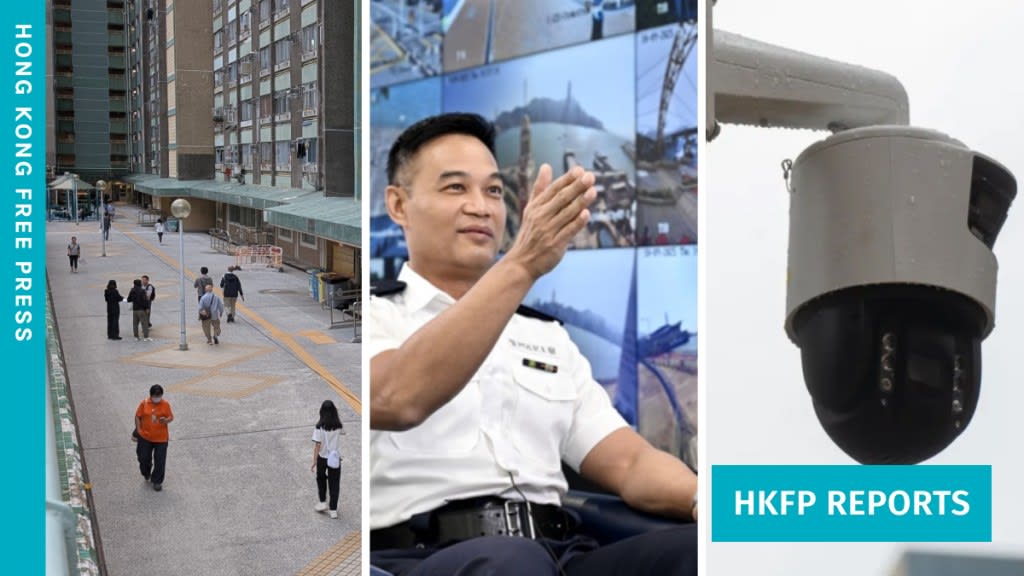
A new initiative by the Hong Kong police to expand their AI-enabled SmartView CCTV system has raised concerns among residents. The plan involves integrating surveillance systems from various departments, including 10 public housing estates, sparking discussions about privacy and security.

The Hong Kong police force announced that they aim to complete the expansion of the SmartView system by the end of 2025. This advanced system offers real-time monitoring capabilities, including features like number plate recognition, people-counting technology, and AI face recognition. These technologies are designed to enhance public safety and improve crime detection.

New Territories South West includes districts such as Kwai Tsing District and Tsuen Wan District. According to data from June 2021, the projected population in this area was 824,600, with 509,991 registered voters. Several candidates are running for office, including Adrian Lau Cheuk-yu, an independent democrat; Ben Chan Han-pan, representing the pro-Beijing DAB; and Joephy Chan Wing-yan, who is affiliated with the pro-Beijing Federation of Trade Unions.

The police force stated that their goal for this year is to integrate cameras from 10 public housing estates managed by the Housing Department, three cross-harbour tunnels under the Transport Department, seven venues related to the National Games managed by the Leisure & Cultural Services Department, and four immigration control points. Currently, there are 4,500 SmartView cameras across the city, but an additional 5,000 cameras installed by other departments and public organizations have also been incorporated into the network.
The SmartView system has already contributed to detecting over 480 criminal cases and leading to the arrest of more than 840 individuals. It has also been used for crowd control and to assist authorities during typhoons. Senior Superintendent Leung Ming-leung of the police Operation Wing mentioned that the video feeds have been shared with the Drainage Services Department to monitor flooding conditions in the city.

The cameras are primarily installed on lampposts, smart lampposts, and government buildings. Police vehicle-mounted units were introduced this summer, and traffic light-mounted SmartView cameras are expected to be added by the end of the year. In the European Union, the use of real-time remote biometric identification systems by law enforcement in publicly accessible places is banned, with some exceptions. In the UK, similar technologies have been deployed, though concerns about wrongful identification persist.
Hong Kong does not have specific regulations governing how law enforcement can use AI technology. Earlier this month, the city’s privacy watchdog, an independent statutory body, declined to respond to AFP regarding whether it had been consulted in the expansion of the surveillance program.

A police spokesperson told HKFP that the expanded SmartView rollout aims to prevent and detect crime, with shopping malls set to be considered for 2026. However, they did not provide details on which housing estates would be integrated this year or the criteria used for selection. The police emphasized that they will ensure compliance with the Personal Data (Privacy) Ordinance through three measures: commissioning an independent consultancy for a Privacy Impact Assessment, seeking professional advice from the Department of Justice and the Office of the Privacy Commissioner for Personal Data, and fully implementing relevant regulations on personal data protection.
They added that they will ensure the public’s interests are safeguarded, though they did not confirm if the Office of the Privacy Commissioner for Personal Data had been consulted.

The integration of the SmartView system has led to mixed reactions from residents. At two Chai Wan estates, some welcomed the move, while others expressed concerns about privacy. Choi Mang-sang, a 68-year-old resident of Wan Tsui Estate, supported the initiative, stating, “There are so many liars… there is nothing to be afraid of.” Conversely, a 17-year-old secondary school student, surnamed Chow, voiced concerns about monitoring in areas like lift lobbies, fearing it could restrict personal freedom.

Another resident, a woman in her 50s, described the new plan as a double-edged sword, noting that while it could improve public security, it also raises privacy issues. A Housing Authority spokesperson mentioned that CCTV is already installed in housing estate areas, with notices displayed to inform tenants and visitors about the use of video footage for security and property management purposes.

Footage is retained for no more than 28 days and is handled by management personnel according to privacy laws. Video footage that may be used for investigation or evidence is kept until the relevant investigation or prosecution proceedings are completed. Yau Tsim Mong District Councillor and Fight Crime Committee member Chan Siu-tong argued that it is illogical to fear cameras, stating that police cameras are under public supervision, unlike those managed by private companies. He suggested that people might be more concerned if all the CCTV systems were removed from their housing estates.


