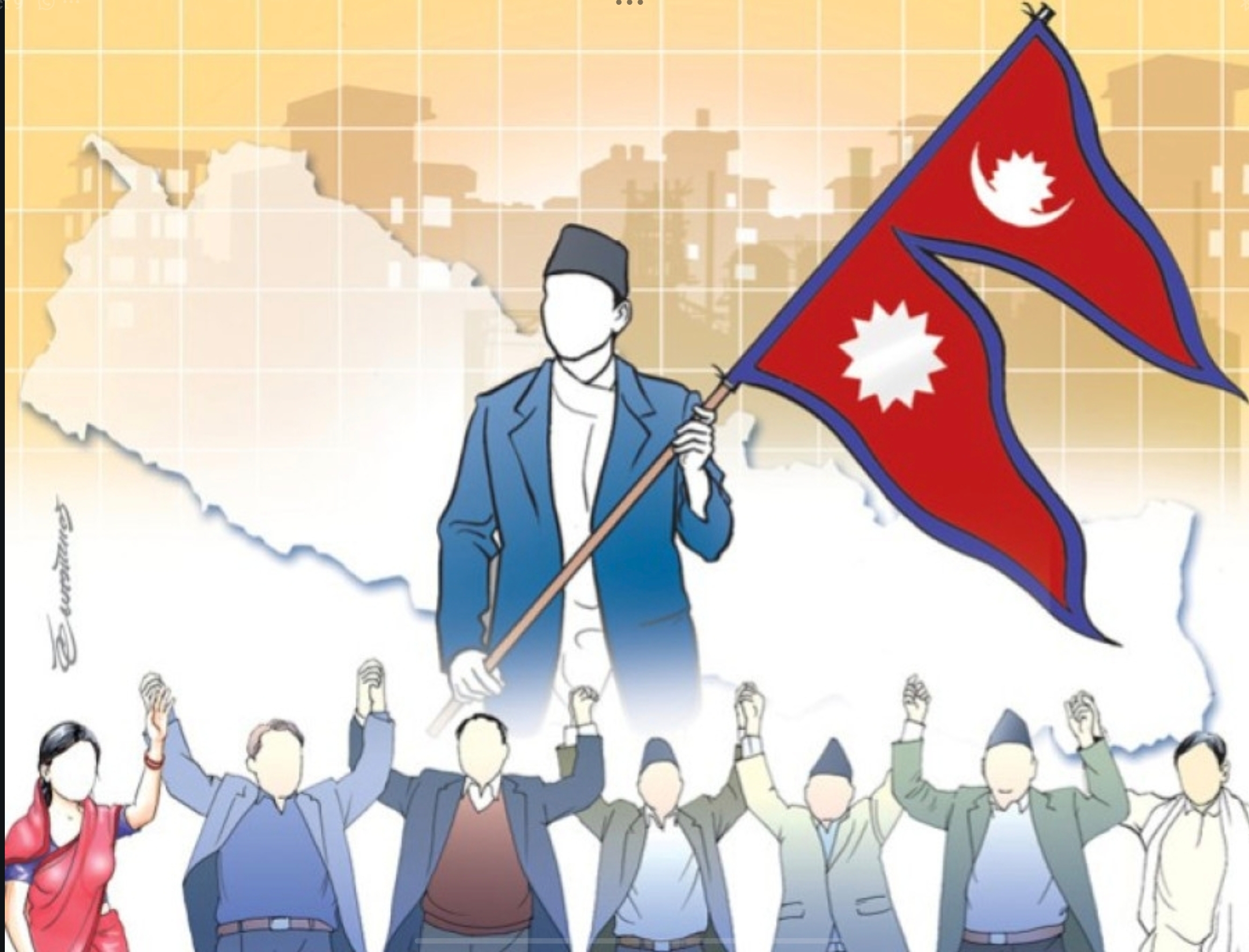
The Current State of Nepal’s Political and Economic Landscape
Nepal is at a pivotal moment where decisive political choices will determine its economic trajectory. After years of constitutional development, the nation faces a pressing challenge: its current political structure is increasingly an obstacle to progress. While many countries have adopted efficient governance models that drive growth, Nepal remains hindered by administrative systems that drain resources without delivering proportional benefits.
The seven-province system in Nepal represents an ambitious attempt at federalism, but it has proven economically unsustainable. Federalism can be likened to a river flowing from federal resources to local communities. In the most effective systems, this flow occurs directly, with local municipalities and districts acting as natural conduits that understand their terrain. However, Nepal has introduced costly intermediaries—provincial governments—that act as barriers rather than facilitators. These structures do not enhance the quality or volume of the flow; instead, they create bottlenecks that require expensive maintenance while slowing down the delivery of services. Resources still reach villages, but with unnecessary delays, reduced efficiency, and at great cost.
Administrative Expansion and Its Consequences
Each province maintains expensive assemblies, secretariats, and bureaucracies that duplicate functions already handled by federal and local governments. This administrative expansion consumes 15-20 percent of the federal budget annually. These funds could be redirected to significantly improve infrastructure, education, and healthcare. Rather than becoming engines of development, provinces often function as recruitment centers for party loyalists seeking government positions.
The size of parliament further complicates matters. With 334 members across both houses, Nepal has one of the highest representative-to-population ratios in the world. This creates a large professional political class that depends on public positions for survival. While political parties play an essential role in democratic discourse, policy formulation, and oversight, when politics becomes the primary career path for hundreds of individuals, governance decisions may prioritize political survival over economic logic. Large parliaments often lead to horse-trading, coalition instability, and policy delays—issues that Nepal cannot afford.
Ministerial Selection and Policy Effectiveness
The ministerial selection process reveals significant opportunities for improvement in party-based governance. When finance ministers lack financial expertise, industry ministers have limited business experience, and agriculture ministers are unfamiliar with farming realities, policy effectiveness suffers. This system treats expertise as secondary to party loyalty, potentially ensuring that economic challenges are addressed by politicians rather than specialists.
Political parties should continue to set policy directions and ideological frameworks, but technical execution would benefit from professional competence. Singapore’s transformation into a developed nation occurred partly because technocratic ministers with relevant expertise crafted economic policies. Nepal’s persistent trade deficits, unemployment issues, and industrial stagnation may reflect the cost of prioritizing political connections over professional competence.
Local Governance and Party Interference
At the local level, party interference creates additional governance complications. When mayors and ward chairpersons operate through party mechanisms rather than community choice, their primary loyalty may shift from local development to party headquarters. This dynamic can subordinate economic priorities to political calculations, ensuring that local projects serve party interests rather than community needs.
While parties remain essential for national policy debates and ideological representation, local governance would benefit from different dynamics focused on immediate community needs rather than broader political narratives. Independent local leadership could focus on attracting investment, improving infrastructure, and creating employment opportunities without external political constraints. Therefore, allowing only independent candidates to contest local body elections merits serious consideration.
The Potential of Local Governments
Notably, local governments have demonstrated how federalism’s potential might be better realized in Nepal. The spirit of federalism lies at the grassroots level, not necessarily at the provincial level. Municipalities and rural municipalities understand their constituents’ immediate needs, collect revenues more efficiently than higher tiers, and implement development projects with greater accountability. They represent genuine federalism: governance closest to the people who benefit from services. The success of local governments suggests that Nepal doesn’t need expensive provincial intermediaries to achieve federal objectives. Direct federal-local coordination could eliminate bureaucratic redundancy while strengthening democratic accountability.
Proposed Reforms for a Sustainable Future
The economic and governance arguments for reform present compelling opportunities. Given current structural challenges, several critical reforms merit implementation. First, constitutional amendments eliminating provincial governments and redirecting their administrative costs to development funds would create significant fiscal space. Parliamentary size should be reduced significantly, creating larger constituencies with greater accountability while reducing overall political costs.
In the proposed system, political parties would continue to compete for elections and secure seats in a smaller, more efficient parliament where they perform their legitimate democratic functions such as policy formulation, ideological debate, and government oversight. However, ministers would be appointed based on professional qualifications, not selected from among MPs or party members. This separation ensures that while parties handle democratic representation and policy debate at the federal level, the technical execution of policies is managed by experts who understand complex global markets and technological trends.
At the local level, only independent candidates would be allowed to contest elections, removing party influence from grassroots governance. This would create genuine democratic competition based on development visions rather than party manifestos drafted in Kathmandu. Performance-based funding mechanisms would reward local governments that achieve measurable economic outcomes, creating incentives for efficient service delivery and innovation.
This transformation requires considerable political wisdom to choose efficiency over familiar but potentially suboptimal structures. Existing political elites may resist reforms that threaten their positions, arguing that change undermines democratic institutions. However, party-dominated governance that struggles to deliver economic progress may ultimately undermine democratic legitimacy. Nepal’s youth migration, brain drain, and persistent poverty reflect governance effectiveness challenges, not democratic success.
Our choice presents a significant opportunity: Continue funding expensive, potentially inefficient structures that may serve elite and party interests while constraining the nation, or implement thoughtful reforms that prioritize development alongside democratic representation. We need comprehensive political reform that transforms governance from a cost center into a growth catalyst. This doesn’t mean eliminating political parties from democracy; rather, it means ensuring they operate where they add value: In policy debate, ideological representation, and democratic oversight, not in technical administration or local service delivery.
Only by eliminating administrative redundancy, reducing political overhead, and prioritizing expertise alongside loyalty can we create the foundation for sustained economic development. Our people deserve governance that serves their economic aspirations while maintaining robust democratic principles.


