The Unforgettable Canadian Grand Prix of 2011
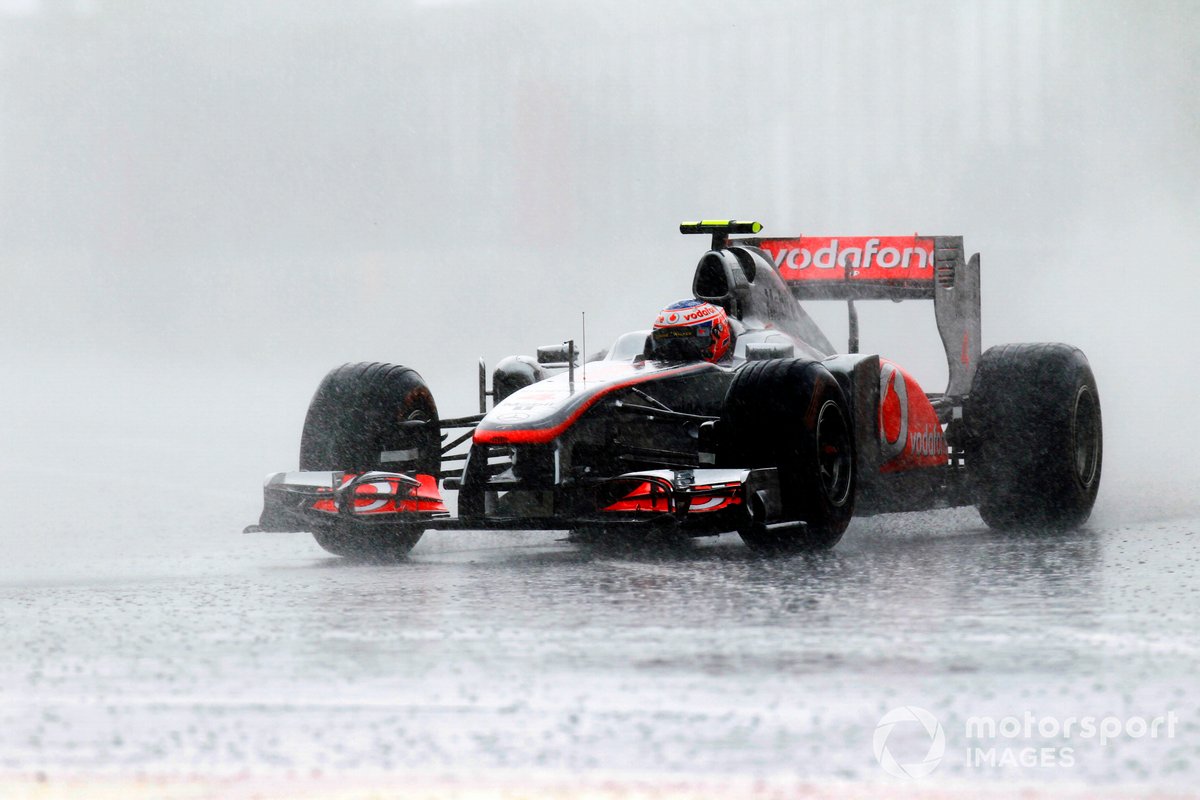
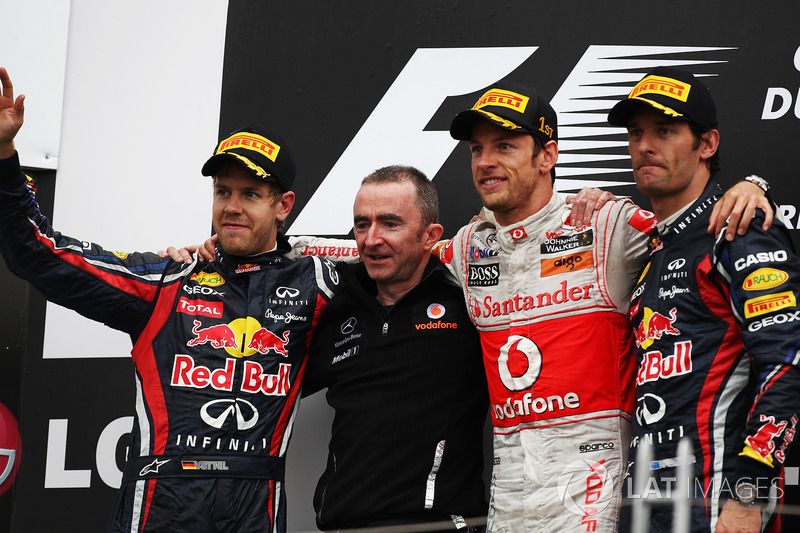
Four hours, four minutes, and 37 seconds. The 2011 Canadian Grand Prix is remembered for two reasons: it was the longest race in Formula 1 history, a record that might never be broken, and for Jenson Button’s remarkable victory after starting from the back of the grid. This race is considered one of Button’s finest, where he battled not only the elements but also several on-track incidents to climb from last to first.
Button had always excelled in unpredictable conditions, a skill honed during his karting days when he often raced in slick tires under similar circumstances. McLaren had anticipated a wet race and set up their cars with high downforce, which suited Button perfectly. However, the first half of the race was anything but smooth.
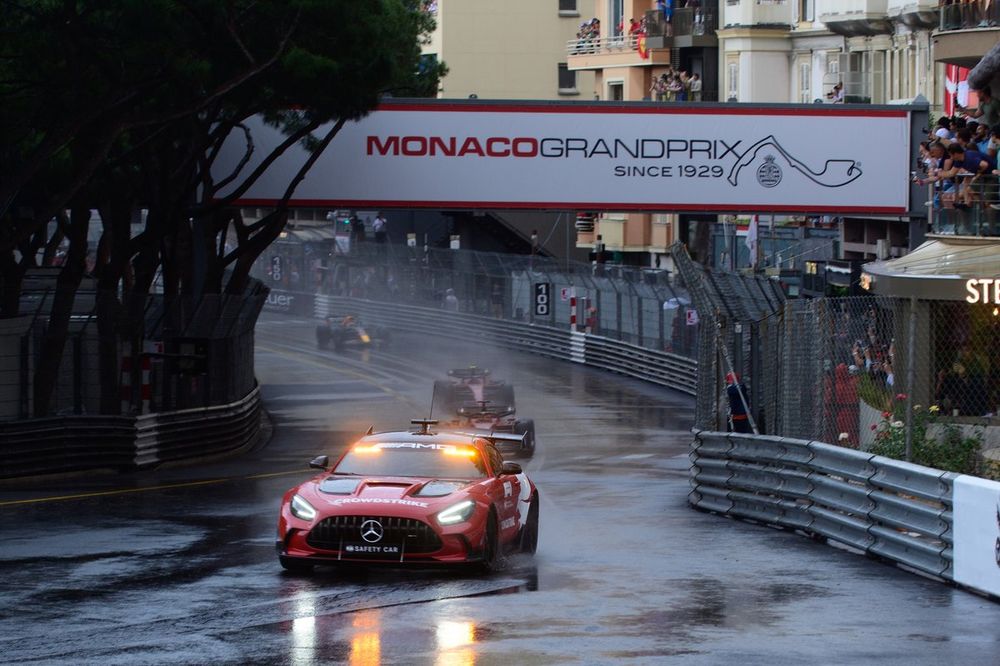
The race began behind the safety car for the first four laps. Soon after, Button had an incident with his teammate Lewis Hamilton. Hamilton, who had qualified fifth compared to Button’s seventh, lost ground after making contact with Mark Webber at Turn 2. The following laps were filled with close calls and strategic moves. Button let Michael Schumacher through at Turn 6, allowing him to take fifth, while Hamilton overtook him again as Button struggled to regain control.
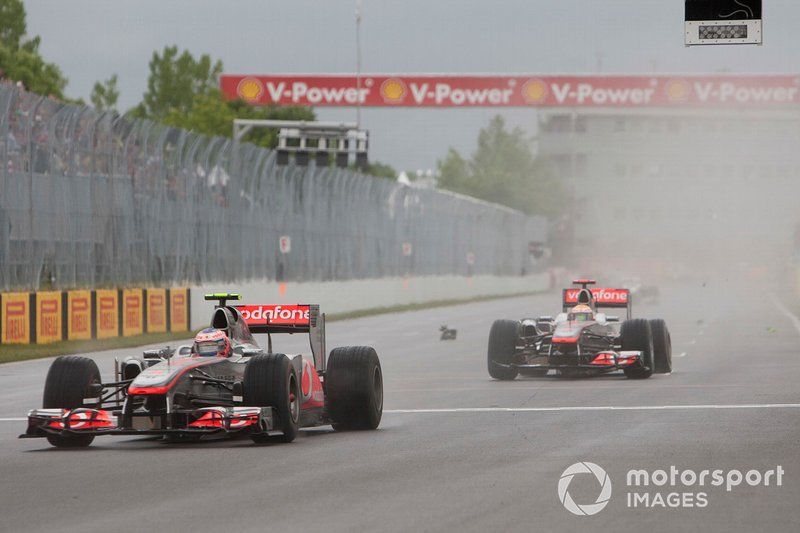
On lap six, Hamilton attempted to overtake Schumacher at the hairpin, but the seven-time champion held his line, allowing Button to pass into sixth. Later, the McLarens made contact again. Hamilton tried to overtake Button on the start-finish straight, but Button closed the door, leading to a crash that saw Hamilton retire with damage to his left-rear wheel.
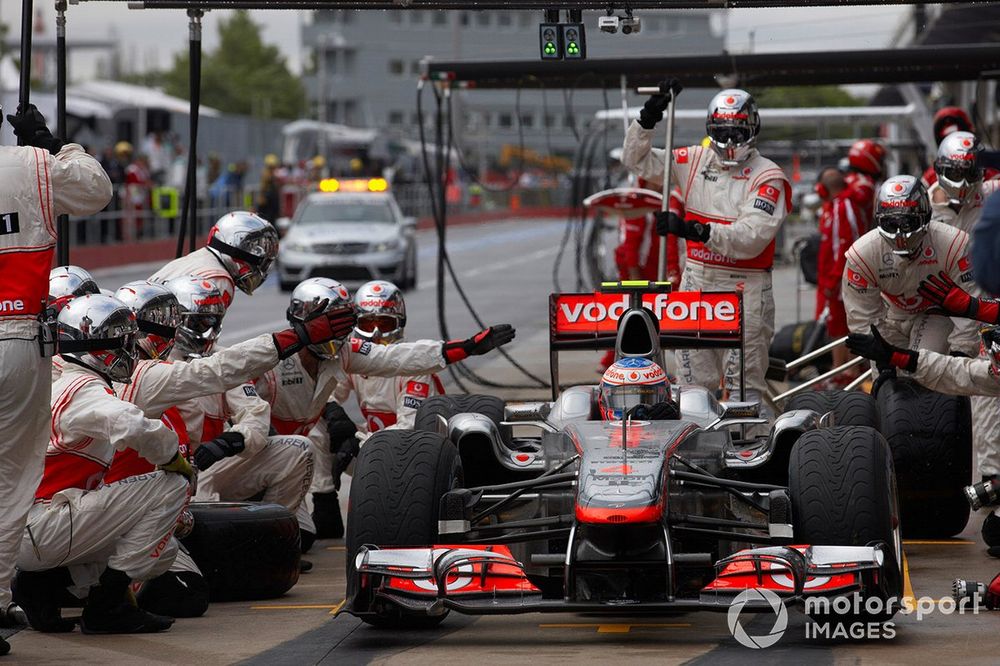
Button used the safety car period to pit, switching from full-wet to intermediate tires. However, he was penalized for speeding behind the safety car, dropping him to 15th place. Despite this setback, Button quickly made progress through the midfield, lapping significantly faster than race leader Sebastian Vettel.
As the rain intensified, the intermediates became ineffective, and the track surface was nearly unrecognizable. The safety car returned, and Button switched back to full-wet tires. After 24 laps, the race was red-flagged due to the worsening conditions. The race remained halted for two hours, with the cars waiting on the grid as the rain continued.
After a long wait, the race resumed, and Button managed to move up the field, eventually finding himself in a battle for second place. A late safety car period allowed Button to catch up to the leaders, and he eventually found himself in a final showdown with Vettel.
On the final lap, Button closed in on Vettel, who slid off the track at Turn 6, giving Button the lead and a monumental victory. He had come from the back to the front in just 30 laps, forcing the reigning champion into a last-gasp mistake.
This win was particularly special for Button, marking his most memorable victory. It showcased his ability to thrive in challenging conditions and demonstrated his resilience and determination.
How Canada 2011 Changed Wet Races Forever
The 2011 Canadian Grand Prix exposed a flaw in the rules regarding race duration. At the time, there was no maximum limit for races beyond the two-hour green-flag running period. As a result, a four-hour limit was introduced to prevent races from being affected by sunset. This was later reduced to three hours in 2021.
The race also highlighted the need for more proactive decisions by race directors in adverse weather conditions. Drivers had expressed a desire for race control to take a more active role in stopping races if conditions were too dangerous, rather than continuing and risking injury.
Red flags in anticipation of poor weather have since become more accepted. While fans often joke about the effectiveness of Pirelli’s wet tires, the main issue in modern wet races is visibility, not grip. F1 and the FIA have tested wheelguards to reduce spray caused by current aerodynamic packages. It remains to be seen how 2026 regulations will address these issues, especially with narrower tires and bodywork.
Although some criticize the caution in wet races today, it is preferable that race directors can preemptively manage situations in poor weather rather than wait for disasters to occur.
The Legacy of a Rainy Victory
Button’s 2011 Canadian Grand Prix victory stands out among his other rain-affected wins, including his 2006 Hungarian Grand Prix and 2009 Malaysian race. It represents the quintessential Button win, showcasing his ability to adapt and perform under pressure.
The Impact on Future Regulations
The 2011 Canadian Grand Prix led to significant changes in how races are managed in wet conditions. The introduction of a four-hour limit and the increased use of red flags in response to weather have improved safety and fairness in Formula 1.
Related Articles
WEC: Button Rules Out One-Off Le Mans Return as WEC Career Nears End