A Call for Human-Led Leadership in Nepal
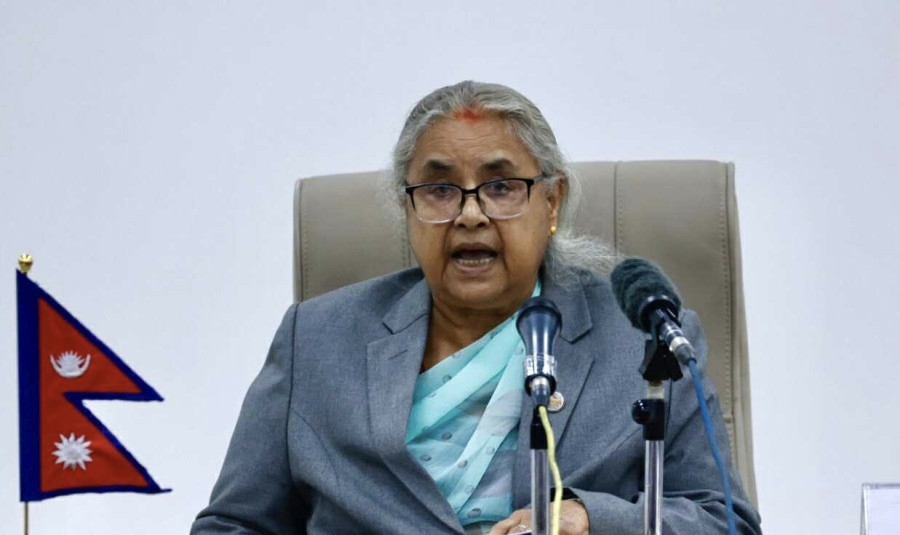
In recent times, Prime Minister Sushila Karki addressed the nation, promising timely elections, relief, and accountability. Yet, this single speech cannot erase a deeper pattern: in Nepal, leaders often avoid engaging with the people they represent, especially during moments of uncertainty. This disconnect is not a new phenomenon but rather a recurring issue that has shaped the political landscape.
The importance of leadership during crises was vividly demonstrated on September 11, 2001, when New Yorkers faced an unimaginable tragedy. At that moment, it would have been expected for city leaders to retreat behind bureaucracy and faceless communiques. However, then-Mayor Rudy Giuliani chose a different path. He walked the streets himself, covered in ash, and spoke to his city with words that were human, natural, and unadorned. His presence and communication provided reassurance, projecting calm, confidence, and determination that New York would rebuild.
Psychologists later noted that Giuliani’s press briefings and street appearances served as a form of psychological first aid. While he didn’t offer direct solutions, his actions reassured the city that it was not leaderless and that the fears of its citizens had been acknowledged. This kind of leadership is what the Nepali people could have used during their own moments of fear, particularly during the Gen Z protests.
These protests were not just about a social media ban; they reflected a deeper anxiety about freedom of expression and the government’s arbitrariness. Instead of addressing these concerns with transparency and empathy, former Prime Minister KP Oli and Communications Minister Prithvi Subba Gurung responded with mockery and firm statements. What the people encountered was not dialogue but decrees, not persuasion but ridicule, and eventually, not words but bullets.
This pattern of leadership failure extended to the controversy over embossed number plates. The idea itself had merit—a modernized registration system could improve road safety and strengthen law enforcement. However, instead of explaining the policy or negotiating practical compromises, the government issued an ultimatum, which resembled the commands of imperial governors more than the voice of elected representatives.
These are not isolated failures but part of a larger trend where Nepali leaders confuse command with communication. In democracies, policies often fail not because of technical flaws but because they are poorly explained and perceived as exclusionary. A government that does not talk to its citizens creates the very instability it seeks to suppress.
This absence of meaningful communication is not limited to current crises. During the 2015 earthquake, Nepalis searched for their leaders, much like New Yorkers did after 9/11. They saw the army and police working heroically but felt the government was absent. Leaders were not present in moments of fear, let alone offering words of solidarity or hope.
In contrast, leaders like New Zealand’s Jacinda Ardern demonstrated the power of empathetic communication. After the Christchurch Mosque shootings, she comforted her nation by embracing victims’ families, wearing a headscarf, and calling those murdered “our people.” During the pandemic, she spoke directly from her living room, using plain, empathetic language. These actions highlight the importance of genuine connection, something that Nepali leaders often overlook.
PM Karki’s recent address was no different. Delivered from behind cameras, it carried the tone of a scripted statement and failed to convincingly explain why constitutional amendments must wait until after elections. It also lacked openness to acknowledging the challenges of holding presidential-style elections or a referendum on core issues. Such gestures risk being one-off actions when what Nepal needs is regular, empathetic communication from its leaders.
The new government has begun with some positive steps. PM Karki visited hospitals, comforting the injured. Finance Minister Rameshore Khanal invited email inputs on governance issues, and Education Minister Mahabir Pun provided candid responses about free education. These actions reflect a more realistic and honest tone compared to past leaders who made unrealistic promises.
However, beyond these exceptions, the contrast in inspiring and reassuring citizens remains discouraging. Nepal does not need leaders who reduce politics to pre-scripted press statements or commands enforced by law enforcement. It needs human-like leaders willing to stand visibly in public spaces, explain policies in plain words, admit uncertainty, and speak with empathy.
The lost art of talking to the people is not a Western luxury but a universal necessity. It is the foundation on which trust between citizens and leaders is built. On 9/11, New Yorkers found solace in the imperfect yet present figure of a mayor who walked with them through ash and ruin. Two decades later, Nepalis—facing fragile mental health amid current crises—continue their search for a leader to reassure, persuade, and inspire.
The current government, along with less unpopular leaders of the old regime, must rediscover this lost art, rebuild eroded trust, and inspire confidence. Recent inactions and unapologetic statements from leaders do not signal such efforts, but hope remains that change is possible.


