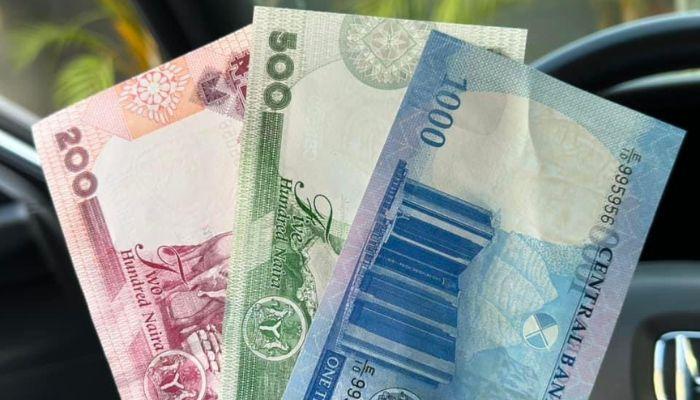
The Naira’s Value and the Complexities of Economic Stability
The Naira, Nigeria’s official currency, has long been compared to the U.S. dollar due to its role as the primary reserve currency in global trade. However, the dynamics between these two currencies have shifted significantly in recent years. In 2025, the dollar experienced a notable decline, losing approximately 11% of its value against major currencies, marking one of the largest drops since the 1970s. While this depreciation is significant, analysts predict that the dollar will eventually recover. The question remains: what will happen to the Naira when this recovery occurs?
Understanding the current value of the Naira is essential to addressing this concern. The Naira has seen some fluctuations over the past year, with an appreciation of about 11% against the dollar. This shift has sparked considerable debate among economists and policymakers. Some argue that the Naira is overvalued, while others believe it is undervalued. To determine which perspective holds more weight, it is crucial to understand the implications of both scenarios.
When the Naira is overvalued, it means it trades at a stronger rate than its true worth. For example, if the Naira sells at N500 per USD, but its fair value is actually N1,000, exports become expensive for foreign buyers, while imports become cheaper. Conversely, when the Naira is undervalued, it trades at a weaker rate than its fair value. If the Naira is priced at N1,500 per USD, but its fair value is N500, exports become more competitive, but imports become costly, leading to inflation.
As of late September, the official exchange rate places the Naira at roughly N1,500 to the dollar, with the parallel market slightly higher at N1,515. Compared to previous years, this represents some progress, but it also masks underlying economic challenges. The cost of the currency merger is being passed on to consumers, resulting in inflation on imported goods. Headline inflation remains high, exceeding 21%, while the 2025 budget projected it to be around 15%. Additionally, external debt service amounts to $5.4 billion, and foreign reserves remain fragile, despite some recovery.
To assess the Naira’s value, the Big Mac Index offers a simple yet effective method. If a Big Mac burger costs $5.79 in the U.S. and N3,900 in Abuja, the implied exchange rate would be approximately N1,029 to the dollar. Comparing this to the current rate of N1,500, the Naira appears to be 31% weaker than its fair value, indicating undervaluation.
Another approach comes from the World Bank’s Purchasing Power Parity (PPP) index. In 2023, when the dollar was around N950, the Naira was classified as undervalued by about 35%. With rising inflation and multiple devaluations since then, the gap today is likely closer to 200%, suggesting that Nigerian goods and services are three times cheaper than their global counterparts.
Despite these calculations, not all experts agree. However, most local analysts acknowledge that the Naira is undervalued, even if the extent is less dramatic than suggested by the Big Mac Index. Undervaluation can benefit an export-oriented economy by making Nigerian goods more competitive. However, it poses challenges for an import-dependent economy, where rising import costs lead to higher inflation and reduced purchasing power for households.
This delicate balance highlights the trade-off between supporting exports and managing the cost of living. A weaker Naira may appear beneficial on paper, but it often translates to hardship for everyday Nigerians.
Looking ahead, the Central Bank’s ability to manage monetary policy will play a critical role in stabilizing the Naira. Dollar reserves have increased from $33 billion in 2023 to $42 billion in 2025, providing some breathing space. If this trend continues, the Naira could potentially appreciate toward N750 per dollar, easing import costs and offering relief to consumers.
However, risks remain. A shift in U.S. monetary policy could strengthen the dollar, increasing demand and causing the Naira to depreciate further. With limited resources to defend the currency, the Central Bank may struggle to maintain stability. Borrowing from Argentina’s experience could offer some insights, but the outcome remains uncertain.
Ultimately, the Naira’s value reflects broader economic challenges, including reliance on oil, import dependency, and structural issues tied to international financial institutions. Addressing these problems is essential for long-term stability. Until then, the Naira will continue to represent the complexities of Nigeria’s economic landscape.


