A New Chapter in Asia for Tiffany & Co.
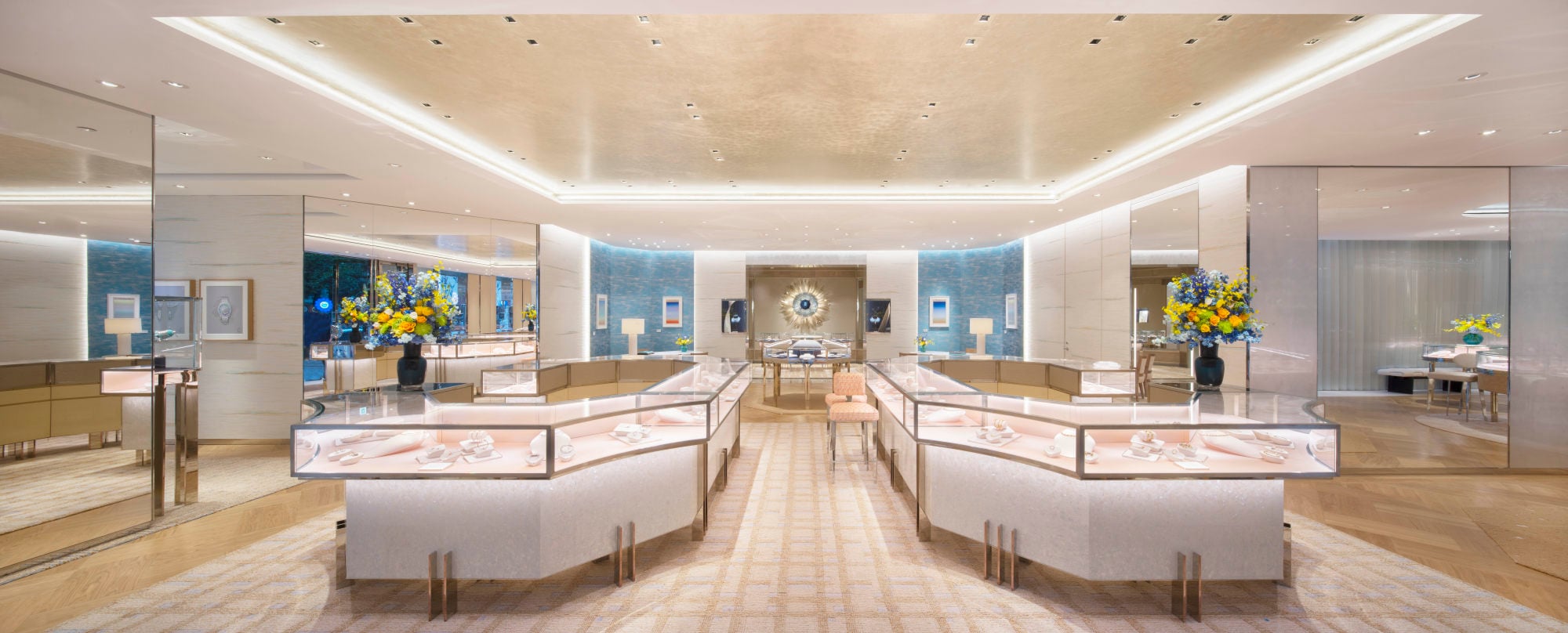
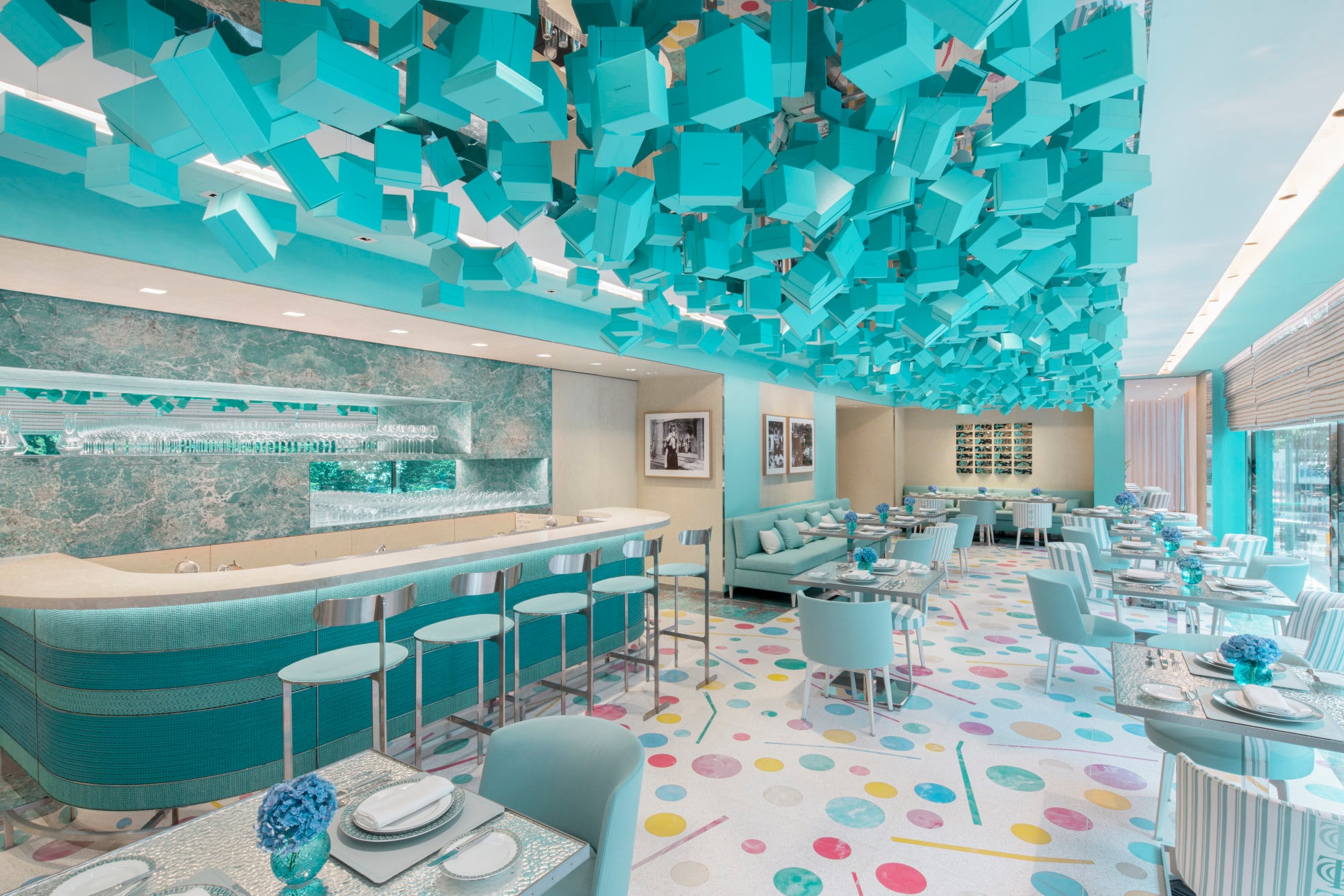
Tiffany & Co., the iconic American jewellery house, is making significant strides in its expansion across Asia. With standout store openings in Tokyo’s Ginza district and Beijing’s Taikoo Li Sanlitun, the brand continues to solidify its presence in the region. These stores are not just retail spaces but artistic expressions inspired by the company’s rich archives and history. The latest addition to this impressive line-up is the new Hong Kong store at Lee Gardens, where a Tiffany Blue Box Cafe is set to open next month.
The Ginza outpost pays homage to the wisteria-like glass designs of Louis Comfort Tiffany, while the Lee Gardens store draws inspiration from a bamboo print that he collected in the early 20th century. Created in collaboration with textile and metal artist Mariko Kusumoto, the store’s windowfronts feature realistic structures meant to evoke said print, which appears on the surrounding window graphics, constructed in her signature intricate style. Inside, hints of the house’s signature Tiffany Blue – trademarked back in 1998 and later standardised with a Pantone partnership as 1837 Blue, a nod to the year in which Tiffany & Co. was founded – imbue the space with a soft glow.
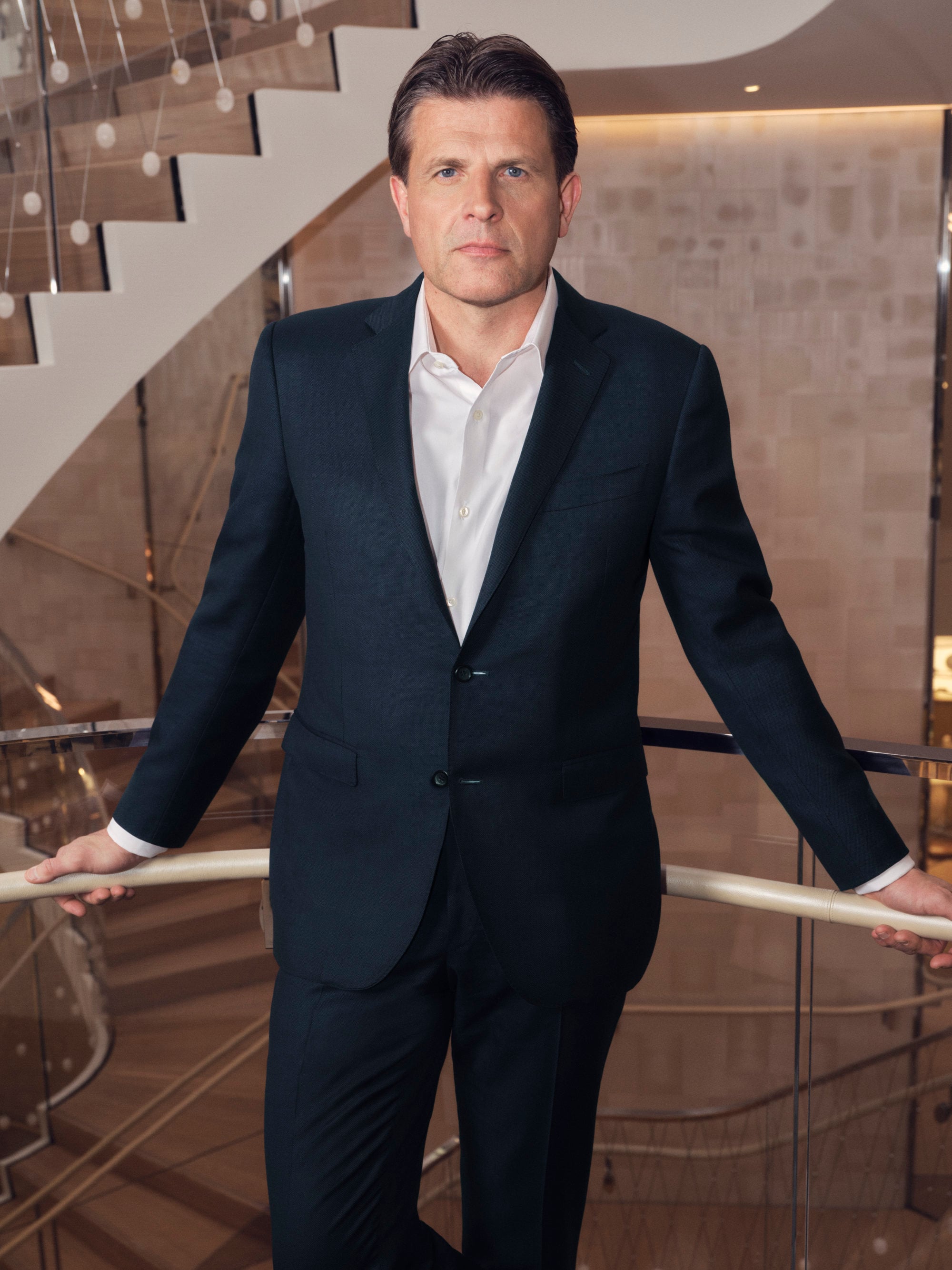
These new openings reflect Tiffany & Co.’s approach to merging brand storytelling with modern aesthetics, elevating the house’s image for new generations and demographics of clients. Anthony Ledru, president and CEO of Tiffany & Co., notes that across Asia, the brand is seeing a sophisticated, highly engaged client who moves seamlessly between luxury, culture, and lifestyle. He cites “consistency and cohesiveness” in brand messaging as one of the main reasons for its success in the region. “We’ve had incredible momentum within our retail network,” he says.
Tiffany & Co.’s revamped New York flagship, The Landmark, is foundational to that messaging and the cornerstone of the brand’s incomparable legacy. This store was famously immortalised in the Truman Capote novella Breakfast at Tiffany’s and its Audrey Hepburn-led film adaptation, a pop culture moment that lives on in public imagination and now informs the offerings at Blue Box Cafes globally. Streamlined design and nostalgic touches, like in The Landmark, ensure a sense of continuity between all of Tiffany & Co.’s global flagships.
“Tiffany has always been an American brand with a strong international influence,” Ledru points out. He says “immersive in-store experiences” like the Blue Box Cafe, designed to make the Tiffany & Co. story feel multisensory and multidimensional, are key to the brand’s ambitions in Asia and beyond. Guests at the cafe can indulge in the internationally acclaimed Tiffany Afternoon Tea as well as new dishes by Michelin-starred chef Agustin Balbi, founder of Hong Kong’s renowned Japanese-Argentinian restaurant Ando. The menu’s offerings are infused with a distinctly Asian touch.
“Bringing a distinctly New York energy to a global audience, and balancing heritage with a truly international perspective, remains one of our greatest strengths,” Ledru says. “From the very beginning, Charles Lewis Tiffany looked beyond the United States, sourcing exceptional gemstones from around the world and establishing Tiffany & Co. as a global authority in jewellery and craftsmanship.”
By envisioning beautifully designed stores as stand-alone destinations in their own right, not just places to shop, Ledru says Tiffany & Co. has created “cultural hubs that are locally relevant while remaining unmistakably Tiffany.” The Lee Gardens store is not only proof of concept, but also testament to the house’s long-standing relationship with Hong Kong.
In 2019, the brand opened its first Blue Box Cafe in Asia here at One Peking Road and has steadily expanded its footprint in recent years with new stores on Canton Road and in the Pacific Place mall.
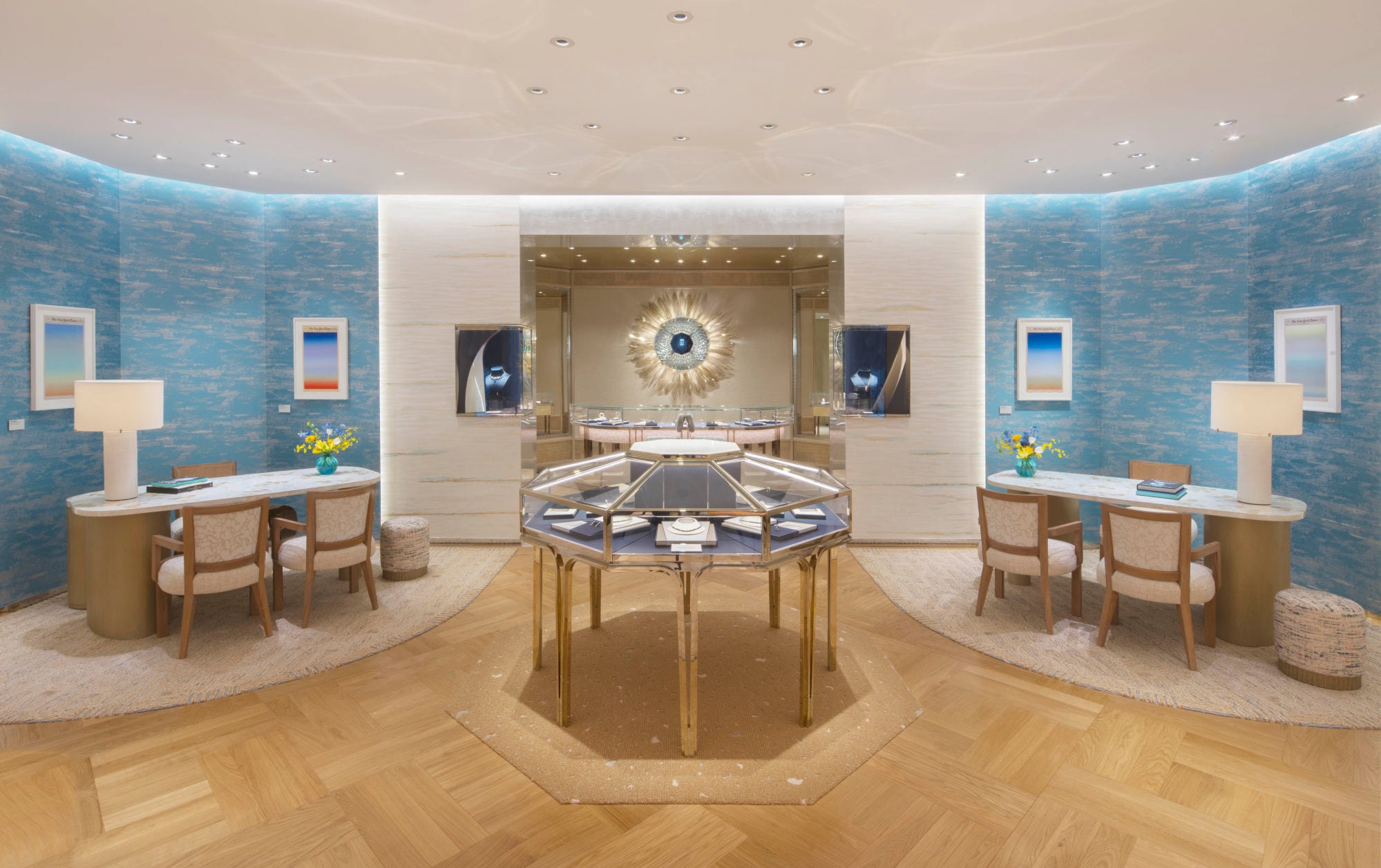
“Hong Kong is a priority for Tiffany,” says Ledru, praising the city’s “vibrant, design-forward hospitality culture.” The Lee Gardens store reflects this consumer demand for luxurious spaces that are as welcoming as they are intellectually stimulating. A curated selection of works by artists like pioneering Korean sculptor Shim Moon-Seup and New York-based Japanese painter Sho Shibuya are on display in the watch salon on the first floor, while a stunning sunflower vitrine – tribute to a historic objet d’art by Tiffany & Co.’s long-time jewellery designer, Jean Schlumberger – is a museum-worthy piece in itself. “Clients are incredibly attuned to how brands show up beyond product. There’s a strong appetite for interactive experiences that reflect both craft and modern lifestyle,” adds Ledru.
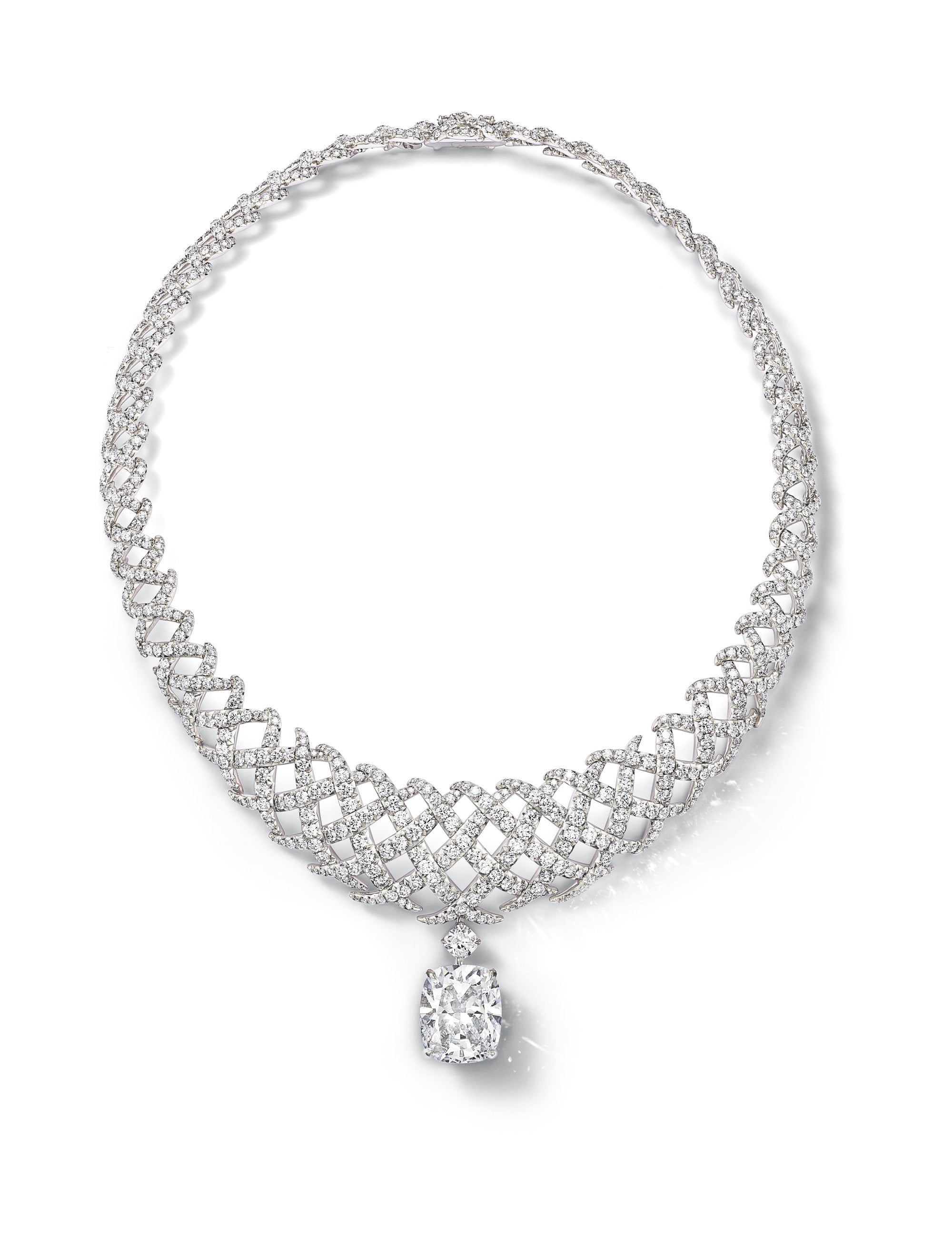
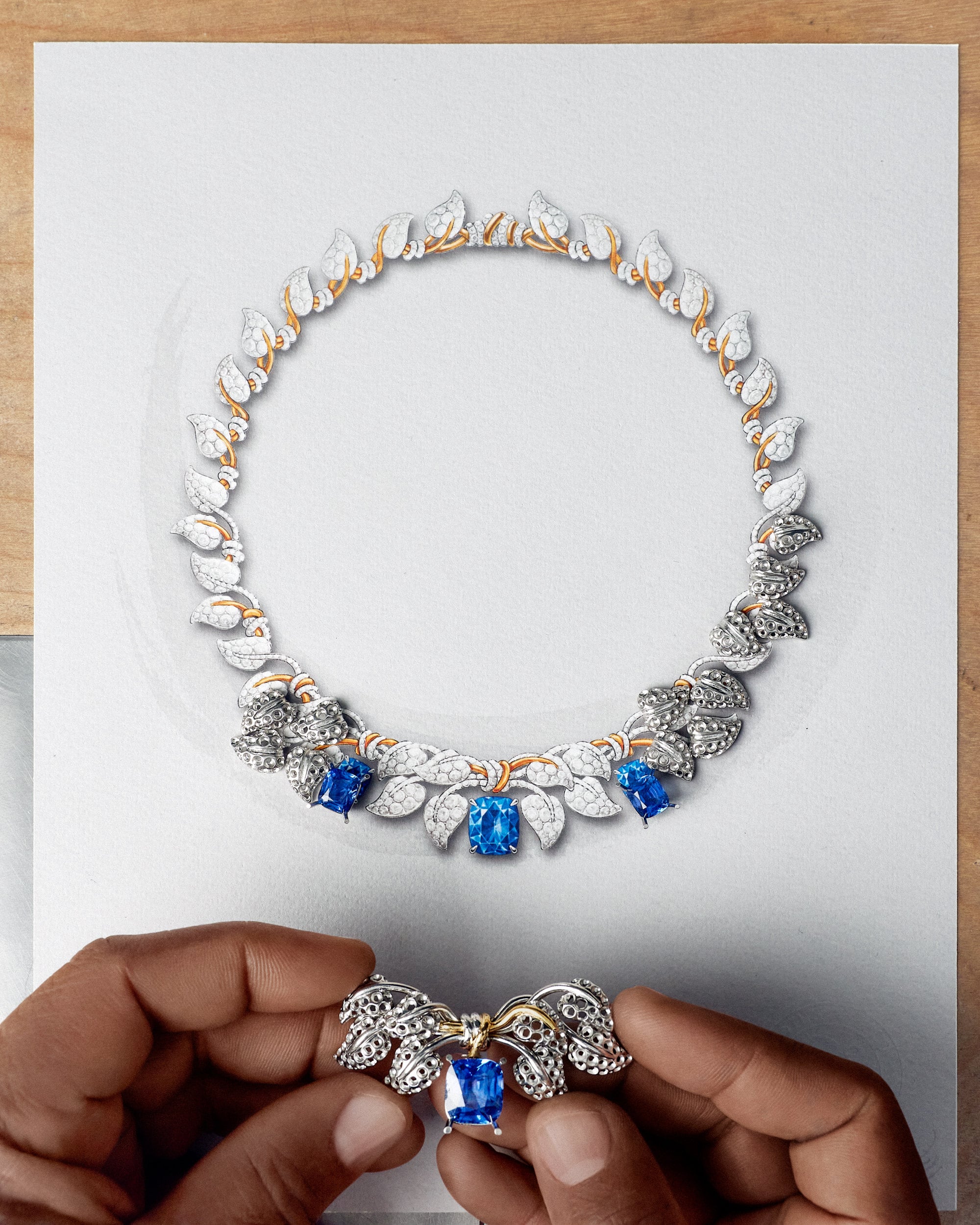
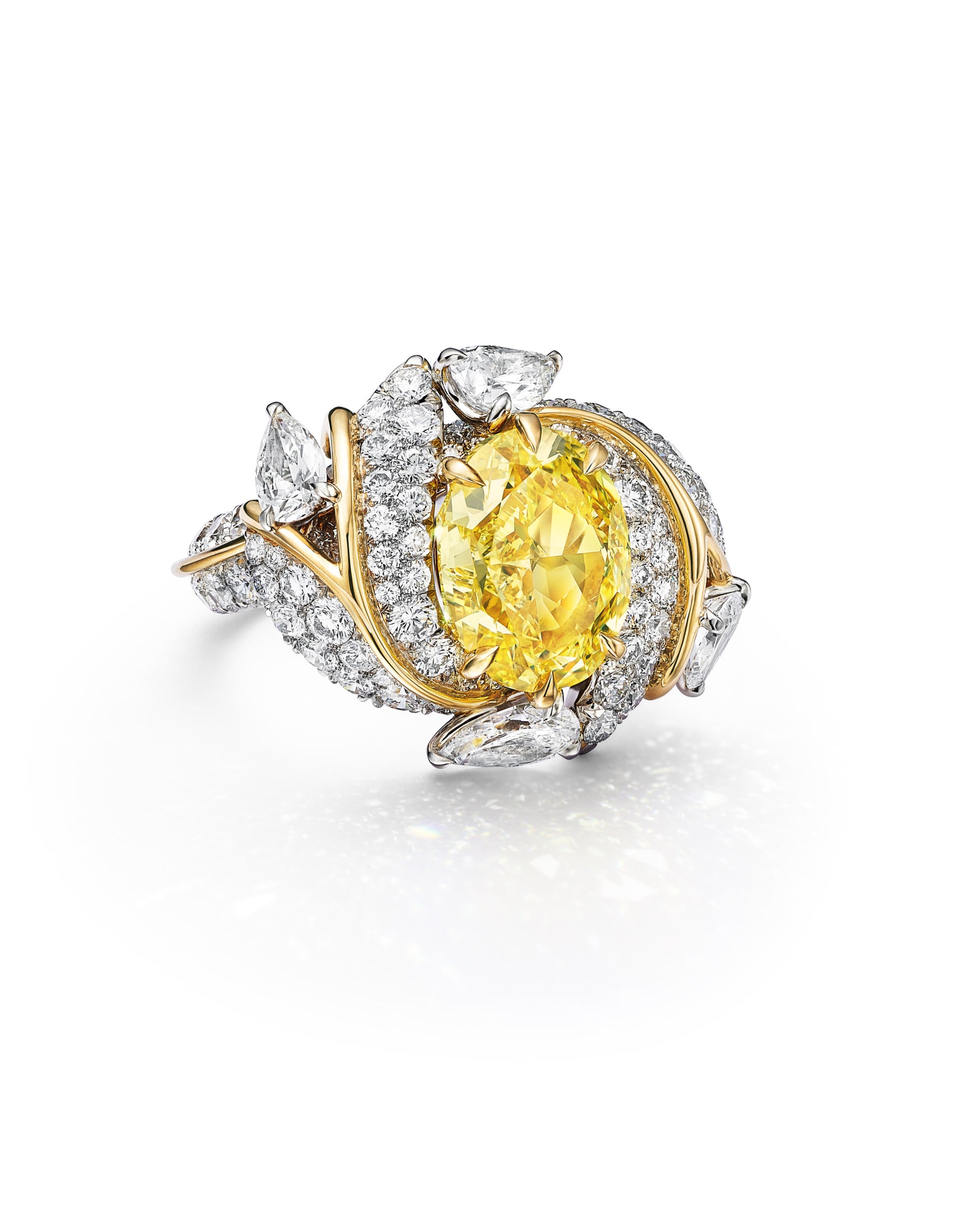
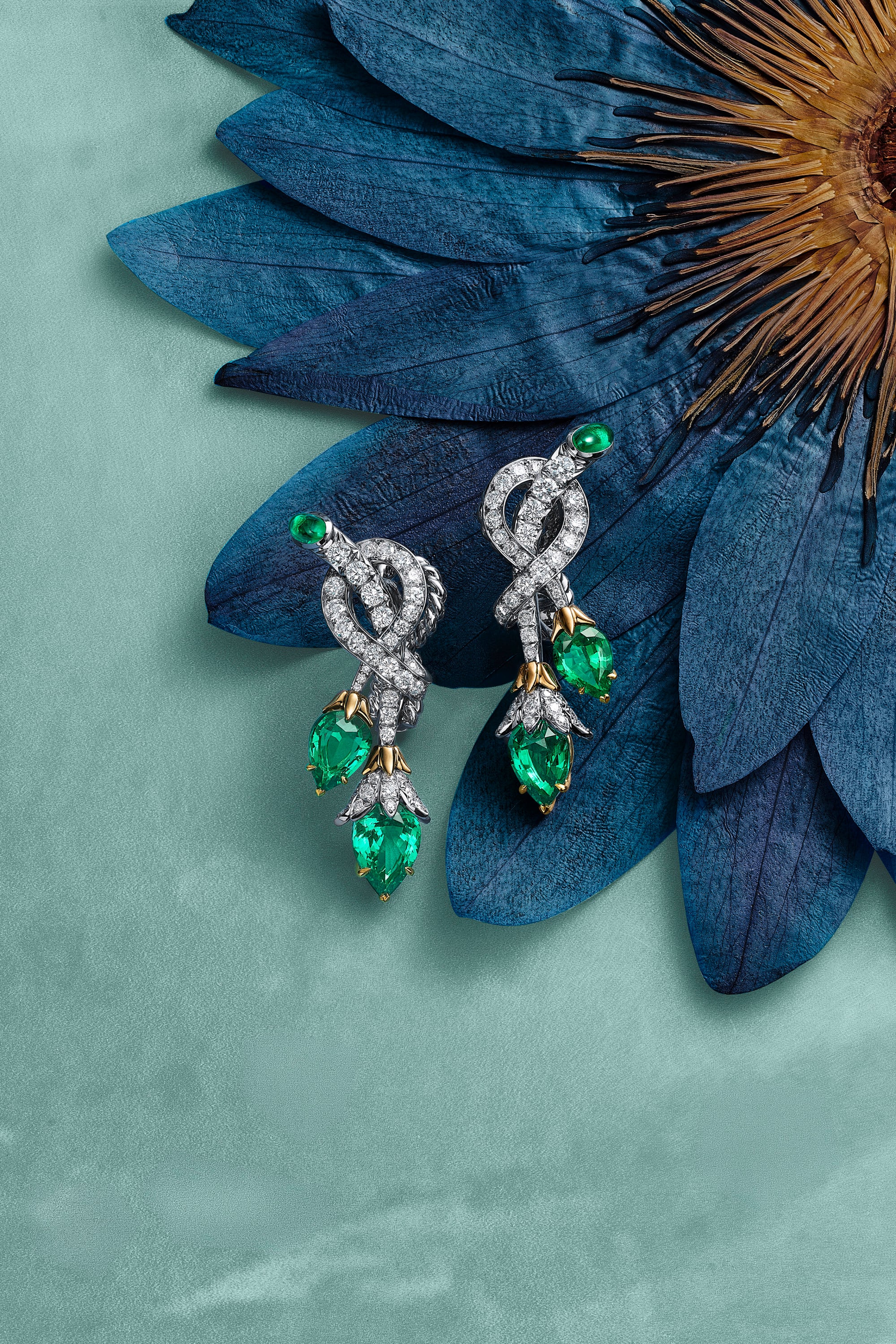
Pieces from Tiffany & Co.’s annual high jewellery showcase, the Blue Book collection, also take pride of place in the new store, showcasing the house’s impeccable reputation for diamond sourcing and jewellery-making. This year’s collection, Hidden Garden, expresses the essence of the Tiffany & Co. story in a way that feels particularly relevant to the brand’s blueprint for continued growth and evolution, drawing inspiration from Schlumberger’s archival designs while using new techniques, stones, and methods. Jewellery suites from the Monarch and Jasmine stories, or chapters, of the Hidden Garden collection dazzle in their ability to make even the most intricate forms of nature appear effortless, achieving a delicate balance of historic value and contemporary elegance.
Ledru says Tiffany & Co., “by showcasing our exceptional design in vibrant cities and forging invaluable connections with our discerning clientele”, continues to demonstrate how everything about the brand’s storytelling – from stores to activations to “the remarkable growth” in its high jewellery category – holds more appeal than ever.
Safeguarding this legacy of unparalleled storytelling has been paramount to his strategy for the brand since taking the helm in 2021, Ledru says.
“Tiffany was a sleeping beauty, a house with an incredible history, exceptional craftsmanship and enormous potential that had not yet been fully expressed,” he adds. “Our ambition was not to change what Tiffany is, but to reveal what it has always been capable of … our work has been to elevate and expand our reach, investing in high jewellery, our new store design and our most iconic collections to become who we were.”