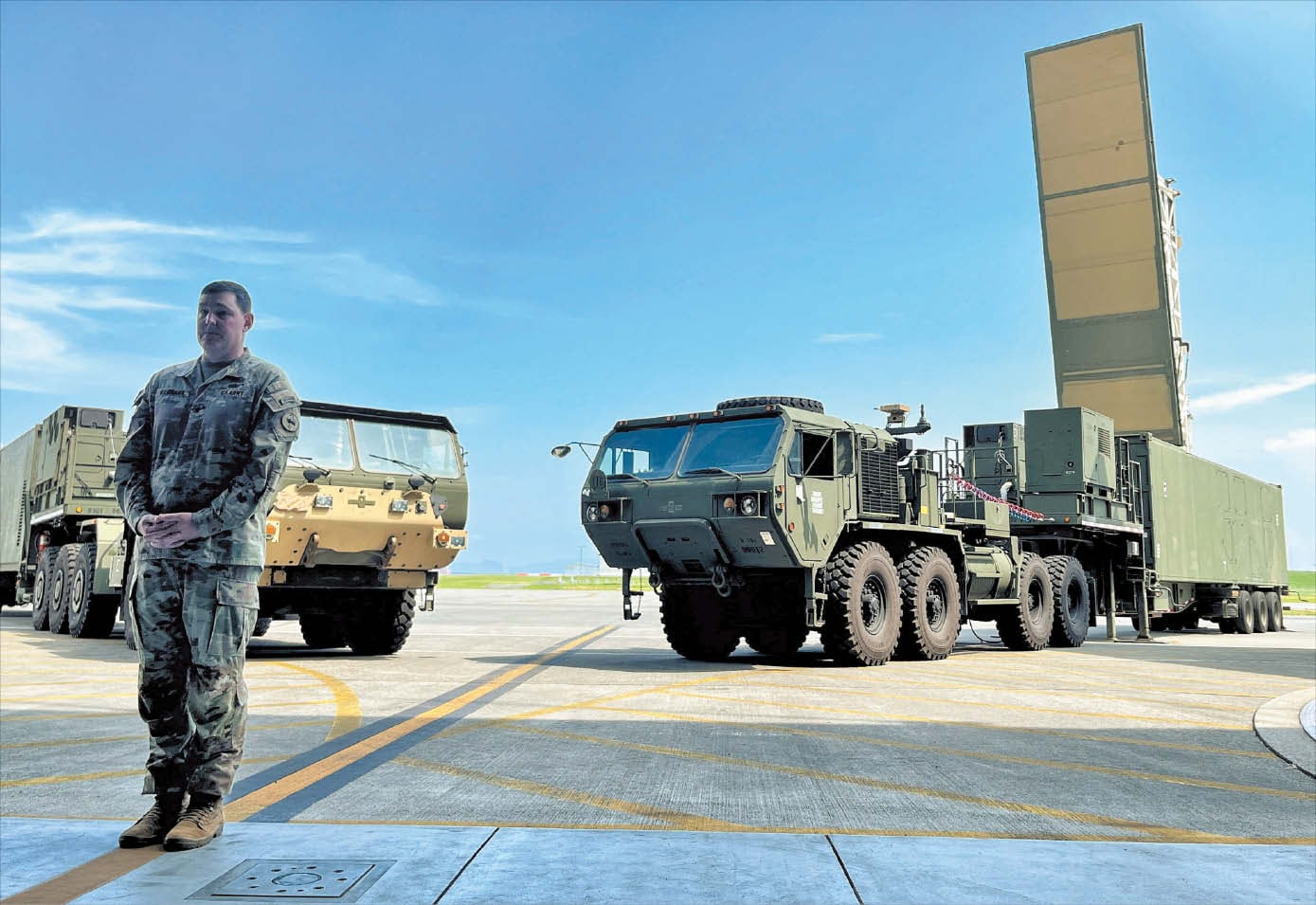
Deployment of the Typhoon Missile System in Japan
The United States has deployed its latest intermediate-range missile system, known as “Typhoon,” to Japan. This move was announced on the 15th and is part of the annual joint military exercise called “Resolute Dragon,” which runs from the 11th to the 25th. This marks the first time the Typhoon has been stationed in Japan, placing a significant portion of China within its strike range.
This deployment comes amid heightened tensions in the Asia-Pacific region. At the end of last month, China issued a warning, urging caution in words and actions, while Russia and North Korea also expressed concerns, advising against any provocative measures. Despite these reactions, the training proceeded as planned. The U.S. and Japan have increased their show of force in response to China’s recent military displays and its alignment with Russia and North Korea during the Tiananmen military parade on the 3rd.
Strategic Significance of the Typhoon System
The Typhoon system is stationed at the Iwakuni base in Yamaguchi Prefecture, western Honshu. It is capable of launching Tomahawk cruise missiles, which have a maximum range of 2,500 km, and multi-purpose SM-6 missiles, both of which are key strategic assets for the U.S. military. The Typhoon’s mobility and versatility make it a challenging asset for North Korea, China, and Russia to counter.
Colonel Wade Germany of the U.S. Marine Corps highlighted the system’s capabilities, stating that it can create dilemmas for enemies through the use of various systems and ammunition. He added that the Typhoon could be rapidly deployed to front lines if needed. In a contingency scenario, the Typhoon could directly target not only the Korean Peninsula but also major cities in China, such as Beijing, Shanghai, Chongqing, and Shenzhen, as well as Vladivostok in Russia.
Scale and Impact of the Exercise
The training involved 14,000 members of the Japan Self-Defense Force and 5,000 U.S. troops, making it the largest joint exercise in history. The deployment of the Typhoon to Japan for live-fire training is seen as a strategic move to preempt China’s efforts to dominate the Pacific from the First Island Chain, which includes Japan, Taiwan, and the Philippines.
On the 3rd, during the Tiananmen military parade, China showcased advanced weapons, including the Dongfeng-5C, a multi-warhead intercontinental strategic nuclear missile with a range of 20,000 km, and the “Guam Killer” Dongfeng-26D missile, which has a range of 5,000 km. Additionally, China has concentrated the deployment of Dongfeng-16 missiles, which can target U.S. military bases in South Korea and Japan, on the Shandong Peninsula.
Regional Response and Strategic Implications
In response to China’s military expansion, the U.S. deployed the Typhoon to the Philippines in April last year. In July, it also deployed the latest hypersonic missile, “Dark Eagle,” along with the Typhoon to northern Australia, marking the first deployment outside the U.S. mainland.
Grant Newsham, a retired U.S. Marine Corps colonel and researcher at the Japan Forum for Strategic Studies (JFSS), noted that such deployments would have been rejected in the past due to concerns over Chinese backlash. However, he stated that Chinese backlash is now less of an issue, indicating that the U.S. no longer considers Chinese reactions in its strategic decisions.
Military Tensions and Budget Increases
China has not issued an official statement regarding the Typhoon’s deployment to Japan. However, the effectiveness of Tomahawk missiles in real combat scenarios, such as the Iraq War and operations against the Islamic State (IS), could be perceived as a signal of U.S. military intervention. This may lead to future backlash from North Korea, China, and Russia.
As military tensions escalate in the Asia-Pacific region, arms races among countries are expected to intensify. China’s defense budget this year increased by 7.2% compared to the previous year. Taiwan also raised its defense budget for next year by 20%, which accounts for over 3% of its gross domestic product. Japan’s defense budget for next year exceeds 88 trillion Korean won, representing the largest military expansion since the end of World War II. South Korea has also set its defense budget for next year at 66.3 trillion Korean won, reflecting an 8.2% increase from this year.


