The Global Energy Landscape and the Impact of Secondary Sanctions
Donald Trump’s recent comments on India’s and China’s continued purchases of Russian oil have sparked significant concern in global markets. He believes that India will reduce its reliance on Russian energy, with China following suit. However, both countries have pushed back against these threats, highlighting their strategic interests in maintaining stable energy supplies.
India and China have been resisting the pressure from the United States, which has threatened secondary sanctions for engaging in trade with a sanctioned country. These sanctions are aimed at curbing the purchase of Russian oil, a critical source of revenue for Russia’s military operations in Ukraine. Despite this, both nations have emphasized their commitment to protecting their economic interests.
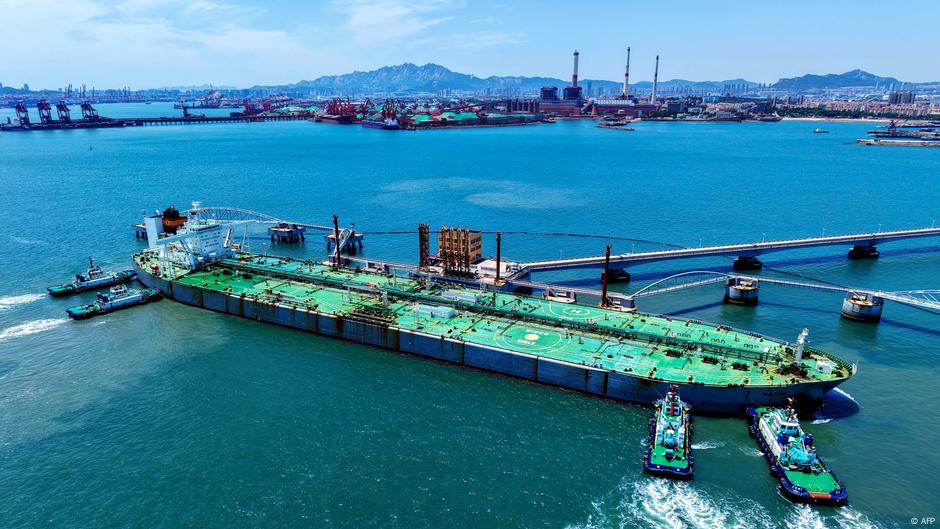
New Delhi has stated that its primary focus is “to safeguard the interests of Indian consumers in a volatile energy environment.” In response to Trump’s remarks about China, Beijing asserted that its Russian oil imports are “legitimate” and refused to accept “unilateral bullying” from the US. China has become the largest importer of Russian oil in 2022, showcasing its significant role in the global energy market.
India has previously criticized Western hypocrisy, pointing out that the European Union continues to import Russian energy despite reducing its reliance on it since the war began. Additionally, Washington had supported India’s oil purchases from Russia, aiming to stabilize global oil prices after the invasion.
Rising Oil Imports from Russia
India’s oil purchases from Russia have seen a dramatic increase, growing nearly 19-fold from 2021 to 2024, reaching 1.9 million barrels a day. Meanwhile, China’s imports have risen by 50% to 2.4 million barrels a day. This surge in imports has allowed India to save up to $33 billion in energy costs between 2022 and 2024 due to large price cuts offered by Moscow.
Petras Katinas, an energy analyst at the Centre for Research on Energy and Clean Air (CREA), noted that India’s long-standing policy of balancing ties with the US, Russia, and China underpinned its decision to buy discounted Russian crude. New Delhi prioritized energy security and affordability, according to Katinas.
Trump’s New Sanctions Threat
Trump’s new sanctions threat has caused unrest in the markets. He has already imposed a 25% tariff on Indian imports and issued an executive order in August, adding another 25% tariff specifically targeting India’s purchases of Russian oil. This could lead to a spike in India’s oil bill by up to $11 billion.
Secondary sanctions would also impact the Russian economy, which is already struggling with Western sanctions. With military spending exceeding 6% of GDP and real inflation estimated at 15-20%, Russia faces serious budgetary pressures.
For global markets, new sanctions could trigger a seismic shift in energy prices and trade flows, similar to the situation in 2022 when oil prices surged and Russia bypassed Western sanctions through discounted energy deals with major economies.
Potential Oil Price Surge
If Russia’s five million barrels a day were suddenly removed from the oil market, analysts predict a significant surge in oil prices as countries scramble for alternative supplies. Even with OPEC increasing output, replacing such a large volume would be challenging due to limited spare capacity and logistical constraints.
Alexander Kolyandr, a senior fellow at the Center for European Policy Analysis, stated that there is nowhere to get those five million barrels fast enough to prevent a spike in oil prices. Sumit Ritolia, an oil analyst from Kpler, noted that it may take Indian firms up to a year to cut their reliance on Russian oil if required.
Inflation and Economic Impacts
Higher oil prices would lead to a sharp rise in inflation globally. The US Federal Reserve estimates that every $10 increase in crude adds about 0.2 percentage points to US inflation. Similarly, India’s central bank reached a similar conclusion.
In a worst-case scenario, if oil prices climb from the current $58 per barrel to $110-$120 per barrel, a one percentage point inflation rise would drive up costs for consumers and businesses, especially in energy, transport, and food sectors.
India and China: Differing Positions
With the world’s two largest economies conducting over $580 billion of trade, China’s economic scale gives it significant bargaining power that India lacks. China’s control over rare earth minerals is a persistent friction point in US-China relations, and it is likely using this leverage to temper Trump’s stance.
India, lacking comparable leverage, faces a tougher position. Trump has suggested that his new sanctions on Russia and India would “take their dead economies down together.”
Despite these challenges, India’s Foreign Ministry has noted that Washington has shown interest in deepening energy cooperation, with talks underway.
Shrinking Oil Benefits for India
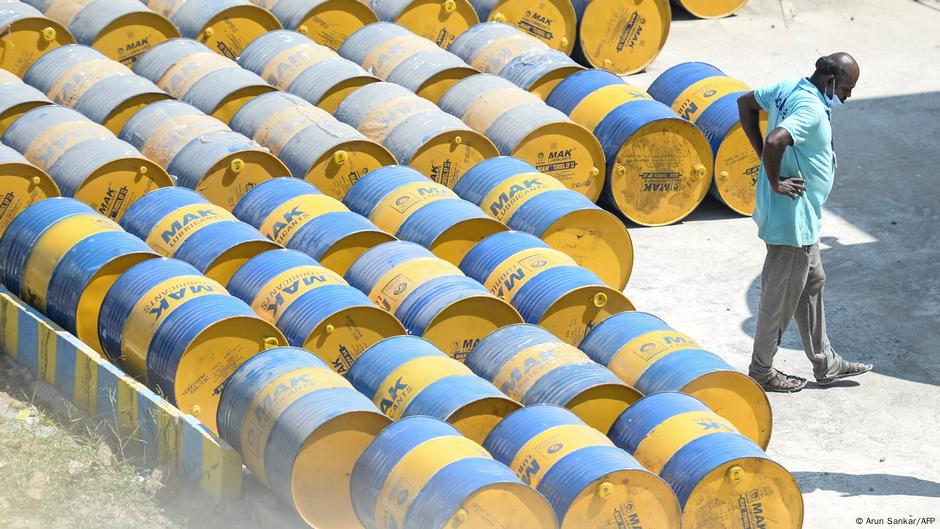
India is no longer reaping the same windfall from Russian oil as it did in 2022, when discounts ranged from $15 to $20 per barrel. That margin has now narrowed to around $5, according to Kpler’s Ritolia. However, Indian refiners continue to buy, with imports hitting an 11-month high in June at 2.08 million barrels per day.
Russia is aggressively maximizing energy revenues, buoyed by rising demand from Turkey and across Asia, where Russian crude is covertly rebranded and reexported to sidestep American sanctions.
While Chinese banks are increasingly refusing Russian transactions, Beijing sees oil imports as a priority that is mostly shielded from political pressure. India, on the other hand, is more likely to hedge, trimming purchases if pressured but not abandoning discounted Russian crude entirely.
Ritolia speculated that India might “reduce” its Russian oil imports, but added: “I don’t see us going down to zero anytime soon.”


