The Urgent Need for EU Support to Ukraine
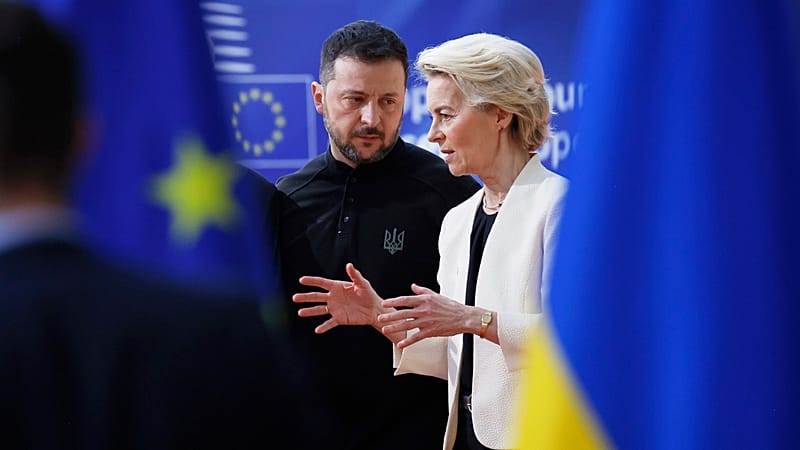
As the European Union (EU) grapples with the challenge of supporting Ukraine’s financial and military needs, the clock is ticking. With foreign assistance significantly impacted by previous policy shifts, the pressure is mounting for the EU to find a sustainable solution before funding runs out. President Volodymyr Zelenskyy has emphasized that Ukraine will require funding from the “very beginning” of next year, highlighting the critical nature of the situation.
Zelenskyy expressed uncertainty about the feasibility of securing this support, stating, “I don’t know if it’s possible. Not everything depends on us.” This sentiment underscores the complexity of the issue, as the EU must navigate a web of political, legal, and financial challenges to provide the necessary aid.
Belgium’s Groundbreaking Plan
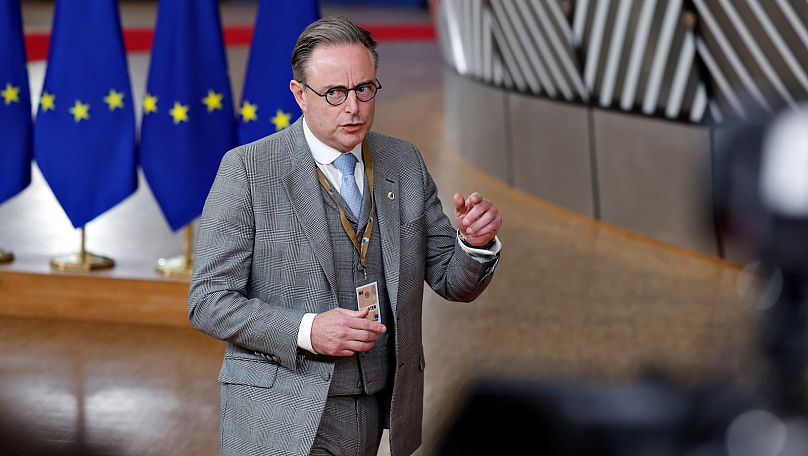
Last week, Belgium proposed a groundbreaking plan to use the immobilized assets of the Russian Central Bank to issue a €140 billion loan to Kyiv. As the prime holder of these assets, Belgium faces concerns about potential retaliation from Moscow and seeks bulletproof guarantees of solidarity among member states. While the principle of a reparations loan has received broad backing, it remains uncertain whether the EU can convince Belgian Prime Minister Bart De Wever by the time leaders meet again in December for a crucial summit.
The European Commission is expected to present an options paper in the coming weeks, outlining potential alternatives to the reparations loan. Here’s what the much-anticipated paper might include.
The Original Reparations Loan
Despite the questions and concerns raised by the Belgian government, the Commission is inclined to stick with its original idea: the reparations loan. Under this tentative scheme, Euroclear, a central securities depository in Brussels, would transfer the immobilized Russian assets to the Commission, which would then issue the reparations loan to Ukraine. An envelope amounting to €140 billion euros would be disbursed gradually over time and subject to conditions.
Ukraine would be asked to repay the loan only after Russia agrees to compensate for the damages caused. Afterwards, the Commission would repay Euroclear, and Euroclear would repay Russia, completing the circle and, in theory, avoiding confiscation. Ursula von der Leyen admitted the plan is “not trivial” but insisted it is “legally sound” and all outstanding questions can be resolved. Privately, Commission officials say the precarious state of national budgets will ultimately prove the most powerful argument in favor of the bold solution.
An Expanded Reparations Loan
One of the most repeated complaints from Belgium is the fact that the Commission’s plan is exclusively based on the assets held at Euroclear, approximately €185 billion. However, for the past three years, the Commission has publicly stated that the Russian Central Bank assets immobilized across EU soil are worth roughly €210 billion. This means there could be €25 billion, give or take, unaccounted for.
“The fattest chicken is in Belgium, but there are other chickens around,” De Wever said after the inconclusive summit. “Nobody ever talks about this.” The Commission has so far refused to disclose the location of the other assets. According to a recent study by the European Parliament’s research service, France holds about €19 billion – in line with the €22.8 billion reported at the start of the full-scale invasion – and Luxembourg some €10 billion to €20 billion. Both countries initially raised concerns about the reparations loan too.
Joint Debt, Without the Assets
If the Belgians double down on their rejection, the Commission’s loan plan will crumble, and they will have to raise funding elsewhere. One option is the financial markets. The Commission could issue fresh debt on behalf of all member states to back a new loan for Ukraine. This was done in the first years of the war to set up programs of Macro-Financial Assistance (MFA), which Kyiv will have to repay at some point.
Alternatively, the Commission could issue joint debt to dole out grants or, in other words, donations. In this scenario, the financial burden would fall on member states themselves, a prospect hard to swallow for many cash-strapped capitals with little fiscal room.
Bilateral Agreements
If action at an EU level failed to materialize, country-to-country agreements may be an option. Since the start of the full-scale invasion, member states have provided aid to Ukraine on a strictly bilateral basis. This has helped bypass Hungary’s veto on military assistance, but it has also caused vast divergences among capitals.
According to the Kiel Institute, Germany (€17.7 billion), Denmark (€9.2 billion), the Netherlands (€8 billion), and Sweden (€7.1 billion) are leading suppliers of weapons and ammunition to Ukraine. By contrast, nations like Italy and Spain lag considerably behind, despite their considerable economic size.
A similar dynamic could be replicated to continue support for Ukraine in the years ahead, covering both budgetary and military needs. The Commission could act as the coordinator to ensure coherence among all the different envelopes.
An Interim Loan
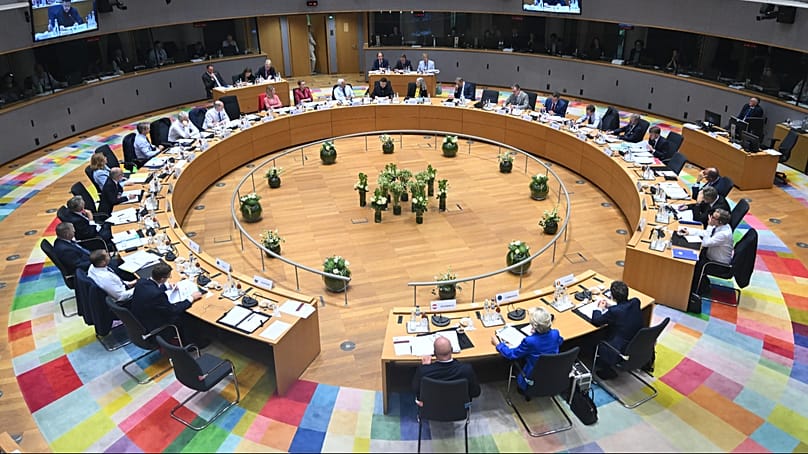
While the December summit is framed as decision time for leaders, Belgium (or another member state) could request additional time to debate the options. When asked by Euronews if December was seen as the “absolute deadline” following last week’s summit, Ursula von der Leyen did not commit to a date.
If no decision is taken and the issue runs into next year, the EU could settle for a bridge solution: a smaller loan covering Ukraine’s most urgent needs for six months. This loan would act as a financial band-aid while discussions on the sovereign assets continue at the highest level. It could be an easier sell for governments worried about taxpayers’ backlash, but it would just kick the can down the road.
Ultimately, leaders will have to make a decision on what constitutes an unprecedented financial operation.


