The Enactment of the Investment and Securities Act (ISA) 2025
The enactment of the Investment and Securities Act (ISA) 2025 is not just an avenue to sanitise the financial sector but may also be the beginning of sanity in the ever-growing ponzi scheme circle in Nigeria. This law could potentially mark the end of the road for ponzi schemes if implemented effectively.
The ISA 2025 was signed into law on March 31 by President Bola Ahmed Tinubu, expanding the Securities and Exchange Commission (SEC) regulatory powers to meet global standards set by bodies like the International Organization of Securities Commissions (IOSCO). This marks a major milestone in Nigeria’s capital market reform. The legislation repealed the former Investments and Securities Act No. 29 of 2007, aiming to strengthen the legal and regulatory framework for investments and capital market activities within the country.
According to the SEC, the presidential assent is a “transformative step” toward enhancing investor protection, improving market transparency, and fostering sustainable growth. The act reaffirms the SEC’s authority as the apex regulator of Nigeria’s capital markets and introduces significant reforms designed to align local operations with international best practices.
While the ISA 2025 is considered the most important investment law in nearly 20 years, it is not universally welcomed, especially by ponzi scheme operators who will face stricter regulations under the new law. The law creates a regulatory framework for digital assets, positioning Africa’s most populous nation to leverage on a fast-growing segment of global capital markets to “revolutionise” its economy, create wealth, and lead in blockchain technology.
Understanding Ponzi Schemes
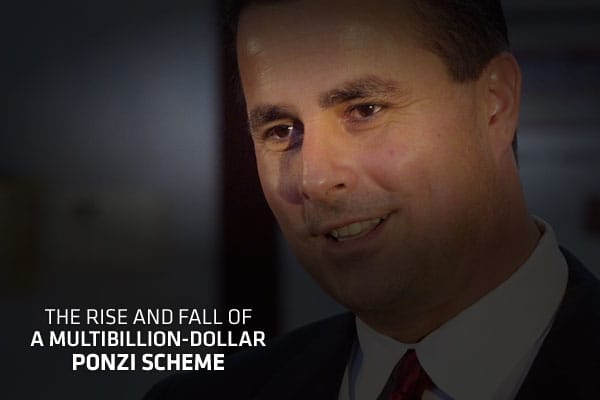
Ponzi schemes are investment frauds that involve payment of purported returns to existing investors from funds contributed by new investors. Operators often solicit new investors by promising to invest funds in opportunities claimed to generate high returns with little or no risk. These schemes often yield uncharacteristically high returns on investment based on massive hunt for admission of new members, with a focus on attracting new money to make promised payments to early-stage investors to create the false appearance that investors are profiting from a legitimate business.
Operators invite the public to deposit or pay money to them with the promise of multiplying or paying it back within a specified period of time with certain percentage interest. The scheme, with little or no legitimate earnings, requires a constant flow of funds by new investors to sustain the investment. In the absence of new investors, a vacuum occurs in the flow of funds, leading to the collapse of the investment.
Despite the illegality of ponzi schemes, they continue to thrive in an era where many people are interested in making quick money or have the get-rich-quick syndrome. People remain unruffled whenever there is a new scheme, even though the schemers may not be sued as their schemes are often done underground and there are no legal frameworks to support those who had lost their investments.
The Impact of the New Law
Early in 2020, the SEC warned stakeholders and the public on the activities of promoters of fraudulent schemes in the country and listed some of the unlawful/unlicensed market operators/fraudulent investments. These include Loom Nigeria Money, Box Value Trading Company Ltd, Now-Now Alert, Flip Cash Investment, Result Investment Nigeria Limited, Helping Hand and Investment, No Failure Development and Empowerment Nigeria Ltd, MBA Forex and Investment Ltd, Federate Investors and Trading Company, Jamalife Helpers Global Ltd, Flexus Global Solutions and Investment Ltd, and United Capital Investment Company Limited.
On July 31, 2024, it was reported that ponzi schemes have defrauded Nigerians of over US$1 billion (₦500 billion) in the past decade. The most infamous scheme across Africa, MMM, attracted over three million Nigerian subscribers, who collectively lost about US$50 million (₦18 billion) when it crashed in December 2016. MBA Forex, a homegrown scheme that promised 15% returns, defrauded Nigerians of about US$500 million (₦213 billion) when it folded in 2021.
Regulatory Gaps and Enforcement
The SEC asserted that over 70 percent of the cases it handles are related to Ponzi schemes which thrived due to myriad reasons; quest for easy cash and financial illiteracy, economic hardship, and weak regulatory laws and poor enforcement mechanisms. The Investment and Securities Act 2007 does not explicitly prohibit Ponzi schemes. Rather, Ponzi schemes are illegal because they are not registered with the SEC.
On March 11, 2025, the Economic and Financial Crimes Commission (EFCC), through its Head of Media and Publicity, Dele Oyewale, alerted Nigerians to the operations of 58 companies posturing as investing entities and defrauding innocent Nigerians of their hard-earned money. The EFCC listed illegally operating companies, including Wales Kingdom Capital, Bethseida Group of Companies, AQM Capital Limited, Titan Multibusiness Investment Limited, Brickwall Global Investment Limited, Farmforte Limited & Agro Partnership Tech, Green Eagles Agricbusiness Solution Limited, Richfield Multiconcepts Limited, Forte Asset Management Limited, and others.
Provisions of the ISA 2025
Under the new law, crypto and digital assets are officially recognised in Nigeria for the first time as part of Nigeria’s investment system—as a “digital asset” classified under securities. This means that crypto is no longer in legal limbo as the government has a defined role for it via regulation by SEC. All crypto businesses must register with the SEC and follow clear rules.
One of the most significant updates in the Investments and Securities Act 2025 is the expansion of the regulatory powers of the Securities and Exchange Commission (SEC) over capital market operators, including digital asset service providers and imposing stringent sanctions on operators engaging in unethical practices.
Now, the investor has more protection against scams and shady platforms, though it doesn’t readily mean the CBN has embraced crypto with open arms, but regulators are no longer ignoring it and the government is ready to play referee in the world of digital assets.
Conclusion
The ISA 2025 marks a significant advancement in Nigeria’s capital market regulatory framework and may be the end of the road for operatives of ponzi schemes as it sets a new benchmark for market integrity in Nigeria.


