Political Divisions in Kogi APC Exposed
The recent endorsement rally organized by the Kogi State chapter of the All Progressives Congress (APC) for President Bola Ahmed Tinubu and Governor Ahmed Usman Ododo has once again highlighted the deep divisions within the ruling party. What was supposed to be a demonstration of unity and renewed loyalty to both leaders ahead of the 2027 general election has instead revealed an enduring rivalry between two major factions in Kogi APC: the Ododo/Yahaya Bello group and the Faleke/Audu political family.
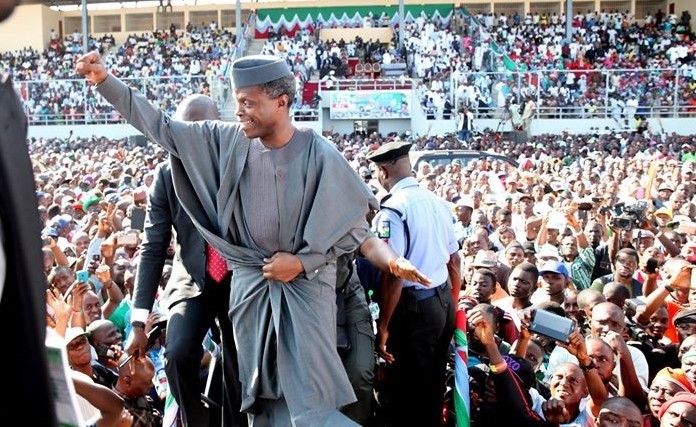
Held on October 18 at the Muhammadu Buhari Civic Centre in Lokoja, the rally attracted large crowds from across the 21 local government areas, including political appointees, lawmakers, and party executives. Among the notable figures in attendance were former Governor Yahaya Bello and Senator Smart Adeyemi. However, the absence of key figures from the Faleke/Audu bloc, particularly Hon. James Faleke, a federal lawmaker and close ally of President Tinubu, and Prince Shuaibu Abubakar Audu, the late Abubakar Audu’s son and current Minister of Steel Development, spoke louder than the speeches and cheers that filled the hall.
The event, which the organizers described as an ‘organic show of support,’ quickly became a flashpoint for renewed debate about inclusion, fairness, and political succession in Kogi APC.
A House Divided
According to multiple party sources, the latest rift reflects a long-running struggle for control of the APC structure in Kogi, a conflict that dates back to the aftermath of the 2015 governorship election. The death of Prince Abubakar Audu, then APC candidate, a few hours before his likely victory, set off a political realignment that saw Yahaya Bello, who came second in the party primaries, emerge as governor.
Faleke, Audu’s running mate, was denied the chance to inherit the joint ticket, a move many in the Tinubu camp saw as a slight against their leader, who had invested heavily in the campaign. The fallout from that episode still shapes the political dynamics of the state today.
Political observers say the endorsement rally was therefore less about Tinubu and more about consolidating the Ododo/Bello structure amid growing speculation that Faleke may be positioned for the 2027 APC ticket.
Underlying Resentments
Beyond the political optics, deep-seated ethnic and factional sentiments also played out. For years, Kogi West, home to the Okun-Yoruba, has demanded a turn at the governorship. The zone, which has never produced a governor since the state’s creation, sees the current tension as a continuation of its political marginalization.
Professor Ponle Adeniyi, an Okun elder, said the rally reawakened old frustrations. He said, “The root of this disillusionment often traces back to a fundamental act of betrayal. In 2019, while soliciting support for his second term, the then-Governor Yahaya Bello pledged before prominent Okun elders that his successor would be one of their own. Because the Okun people are virtuous and perhaps politically naïve, our elders believed him and galvanised crucial support, securing his victory. When the time came to honour that pledge, it was breached with utter impunity.”
Structure and Survival
For analysts, the crisis in Kogi APC is also about the control of the party’s machinery. A Lokoja-based political commentator, Jamiu Abubakar, said the current APC structure is the product of Yahaya Bello’s political architecture, which replaced the original Audu-Faleke foundation that won the state for the APC in 2015.
“The present leadership of the party in Kogi is a continuation of the Bello order. Those who built the initial structure were displaced or sidelined,” he added. He noted that the new political order at the national level appears to favor the Audu-Faleke group, a development that has sent jitters through the Yahaya Bello/Ododo camp, which fears that a political payback may be imminent.
He said the endorsement rally was a clear sign that reconciliation efforts within the party have yet to yield positive fruits.
Fallout from Karimi’s Criticism
Senator Sunday Karimi, representing Kogi West, amplified the discord when he described the rally as “unnecessary, insensitive and self-serving.” According to him, President Tinubu’s performance will speak for him when the time comes. “There’s no need to march people out like schoolchildren for endorsements,” he added.
His comments drew swift reactions from loyalists of Governor Ododo. Seven council chairmen from Kogi West issued a joint statement condemning Karimi’s remarks as “unfortunate and ungrateful,” insisting that the massive turnout at the civic centre was genuine. “The crowd came out willingly to show love and loyalty to President Tinubu and Governor Ododo. The voice vote was not stage-managed,” the statement, read by Kabba/Bunu council chairman Zacchaeus Dare Michael, said.
The chairmen urged members to disregard Karimi’s “outburst” and focus on ensuring APC’s victory in 2027. However, a faction within the party dismissed the council chairmen’s defense as hollow. A group calling itself Concerned APC Members described the rally as “a self-serving exercise,” accusing the organizers of trying to curry favor with the state leadership.
The Amupitan Factor
The internal tension in the Kogi APC has also been stoked by the recent appointment of Professor Joash Amupitan (SAN) as chairman of the Independent National Electoral Commission (INEC). The new INEC chairman hails from the same Kogi West axis as Faleke, who is regarded as one of President Tinubu’s closest allies and is believed in some quarters to have had a hand in his emergence.
Party insiders say Amupitan’s appointment has unsettled the Ododo/Bello camp, which suspects that the move could tilt future political advantages towards Faleke. There is growing speculation that Faleke, who played a key role in Tinubu’s 2023 presidential campaign, may be groomed to succeed Ododo in 2027.
Shifting Alliances and Future Battles
The growing speculation about Faleke’s future has intensified political realignments across Kogi’s three senatorial districts. While the Ododo/Bello group consolidates its hold on the state structure, several key politicians from Kogi West and even parts of the East are reportedly re-establishing contact with Abuja-based power brokers ahead of the next election cycle.
Some appointees believed to have fallen out with the current administration are said to be quietly aligning with the Faleke camp, anticipating that national influence may soon outweigh state machinery. At the same time, former allies of Bello who have been politically sidelined see in Faleke’s resurgence a chance to return to relevance.
As the dust from the rally settles, one fact remains clear: the Kogi APC is far from united. The old wounds of 2015, deepened by questions of power rotation and internal exclusion, have resurfaced with renewed force.