M23’s capture of Uvira, a Congolese town of 700,000 residents and a major economic and commercial hub serving Congo, Rwanda, Burundi, Tanzania, and Zambia, this week signalled a new direction of the 30-year-old eastern Congo conflict, with Burundi seeing a looming threat and immediately shutting its border with DRC.
The move by AFC/M23 undermines already struggling peace bids between rebels and the Congolese government. While some progress seemed to have been made in the separate US-mediated process between the DRC and Rwanda, experts warn that the gains risk being reversed as the rebel group eyes more territory, and Burundi braces for war.
It is instructive that the Uvira offensive happened after relations between the rebel movement with Burundi collapsed, at a time when optimism around the effect of the recently signed Washington Accords under the auspices of President Donald Trump was fading.
Entry of the rebel group into Uvira, barely 30 kilometres from the Burundian commercial capital Bujumbura, has heightened tensions in the area and a risk of a regional war.
In October, Burundian President Évariste Ndayishimiye received an M23 delegation to discuss a “non-aggression pact,” according to Critical Threats Project (CTP), an initiative by the American Enterprise Institute (AEI) that provides open-source intelligence and analysis on national security threats to the US.
Read: The protagonists in new fighting in Congo’s South KivuThere was a push for Burundi to withdraw its military support for Congolese forces in South Kivu, including air attacks on M23 positions across South Kivu, which Gitega reportedly rejected.
Experts at CTP say the fall of Uvira to the AFC/M23 this week is a “a strategic setback” for Kinshasa, and will likely erode the Felix Tshisekedi administration’s domestic credibility and weaken its military strategy against M23.“Uvira was the last major government foothold and FARDC military hub in South Kivu. M23’s control of Uvira cuts off the FARDC’s supply route for troops and military equipment in the region. M23’s advance also severely constrains if not completely cuts Burundian support, which had been the FARDC’s most important ally and main deterrent force against M23 and M23-aligned rebel militias in South Kivu,” CTP says.
The Tshisekedi government is going to face political pressure from its domestic base and the political opposition after the fall of Uvira.
There are allegations that the M23 offensive was backed by Rwandan forces, which, if true, would mean a breach of the Washington Accords that require the Kigali forces to “lift their defensive measures” and DRC to neutralise the genocidaire force FDLR, who are a threat to the Kigali regime.
Congolese opposition leader Martin Fayulu has termed the Washington agreement a “trap” set by President Paul Kagameof Rwanda. In an interview with France24 TV, the leader of the Engagement for Citizenship and Development Party said President Trump intended to end the war, “but that wasn’t Paul Kagame’s intention; he had other plans” when he signed the deal.
Perceived lack of commitment by Kigali to the peace deal has rallied its rivals DRC and Burundi against it, raising tensions and fears of an escalation of the conflict.
So far, the UN says some 200,000 civilians have fled the combat zone into Burundi and Rwanda, amid fears that the M23 could head deeper into Kalemie town, a strategic Tanganyika provincial capital, leveraging its control of the Lake Tanganyika.
Uvira was the last major defensive position for the Congolese army before Kalemie, a key logistics hub that connects eastern DRC to the Katanga region in the south.
Security experts say AFC/M23’s capture of Uvira is Burundi’s gravest national security threat in years.“Burundi and Rwanda are rivals in the eastern DRC, and both view their competition as potentially existential,” experts at CTP say.
The Burundian Foreign ministry denounced alleged attacks on Burundian territory during the fighting on December 8, and Rwanda’s “belligerent attitude”.
Read: 200,000 flee new advance of Rwanda-backed rebels in Congo despite Trump peace dealRwanda, on its part, accuses Burundi of “sabotaging the peace process” and condemned it for the “systematic bombing” of villages on the Rwandan side of the border.
While M23 officials say they have no territorial claims on Burundi, Burundi’s Foreign ministry said that “what threatens Uvira also threatens Bujumbura” and that “all options are on the table” for a response.“M23’s control of Uvira and key areas along the Burundi-DRC border cuts off Burundi from DRC territory and poses a major security and economic risk to the Burundian government without a détente. The closure of the border and eviction of its forces from South Kivu will likely hinder Burundi’s ability to fend off cross-border attacks on its western provinces from Burundian rebel groups, who have bases in the highlands—the original stated goal for its intervention in the DRC.“M23’s control of the border also has dire economic implications for Burundi, as it relies heavily on the Bujumbura–Uvira corridor to transport the 90 percent of its total exports to the DRC. The spillover and refugee influx from the large-scale fighting will additionally strain the struggling Burundi economy, which has slid even further in 2025 due to chronic fuel shortages and the war in the eastern DRC,” CTP said.
Meanwhile, President Kagame has said “Rwanda’s strength” lies only in its ability to defend itself against enemies.“Some people we’ve explained the situation to, even recently in Washington DC and actually seem to understand, turn around and say, but Rwanda is strong enough. We have strength to protect ourselves against enemies who we are put in the same category of strength, we might not have capacity to deal with all those other problems. I don’t understand the logic of strength that does not lead to protecting oneself, I don’t get it,” Kagame said, alluding to the threat posed by FDLR bent on destabilising Kigali.
Read: Sporadic violence, mistrust persist as Congo peace parties inch towards dealAlthough the peace agreement recently signed in Washington DC, calls on Rwanda to withdraw its troops from eastern DRC, Kigali maintains that it will continue its “defensive posture” as long of the DRC refuses to disarm and rid both countries the threat of FDLR.
President Kagame, while officiating the swearing-in of new ministers in Kigali, said everything points to how the DRC, Burundi and FDLR “coalition” is still bent on advancing a “nefarious” ethnic plan of targeting ethnic Tutsis in eastern DRC, explaining why FDLR still gets the protection and facilitation from the DRC government.“All this history, and the blame piled on Rwanda has a lot to do with a high degree of cruelty and dishonesty in equal measure, and it has a lot to do with the history of our country,” President Kagame said, adding, “Rwanda signed the Washington peace agreement because it truly wanted to and believes in it, and will comply with what the agreement expects of the country. If the other countries also implement what they are supposed to, peace will be achieved.”“But that path is also not as easy as one would want, there are some parties that do not tell the truth, or would want something else from this agreement. But the reality is you cannot get everything in an agreement like this, you can get some key outcomes and the other party also gets something.”Kagame defended Kigali against the “post-agreement instabilities blamed on Rwanda.”“The facts are out there, you can only ignore them, then choose what you want to go with, what you want the truth to be, but the truth is clear for everyone to see,” the president said.
Read: Congo President Tshisekedi accuses Rwanda of violating US-brokered peace dealBut on Friday, President Tshisekedi sounded defiant.‘‘The Democratic Republic of Congo will never capitulate. It will continue to fight for its sovereignty and will never negotiate under the threat of arms,’’ he told diplomats in Kinshasa.
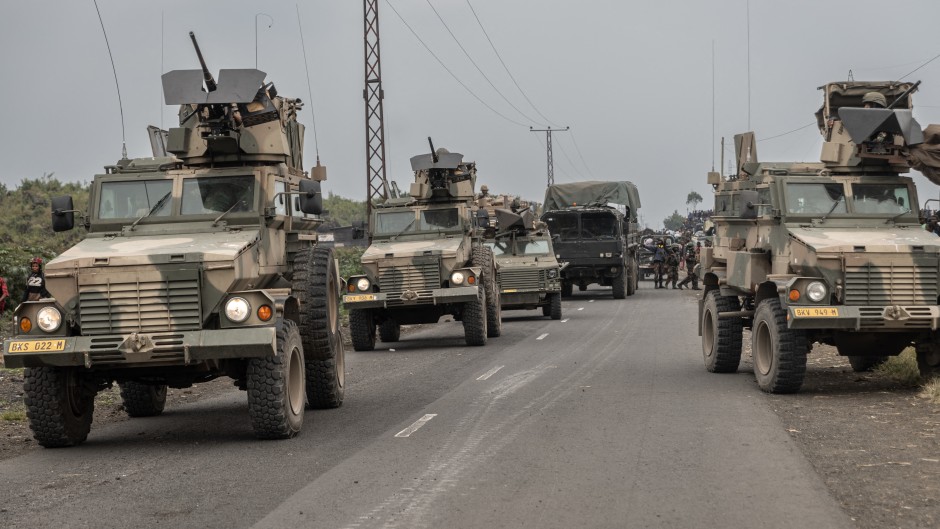
In the lead-up to the capture of Uvira, the Congolese army and its allied militias made a “strategic retreat” aimed at minimising civilian casualties, amid an M23 advance along the Ruzizi River and National Road 5. FARDC units evacuated Uvira on December 9, retreating southward to Swima, Makobola, Baraka, and Fizi territories.
Reports indicate soldiers fled “en masse” toward Burundi, with some looting government offices and civilian households along the way.
No FARDC counter-offensive has been reported since the capture. Gun-wielding M23 rebels clad in dark green military fatigues are seen patrolling main streets as they consolidate control, and have advanced up to the Burundi border at Kavinvira.
Security has, however, been reinforced at Kalundu Port south of the city.
In response to fears of M23 march on the mineral-rich Katanga province, the government is bolstering troop presence in Kalemie to safeguard economic assets, which contribute 80 percent of DRC’s mineral revenue.
Sources close to AFC/M23 power circles have said the plan is for the rebels to continue and capture the mineral rich Katanga and Kisangani, in an attempt to “choke the administration in Kinshasa, since those areas are considered the lungs of DRC.”President Tshisekedi now faces a legitimacy crisis, with opposition groups demanding a national dialogue to address conflict roots and the country’s underdevelopment.
The USN, a ruling coalition supporting President Tshisekedi, reacted swiftly to the capture by organising nationwide protests to rally support for national sovereignty.
The South Kivu provincial government said “more than 413 civilians have been killed by bullets, grenades, and bombs, including many women, children, and young people” in areas between Uvira and Bukavu.
The US and European allies issued a joint statement on December 9 urging Rwanda and M23 to halt operations. On Tuesday, the UN reported at least 74 deaths as M23 rebels clashed with a joint force of Burundian and Congolese soldiers. More than 200,000 civilians fled into Rwanda, turning Kigali into both a refuge and a flashpoint.
The escalation has already alarmed Western allies. The International Contact Group on the Great Lakes Region issued a statement of “profound concern,” blaming the Rwandan Defence Forces and M23 for the renewed violence.“The ICG urges the M23 and the Rwanda Defence Force (RDF) to immediately halt their offensive operations in eastern DRC, in particular in South Kivu, and calls on the RDF to withdraw from eastern DRC and on M23 to return to its positions and uphold its commitments under the Declaration of Principles signed in Doha on July 19, 2025.
Read: Rwanda’s actions in eastern Congo violate accords, Rubio says“We urge all parties to avoid escalatory or provocative speech and actions that gravely endanger civilian populations and risk irreparably undermining the significant progress achieved with the Framework Agreement signed in Doha on 15 November 2025 by the Government of the DRC and M23.”The Contact Group includes the US, Belgium, Denmark, the European Union, France, Germany, the Netherlands, Sweden, Switzerland, and the United Kingdom.
Burundi was a key part of the East African Community Regional Force (EACRF) deployed to eastern Congo, with Gitega deploying its troops in March 2023 to help restore peace and security, working alongside other EAC member states Kenya, Rwanda, South Sudan, and Uganda.
When Kinshasa refused to renew the EACRF mandate a year in, Burundi joined the replacement force from the Southern African Development Community, on top of having bilateral arrangement with DRC.
Additional reporting by Aggrey Mutambo Provided by SyndiGate Media Inc. (Syndigate.info).