Amid push in China for museum digitalisation, one educator seeks to help students ‘feel history without being flooded by it’
In October, as Simon Li finished speaking at an international conference about embracing technological innovation in education, several Chinese history educators approached him with a potent, pressing question: could a virtual reality (VR) project about the 1937 Nanking massacre become the next pedagogical frontier?
Li, executive director of the Hong Kong Holocaust and Tolerance Centre, recalled it as an electrifying moment. “They were genuinely energised, saying that such a programme could help students feel history without being flooded by it,” he said of the educators.
He added that the concept of an “ethical empathy VR” had been circulating within academic circles for some time as a possible “evolution of atrocity education” in East Asia.
Do you have questions about the biggest topics and trends from around the world? Get the answers with SCMP Knowledge, our new platform of curated content with explainers, FAQs, analyses and infographics brought to you by our award-winning team.
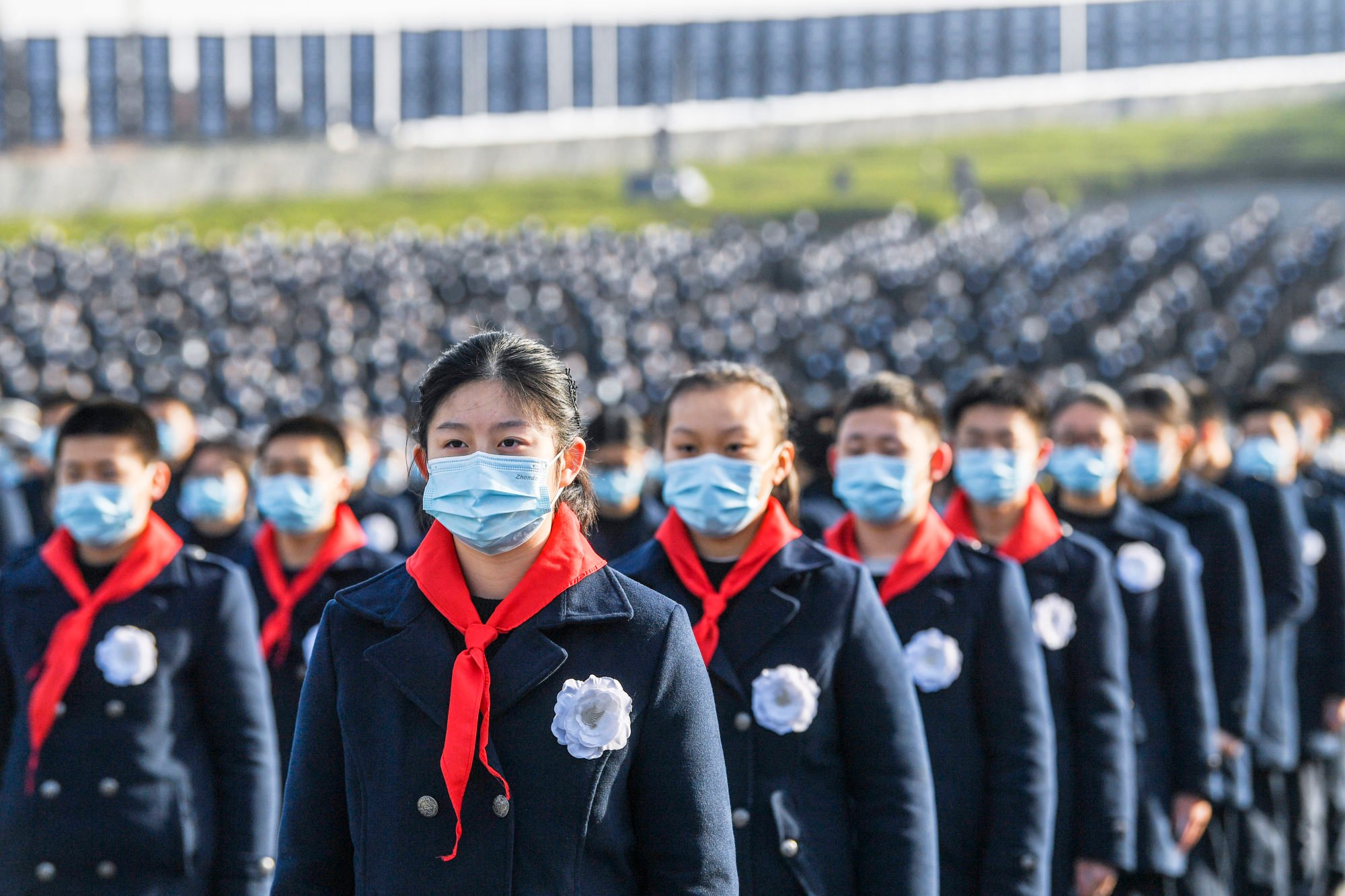
Lately, the idea has gained traction, as China held a national commemorative ceremony on Saturday to mark the 88th anniversary of the Nanking massacre, which started on December 13, 1937, when Japanese troops occupied the then capital.
Historians’ estimates of the number of fatalities vary widely, ranging from the tens of thousands to as high as 300,000.
Only 24 registered survivors are still alive, according to state news agency Xinhua. This year, Beijing also marked the 80th anniversary of the end of World War II and the global victory against fascism.
As victims’ stories fade with the passage of time, educators are proposing using hi-tech resources like VR to immerse a new generation in the historical atrocity for future commemorations.
While proponents see it as a powerful tool for peace education, some experts like Li are sounding alarms about the psychological and ethical pitfalls involved.
Li, who is also a fellow at the University of Southern California’s Shoah Foundation, argued that without extreme caution, VR could traumatise rather than educate.
“Peace education fails if remembrance becomes re-traumatisation,” he said. “We’re gardeners of moral memory, not curators of collective despair.”
The drive to use VR for historical remembrance is part of a growing global trend. The logic is compelling: immersive technology can foster empathy and make distant history feel immediate.
China has heavily promoted museum digitalisation in response to President Xi Jinping’s call to “let the cultural relics in the museums, the heritage on the vast land and the words written in the ancient books come alive”.
Projects like “The Last Goodbye”, a flagship educational tool used by Li, allow users to share a room with a 3D hologram of a Holocaust survivor, aiming for an intimate non-graphic encounter with their testimony.
The Hong Kong centre he led has teamed up with USC’s Shoah Foundation on “Dimensions in Testimony”, a project documenting grim history with interactive survivor testimonies from the Holocaust and Nanking massacre.
In Japan, the public broadcaster NHK has produced VR experiences recreating moments in Hiroshima to simulate the aftermath of the atomic bomb dropped on the city in 1945. These are intended for use as a peace education tool.
The programme “Mitsuo Kodama’s Story”, about a 12-year-old survivor’s experience in Hiroshima, has captured Chinese educators’ attention, as evidenced in the question put to Li at the recent conference.
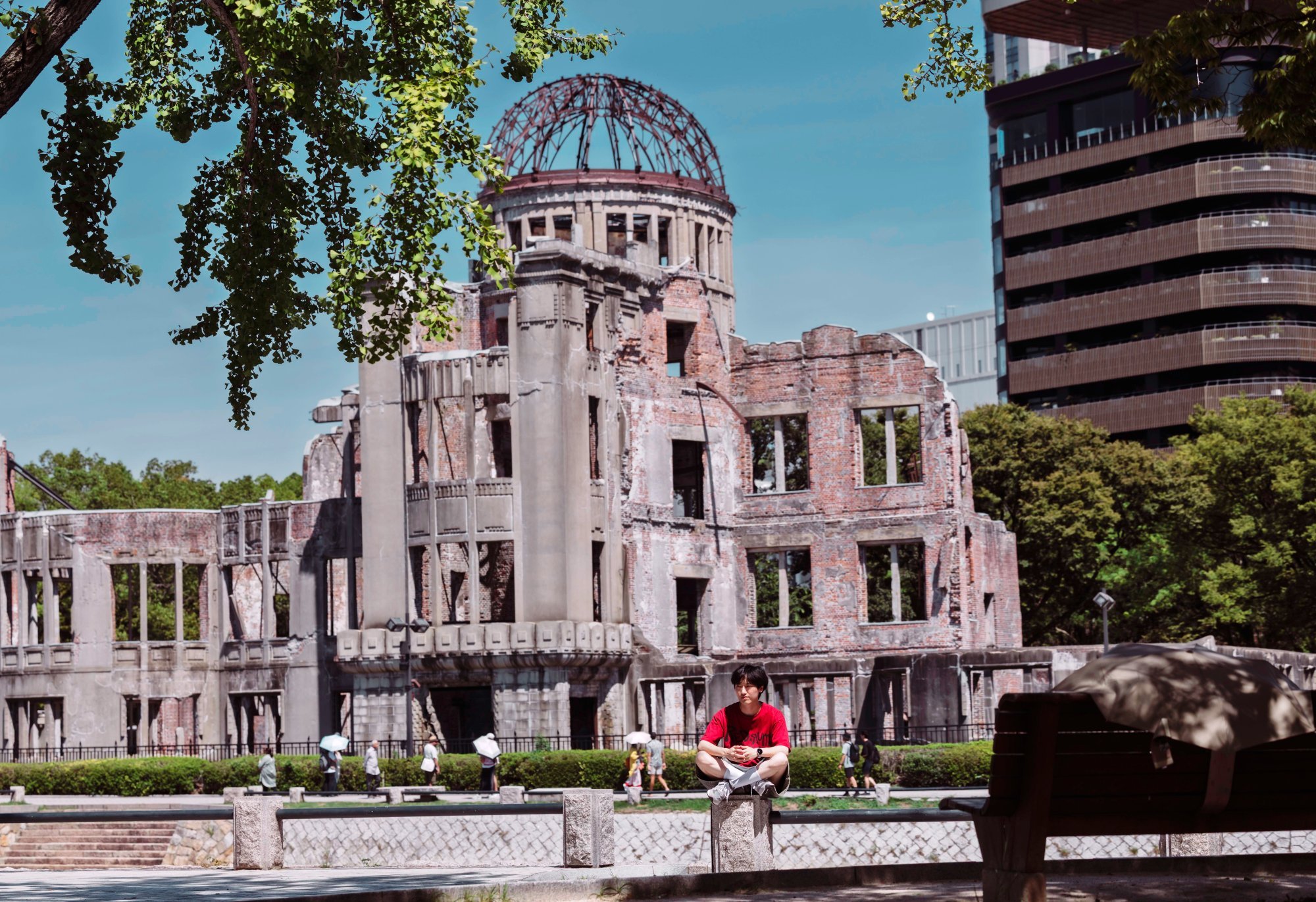
The Japanese programme is built around first-person recollections, and while developers say they avoid outright gore, the VR recreates the moment the bomb flash sears skin, the sudden darkness and the streets strewn with charred figures stumbling for water.
Users hear crackling fire, see silhouettes peel off walls and watch Mitsuo’s own arms blister in real time in imagery so intense that students were seen shaking and tearing up even after taking off the goggles, according to Japanese media coverage.
Proponents of a Nanking massacre VR project have argued that such an experience could help ensure the world never forgets that brutal chapter of history.
While Li saw the virtues of using cutting-edge technology to educate young people, he voiced concern that, without ethical care, immersive history could become “a digital haunted house disguised as history”, especially for events like the Nanking massacre.
His observation was reinforced by his teaching experience this year, as a visiting assistant professor at Andrews University’s Hong Kong campus.
In Li’s undergraduate seminar on world-views, cultures and gods, students grappled with how societies remembered trauma and hope, from ancient myth to digital memory. The class covered four continents, bringing perspectives from global youth, with VR used to replicate a lived experience.
According to the students, VR’s graphic immediacy hit first and hard, and the shock lingered longer than the exposure.
For Josue Camarena, a 21-year-old exchange student who was born in Panama and moved to the United States, the “emotional shock” of VR visuals dominated the experience and raised unsettling questions.
“Because it was VR, I did not have much of a need to imagine … I was able to just feel, as if it was real, except it was not,” Camarena said. The simulation left him questioning his emotional response.
He believed VR could help “bridge the empathy gap when one is learning about [the] tragedies of somebody else’s history or culture”. But he cautioned that the technology “could also shape someone else’s world view on how to see life, whether for better or worse, and in a worst-case scenario, even traumatise that person”.
Gem Peduche, 22, born in the Philippines and raised in Zambia, agreed that sensory overload was a risk of the experience.
“If it is something like the Nanking massacre, it will feel like an overwhelming simulation of the pain that is witnessed because what is seen is cruel and may traumatise you,” Peduche said. “The effects of VR are on two core senses, sight and sound, and when these senses are overstimulated, then there is no space to think.”

The students said they wanted traditional educational sources like texts and testimonies to be used before putting on any headset. They also wanted the chance to opt out of the VR experience entirely. Both saw it as a useful but non-essential empathy amplifier that must be blended with, yet never replace, conventional learning and guided reflection.
Kavira S. Kazimoto, 20, from the Democratic Republic of the Congo, said that relying on VR alone would enable a screen-saturated generation to skip the hard work of reading and imagining.
“However, having a good blend of both allows everyone to have a choice, use their imagination to visualise what they’re reading and also be able to be independent enough to research deeper on a given history topic,” Kazimoto said.
Li called for a narrative and ethical refocus. He suggested that historical VR, especially for a young global audience, should move beyond shocking depictions of perpetrators and victims.
“The majority of people are bystanders,” he said. “What about the Good Samaritans? What if we design empathy around those who helped?”
“Most VR projects aim to drop you into the nightmare,” Li added. “I’d rather drop you into the decision that the nightmare demanded.”
Imagine a VR experience built around “empathetic agency”, he said, an experience where a user would not witness violence passively but simulate taking moral risk: standing alongside figures like American missionary Minnie Vautrin in Nanjing at the gates of Jinling Women’s College, with hundreds of civilians pleading for shelter as soldiers approached.
“Your hands tremble on the lock,” Li described. “The ‘win condition’ isn’t survival or spectacle. It’s moral imagination. You experience fear, hesitation, defiance – and must choose mercy under pressure.”
“VR can simulate violence easily,” he added. “What we need is VR that trains conscience muscle.”
Li also said teachers often lacked adequate support for such intense tech experiences, and he outlined non-negotiable components for an institution venturing into this space.
He believed teachers should preview every scene, map the psychological and historical danger points, run structured reflection circles right after the headset comes off and pair VR with survivor testimonies, philosophical texts or even faith-based ethics discussions.
Without such safeguards, Li said, “it’s just art with anxiety”.
“Every peace educator lives on that tightrope: you want students shaken, not shattered,” he said. “The goal is what I call ‘afterlight learning’. They leave heavier with knowledge but lighter in spirit, carrying responsibility, not residue.”
More Articles from SCMP
Hong Kong stocks slide after China’s economic data shows growth running out of steam
Hannah Wu’s top pick: May the Best Player Win by Kyla Zhao
Hong Kong businesses prepare for scaled-down Christmas celebrations after fire
Young Hongkongers reach for the stars at training camp for aspiring astronauts
This article originally appeared on the South China Morning Post (www.scmp.com), the leading news media reporting on China and Asia.
Copyright (c) 2025. South China Morning Post Publishers Ltd. All rights reserved.