Historical Parallels Between U.S. Interventions in Panama and Venezuela
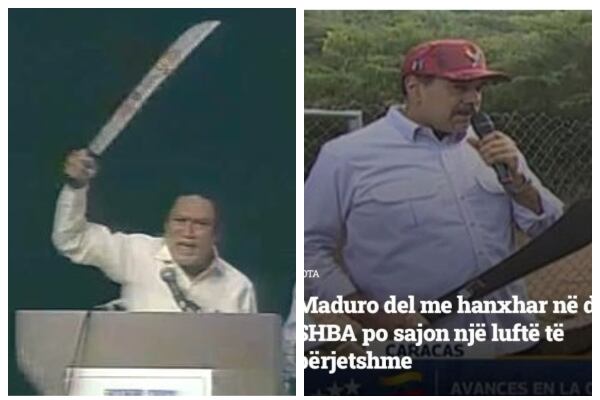
The United States has a long history of intervening in foreign nations under the guise of promoting democracy and combating drug trafficking. Two notable instances that highlight this pattern are the 1989 invasion of Panama and the 2026 arrest of Venezuelan President Nicolás Maduro. Both events occurred on January 3, creating a 36-year parallel that underscores the consistency of U.S. foreign policy strategies.
A Unique Case of Extraterritorial Enforcement
The arrest of Maduro marked a significant moment in modern history. It was the first time a sitting or de facto head of state was apprehended by U.S. special forces on their own territory and transferred to a third country. This event has drawn attention from diplomatic circles as an example of “changing the status quo through American power.” The U.S. justified its actions by framing both Noriega and Maduro as criminals rather than heads of state, using judicial indictments as a pretext for military operations.
From CIA Asset to Public Enemy
Manuel Noriega’s story is one of betrayal and downfall. Initially a key asset for the CIA during the Cold War, he played a crucial role in countering communist forces in Latin America. However, his relationship with the U.S. soured when he began collaborating with Colombian drug cartels, facilitating cocaine smuggling into the U.S. This abuse of trust led to his eventual downfall.
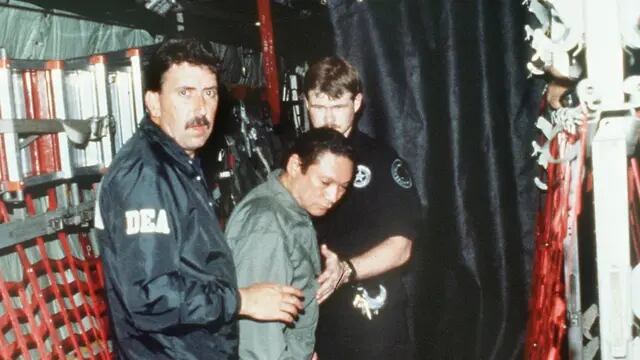
The U.S. decided to remove Noriega after he crossed a critical line by engaging in drug crimes and adopting an anti-American stance. His refusal to relinquish power following the 1989 presidential election, which he declared invalid, further escalated tensions. The death of a U.S. military officer and the assault on another U.S. military couple served as the catalyst for the invasion of Panama, known as Operation Just Cause.
Similar Justifications, Different Contexts
While the U.S. justified the arrests of both Noriega and Maduro as efforts to combat drug trafficking, the contexts of these interventions differ significantly. Noriega was not the president but the commander of the Panamanian Defense Forces, a de facto ruler who dominated from behind the scenes. Similarly, Maduro faced charges of “Narco-terrorism” and was labeled as the head of a drug cartel. Both cases illustrate a hybrid strategy where judicial indictments serve as a justification for military operations.
Small Nation vs. Resource-Rich Country
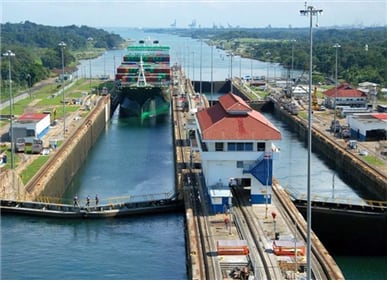
The scale and geopolitical environments of Panama and Venezuela differ greatly. Panama, a small nation with a population of 2 million, was internationally isolated at the time of Noriega’s ouster. In contrast, Venezuela is a resource-rich country with the world’s largest oil reserves, entangled in complex relationships with Russia and China. The forms of operation also vary; while the Panama invasion involved a full-scale war with 26,000 ground troops, the operation against Maduro was a “decapitation strike” using precision strikes and special forces.
Futures of the Two Nations
The fate of Maduro and the future of Venezuela remain uncertain. Like Noriega, Maduro is likely to face a similar judicial process and serve a de facto life sentence in a U.S. prison. However, the outcome for Venezuela may differ from Panama’s post-Noriega trajectory. Panama dismantled its military, regained control of the Panama Canal, and achieved stability through financial liberalization. In contrast, Venezuela’s economic system has collapsed, and pro-government armed militias are deeply entrenched in society.
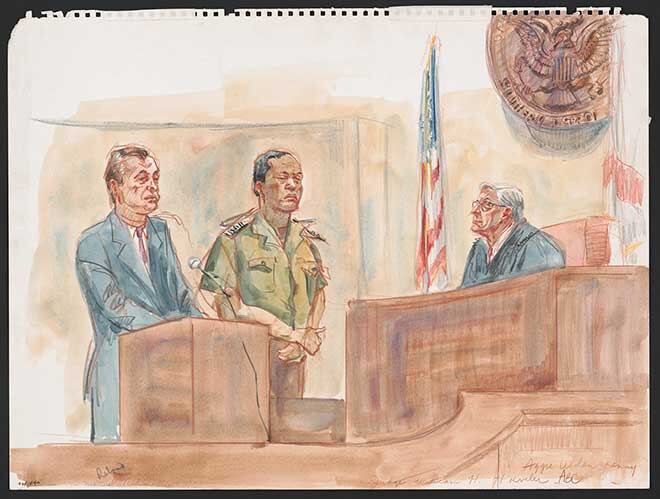
The potential outcomes for Venezuela could mirror the “Afghanistan model,” where armed factions proliferate amid a power vacuum, or lead to a prolonged civil war. The lessons from Panama’s recovery highlight the importance of addressing systemic issues and rebuilding institutions to ensure long-term stability. As the U.S. continues to assert its influence, the consequences for the nations it intervenes in remain a subject of global concern.