Judges in Brazil now have permission to confiscate cryptocurrency holdings from individuals who owe debts and are delinquent with their payments. This move highlights an increasing acknowledgment that virtual currencies serve as not only a means of settlement but also a way to hold wealth.
According to local media
reports
The Third Panel of Brazil’s Superior Tribunal de Justiça has unanimously approved a measure allowing judges to dispatch letters to cryptocurrency exchanges. These letters aim to notify these platforms about the intention to freeze an individual’s assets in order to compensate their creditors.
The report was validated by the Superior Court of Justice, which posted an announcement on its website.
The unanimous decision was made by the Third Panel after they examined a case presented by a creditor.
“Even though they aren’t considered legal currency,cryptoassets can still function as a method of payment and as a way to hold value,” according to a translation of the memorandum from Brazil’s Higher Court of Justice.
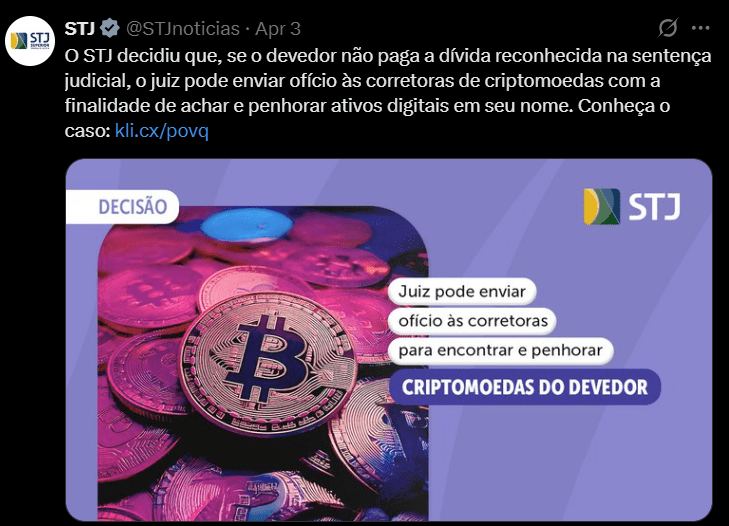
Under existing rules, Brazilian judges are allowed to freeze bank accounts and order fund withdrawals, even without a debtor’s knowledge, should they rule that a creditor is owed money.
After the latest ruling,cryptoassetsnowfallunderthesameoversight.
(Note: The original sentence had no explicit numbers or lists, so none were preserved.)
Minister Ricardo Villas Bôas Cueva, part of the five-member committee, stated during his vote that cryptocurrencies remain unregulated in Brazil. However, he acknowledged that some proposed bills have categorized these assets as “digital representations of value.”
Related:
Brazil’s data watchdog upholds ban on World crypto payments
Even with regulatory ambiguity, Brazil stands as a key center for cryptocurrency.
Even though Brazil doesn’t yet have a comprehensive regulatory framework for digital assets, the nation’s central bank remains key.
divvying up
The regulatory procedures have been divided into stages, leading to a growing acceptance of cryptocurrencies nationwide.
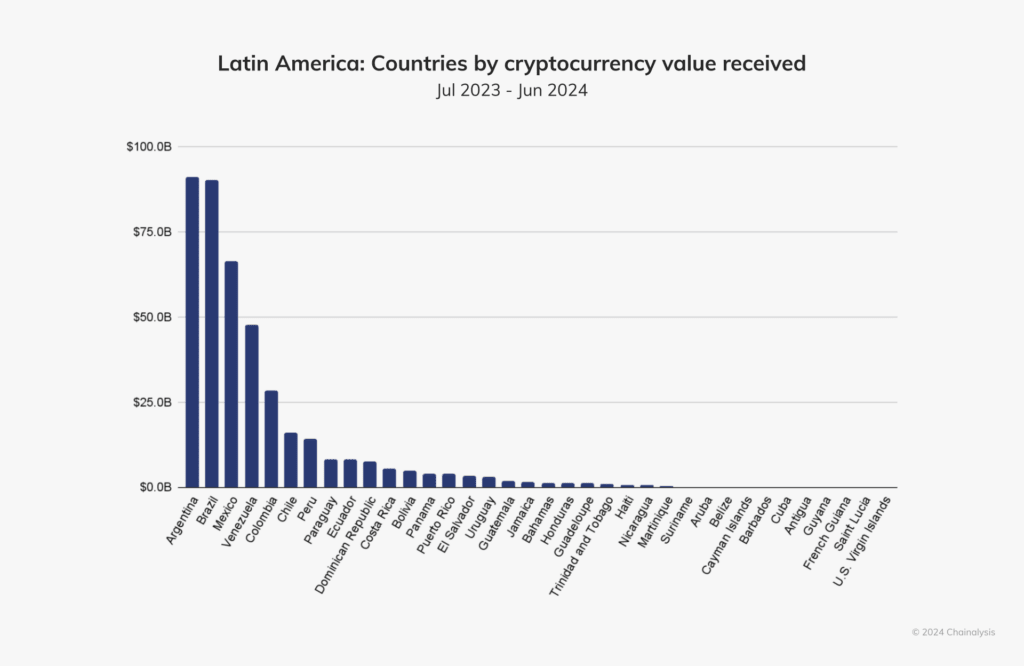
According to a report released in October by Chainalysis, Brazil stands as the second-highest country in Latin America regarding “crypto value received,” serving as a significant indicator of adoption.
Earlier this year, the cryptocurrency exchange Binance faced issues.
approved to function within the nation
following its acquisition of a São Paulo-based investment firm.
A representative from Binance informed Cointelegraph back then that Brazil was advancing “substantial progress” toward regulating the sector and anticipated a complete regulatory structure would be concluded “by the middle of this year.”
However, not all of Brazil’s proposed regulations have had a positive impact on the industry.
In December, the nation’s principal banking institution
proposed banning stablecoin transactions
On self-managed wallets as more residents turned to stablecoins pegged to the U.S. dollar to protect themselves from the depreciation of the Brazilian real.
Industry watchers informed Cointelegraph at the time that implementing such a ban would likely be challenging to carry out.
“Governments may be able to oversee centralized exchanges, yet person-to-person transactions and decentralized platforms pose greater challenges for regulation, indicating that such bans might impact just a portion of the overall system,” explained Lucien Bourdon, an analyst at Trezor.
Related:
Brazilian legislator proposes bill for regulating bitcoin compensation

