Hong Kong’s Ecotourism Dilemma: Balancing Nature and Visitor Demand
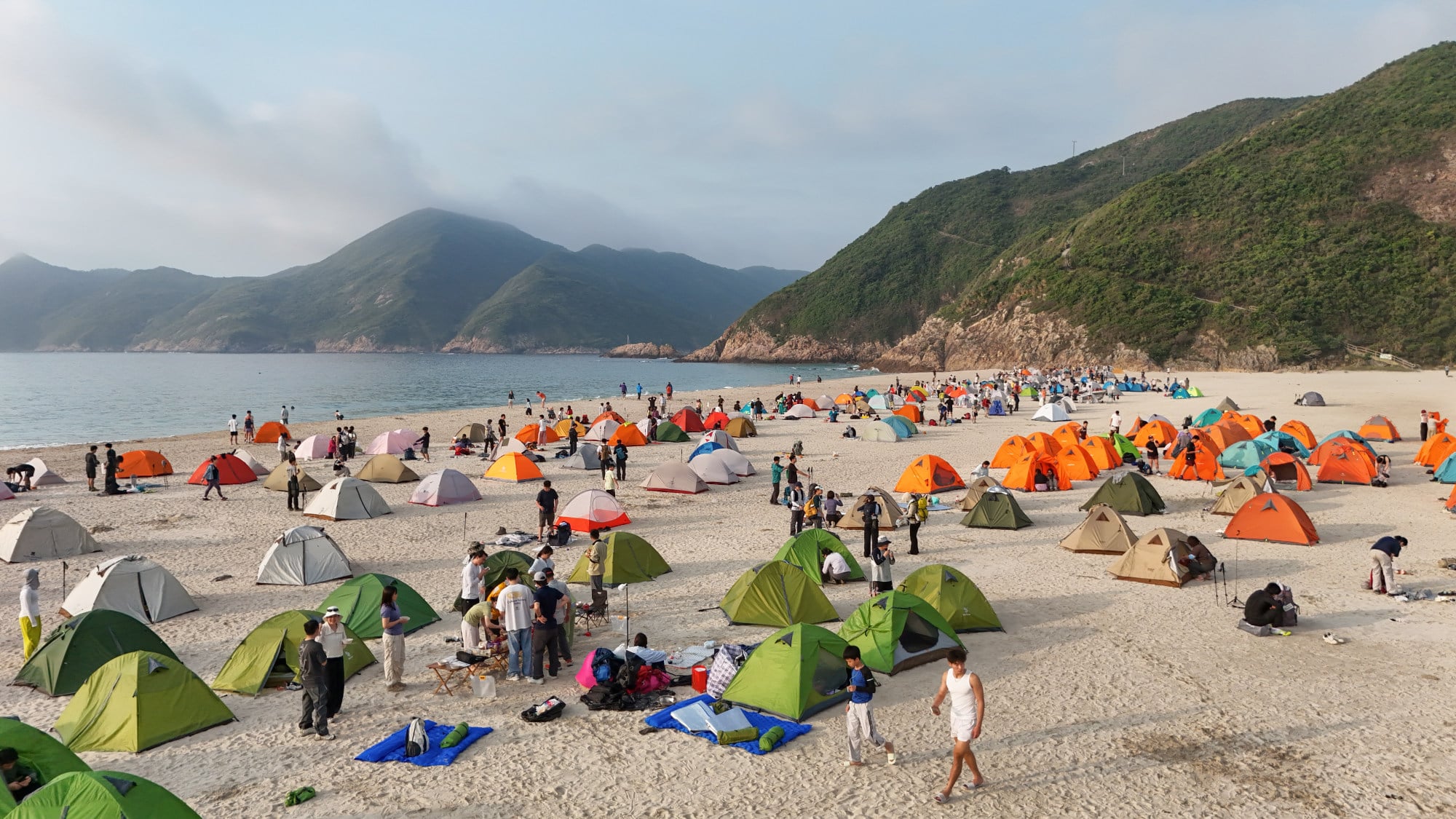
As more visitors seek outdoor experiences in Hong Kong, the city faces a critical challenge: how to protect its natural landscapes while promoting them as tourism destinations. The recent Labour Day holiday highlighted this issue, with over 500 tents covering the white sands of Ham Tin Wan in Sai Kung, transforming one of the region’s most scenic beaches into a makeshift campsite for overnight visitors.
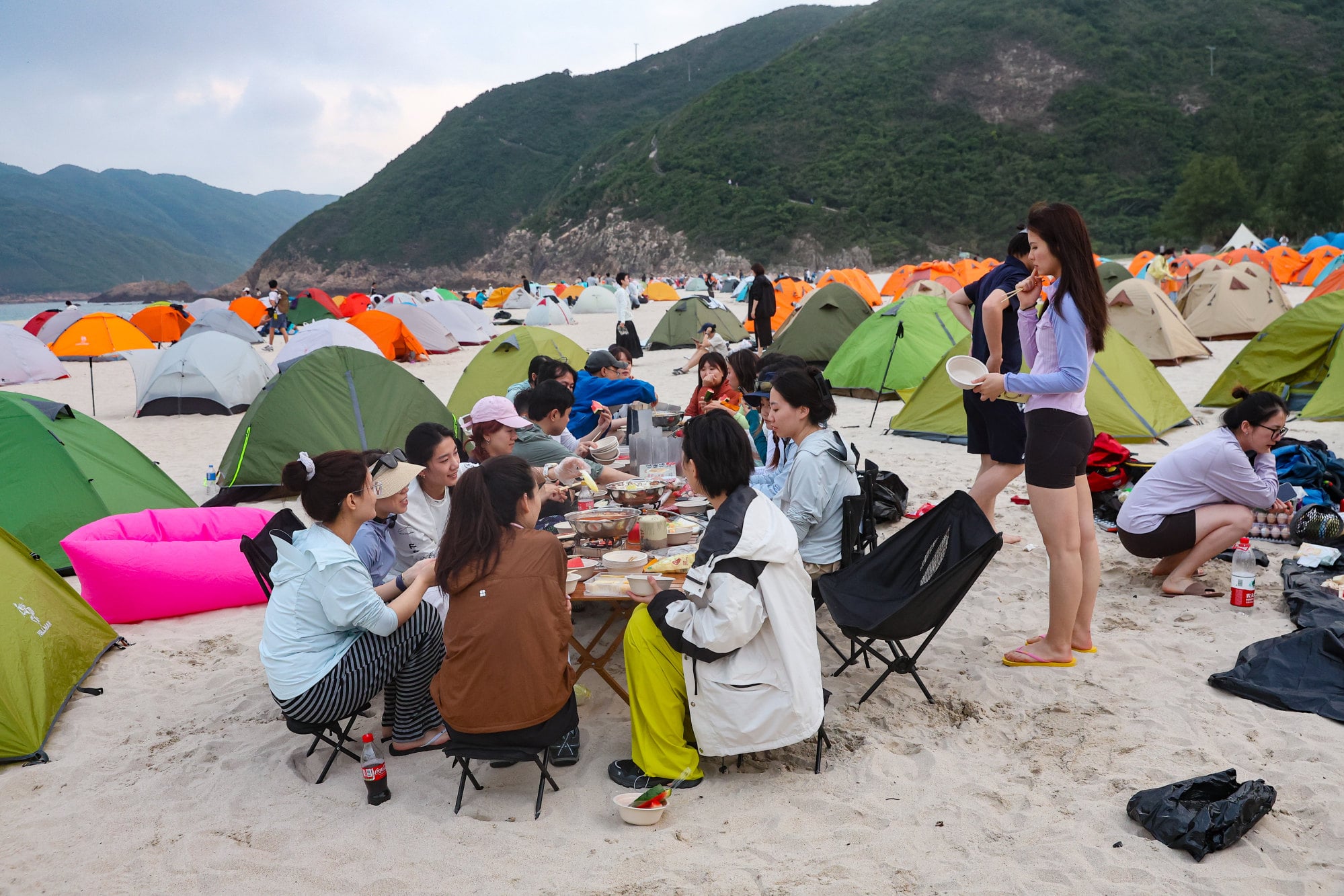
Some of these campers were part of tours from mainland China, spending two days in identical tents and gathering around camping tables for hotpot dinners. The ingredients for these meals were often brought across the border by their guides. By morning, the public bathroom at the beach was clogged with food scraps, and some tents remained standing for the next group of tourists arriving that afternoon.
This scene raises an important question for Hong Kong: can it turn its beaches, islands, villages, and country parks into economic assets without allowing “ecotourism” to become another form of mass tourism?
Experts, conservationists, and operators believe the answer lies in shifting from simply promoting scenic spots to actively managing visitor flows, enforcing rules, supporting local communities, and ensuring that nature-based tourism generates enough economic value to fund conservation.
Good but Late
Lam Chiu-ying, a former Observatory director and adviser to the Hong Kong Countryside Foundation, emphasized the importance of treating conservation as a priority. The non-profit organization, co-established in 2011, aims to bring together people interested in conserving the countryside for the long-term benefit of Hong Kong.
Economist Simon Lee Siu-po of the Chinese University of Hong Kong’s Shenzhen Finance Institute noted that popular areas such as Ham Tin Wan, Long Ke Wan, and the High Island Reservoir East Dam have already exceeded their capacity. He described proposals to introduce booking and fee systems at popular country park sites as “good but late.”
Rory Mackay, founder of adventure and eco-tour operator Wild Hong Kong, was more blunt. He argued that calling the current trend an “ecotourism boom” is misleading, as it’s essentially mass tourism displaced into nature. These crowds bring their own supplies, hike or camp, and then return to the mainland, leaving local villages and shops dealing with gridlock, overcrowding, and trash without seeing any financial benefit.
Hong Kong has seen a steady post-pandemic recovery in mainland visitor numbers over the past two years, with growing interest in outdoor and nature-based attractions. During the recent five-day Labour Day golden week holiday, the city welcomed about 1.19 million visitors, including 1 million from the mainland, representing a 10 per cent increase from a year earlier.
A Shift in Tourism Strategy
For years, Hong Kong’s tourism economy was powered by shopping, dining, and city sightseeing. However, this model has weakened as mainland visitors, who account for around 80 per cent of total annual inbound tourists, spend less on retail and increasingly seek “in-depth” experiences, including hiking and camping, and visiting islands and old villages.
The government has identified ecotourism as part of the city’s tourism diversification strategy, with the 2024 policy address mentioning plans to turn Tsim Bei Tsui and Pak Nai into environmentally friendly tourist nodes. However, the Labour Day crowds exposed the gap between ambition and capacity.
The Agriculture, Fisheries and Conservation Department (AFCD) recorded about 5,700 visitors at High Island Reservoir’s East Dam on May 1, while about 3,000 people went to Sharp Island that day, exceeding expectations. Sharp Island is part of the Hong Kong UNESCO Global Geopark.
The department adopted an educational approach towards visitors, teaming up with green group WWF Hong Kong for preservation efforts, while staff issued about 300 verbal warnings to tourists on Sharp Island. At Ham Tin Wan, Sai Wan, and Long Ke Wan, about 1,100 tents were observed on the first night of the holiday.

Will Booking Systems Help?
Associate Professor Lisa Wan Chun-ying of Chinese University’s school of hotel and tourism management said reservation systems are generally effective for high-demand and environmentally sensitive sites because they turn visitor numbers into a controllable variable. Their main benefits include reducing congestion during peak periods, protecting ecosystems from overuse, and improving visitor safety and experience.
However, Wan cautioned that reservation systems are not a stand-alone solution and could create new challenges, including higher enforcement costs, the displacement of visitors to unmanaged sites, and barriers for spontaneous travelers.
The bureau told lawmakers earlier this week about its plan to launch a pilot booking system with real-name registration for Po Pin Chau—a scenic headland featuring massive hexagonal volcanic columns east of High Island Reservoir—and designate some areas around Sharp Island as a marine park.
Undersecretary for Environment and Ecology Diane Wong Shuk-han said the government would not roll out new arrangements abruptly, allowing visitors to adapt to changes. She added that imposing a fee to visit Po Pin Chau would only be considered after the pilot scheme proved effective.
Other lawmakers expressed concerns that online bots and travel agencies could game the reservation system. “The Inca Trail in South America also has a reservation system, but after it was introduced, some online programmes or travel agencies snapped up all the quotas in seconds,” lawmaker Chris Ip Ngo-tung said.
Wong of the bureau said the government was studying a ballot mechanism in which all applications would be collected before a draw, preventing programs from monopolizing slots.
A Slower Vision for Ecotourism
Lam pointed to Lai Chi Wo, a centuries-old Hakka village, as an example of how conservation and tourism could coexist. It has seen residents return after years of revitalization efforts involving villagers, conservation groups, and academics.
Katie Chick Hiu-lai, senior project manager at the University of Hong Kong’s Policy for Sustainability Lab, said much of what passed for nature tourism locally lacked ecological or cultural design. She warned that money could be taken away by outside tour operators while the impact stayed in the local area.
The dilemma is not unique to Hong Kong. Across Asia, governments use fees, permits, and quotas to manage pressure on natural sites. Bali charges foreign visitors a mandatory levy used for cultural preservation, waste management, and infrastructure, while Taiwan uses a permit system for fragile mountain ecosystems.
Thailand charges entrance fees at national and marine parks, with foreign visitors often paying more than locals. The mainland’s major national parks also use structured ticketing, with Zhangjiajie National Forest Park charging about 250 yuan for a multi-day pass.
Bhutan offers another model, with its long-standing high-value, low-volume tourism approach and sustainable development fee. Unfinished business remains for Hong Kong, as it seeks to balance ecotourism with the need to protect its natural and cultural resources.