The Latest Ebola Outbreak and Regional Response
The latest Ebola outbreak in eastern Democratic Republic of Congo (DRC) and Uganda has reignited concerns about the potential for trade restrictions similar to those seen during the height of the Covid-19 pandemic. Neighboring states are rushing to implement border controls, despite warnings from health agencies against such measures.
Although both the World Health Organization (WHO) and Africa Centres for Disease Control and Prevention (CDC) have advised against closing borders or restricting movement, several neighboring countries have implemented stricter screening protocols for travelers. Rwanda, for instance, has partially blocked the border crossing with DRC, drawing criticism from Kinshasa.
Ugandan authorities announced on Thursday that they would suspend flights and other forms of public transport to DRC as part of efforts to contain an Ebola outbreak declared last week. This decision came even as Ugandan President Yoweri Museveni criticized international media outlets for causing panic, stating that disease is easier to contain than Covid-19 because it requires physical contact to spread.
As part of new safety measures, Uganda suspended ferry passenger services on the Semliki River, which marks the border between Uganda and DRC. It also temporarily halted cross-border public road transport between the two countries for four weeks. All flights between the two nations will be suspended within 48 hours, while authorities increase screening in high-risk districts.
Uganda is also monitoring illegal crossings and enforcing strict infection prevention measures in schools, prisons, hotels, places of worship, and non-weekly markets. Learning institutions will remain open but have been instructed to follow new standard operating procedures issued by the Ministry of Health, including avoiding handshakes and hugging. Nearby health centers are expected to support these monitoring efforts.
As of May 21, 2026, the Ebola outbreak caused by the Bundibugyo strain of the virus had claimed at least 139 lives across DRC and Uganda, with more than 600 suspected cases reported. Uganda confirmed two cases, including one death. Both individuals were Congolese nationals who had crossed into Uganda.
During the Covid-19 pandemic, countries imposed lockdowns, except for Tanzania, and implemented strict public health protocols, including hygiene and testing before travel approval. However, the variability in requirements and sometimes the lack of recognition for testing and insufficient capacity to handle the illness could pose challenges for overall business operations.
President Museveni argued that the reporting on the Ebola outbreak has been exaggerated. During the 10th Pearl of Africa Tourism Expo at Speke Resort Munyonyo in Kampala, he criticized international media outlets, particularly CNN, for spreading fear through ignorance. He stated that Ebola is easier to contain than Covid-19 because it spreads through direct contact rather than through the air.
His remarks came amid heightened regional concern following the confirmation by Uganda’s Ministry of Health that the country had recorded two Ebola cases linked to the ongoing outbreak in eastern DRC. As the region has porous borders, there is concern that stricter border controls on one side and a lack of control on the other could disrupt cargo flows, slowing trade especially along the Northern Corridor, shared by Kenya, Uganda, South Sudan, DRC, and Rwanda.
Northern Corridor Transit and Transport Coordination Authority (NCTTCA) Executive Secretary, Dr John Deng, said the variance in health protocols across the region is especially worrying. He emphasized the need for a joint framework to contain Ebola and any other communicable diseases. “Long-distance crews are vulnerable and their movements within the region cannot be ignored. Each country cannot shut down the borders without clear coordination,” he said.
Uganda and Rwanda were both restricting movements into eastern DRC, even though the two countries have some of the busiest border crossings in the region. Congolese authorities said they were struggling to impose controls in the east, now under rebel control.
Kenya and Tanzania said they had heightened screening of travelers but there was no testing of suspected cases at the crossings. South Sudan, facing security challenges, was already struggling with capacity to police its border with the DRC.
Transporters are already worried about the lack of screening along the Northern Corridor, which might worsen the situation as health workers complain of inadequate resources to fight Ebola.
Sudi Mwatela, chairman of the Kenya Long Distance Truck Drivers Union (KLDTDU), blamed governments for a lack of communication regarding the Ebola outbreak. “We are worried since we only received communication from Goma about Ebola. We expected screening as we cross but little is being done. We are urging our drivers to be cautious as they ferry goods across the region,” he said.
The East African Community (EAC) bloc urged partner states to strengthen surveillance and border screening following the outbreak, but discouraged blockades. Andrea Aguer Ariik Malueth, the EAC Deputy Secretary-General in charge of Infrastructure, Productive, Social and Political Sectors, said: “All partner states should strengthen national and cross-border emergency preparedness plans in order to enhance surveillance and monitoring at points of entry and safeguard public health.”
Malueth highlighted the continuing threat posed by epidemic-prone diseases in East Africa and the need for coordinated preparedness. “The EAC remains vigilant and committed to supporting partner states in strengthening surveillance, laboratory diagnosis, infection prevention and control, as well as risk communication, especially in border areas,” he added.
So far, the EAC has sent a mobile laboratory network to support border surveillance along the DRC frontier. The EAC Regional Centre of Excellence is supporting laboratory diagnostic services across the region, he added.
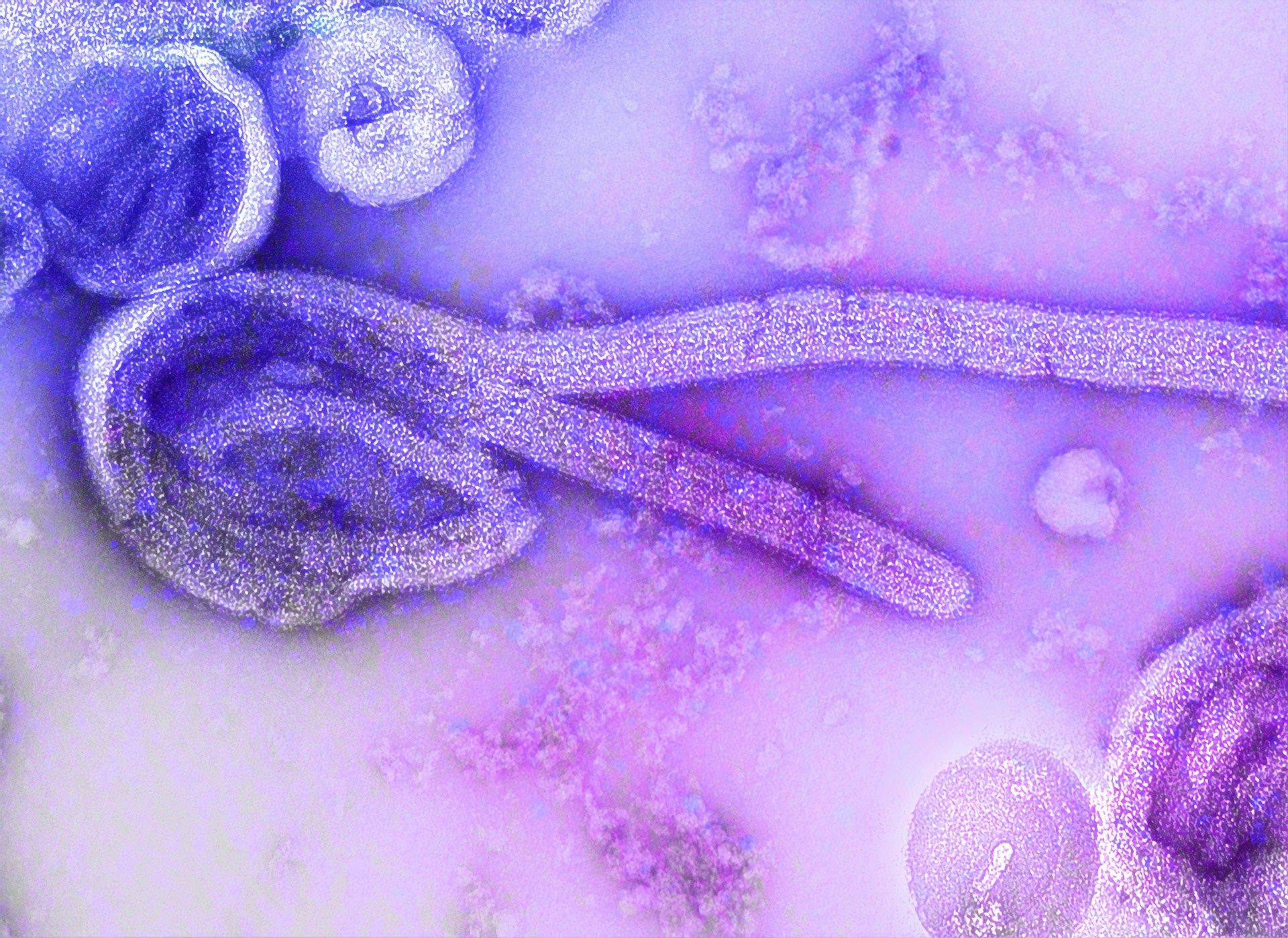
This is the 17th Ebola outbreak recorded in the DRC since the disease was first identified in 1976 near the Ebola River. The new cases involve the Bundibugyo strain, which has no vaccine or treatment.
The outbreak has already spread beyond its original epicenter, linked to delayed detection and porous borders. The WHO declared it an international public health emergency, while the CDC, acting on recommendations from its Emergency Consultative Group (ECG), declared it a Public Health Emergency of Continental Security (PHECS). Both declarations fall below pandemic level but authorize the agencies to lead and coordinate international responses.
The Africa CDC warned of “the high risk of regional spread due to intense cross-border population movement” and insecurity in affected areas with weak infection prevention and control measures.
Public health workers say the response has been stymied by US cuts to foreign aid and global health organizations. Amadou Bocoum, Democratic Republic of Congo country director for charity group CARE, told local media: “We are no longer able to get some supplies. We are not able to react immediately.” Mr Bocoum said that basic medical equipment such as masks and hand sanitizers, as well as components necessary for testing, are in short supply due to funding cuts.
The estimated case fatality rate of the Bundibugyo strain is between 25 and 40 per cent, according to experts from medical charity group Doctors Without Borders (MSF), whose team was among early responders to the new outbreak reported last week. This is the third detected outbreak involving the Bundibugyo strain, following outbreaks in Uganda in 2007–2008 and in the DRC in 2012.
“The number of cases and deaths we are seeing in such a short timeframe, combined with the spread across several health zones and now across the border, is extremely concerning,” said Trish Newport, MSF Emergency Programme Manager. “In Ituri province, many people already struggle to access healthcare and live with ongoing insecurity, making rapid action critical to prevent the outbreak from escalating further.”
Cutting aid
The US, despite cutting aid to the WHO earlier, this week said it was deploying experts to the DRC “to support on-the-ground coordination with host governments and humanitarian partners.” The US State Department also said it had mobilized an initial $23 million in bilateral foreign assistance “to immediately bolster each country’s own response, supporting surveillance, laboratory capacity, risk communication, safe burials, entry and exit screening, and clinical case management.” It was also funding up to 50 treatment clinics and associated frontline costs being established in Ebola-affected regions of the DRC and Uganda.
Ebola is an infectious viral haemorrhagic fever, transmitted to humans through direct contact with blood, secretions, organs or other bodily fluids of infected animals. Human-to-human transmission occurs through close contact with the bodily fluids of infected individuals.
Its emergence is also raising fears of worsening relations between Rwanda and the DRC. “Rwanda should not have closed the border. The International Health Regulations prohibit it. When Rwanda experienced the Marburg virus outbreak, we did not close our borders,” said Congolese Minister for Public Health Dr Roger Kamba at a press conference in Kinshasa.
The briefing was attended by Communication Minister Patrick Muyaya, the Minister for Health, the Director-General of the National Institute for Biomedical Research (INRB) Dr Jean Jacques Muyembe, and the Director-General of the Africa CDC of the African Union Dr Jean Kaseya. Africa CDC announced $1 million in support of the DRC’s fight against the epidemic.
Congolese authorities argue that border closures are not an effective response to an epidemic that requires strong health coordination between neighboring countries.
Africa CDC Director-General Jean Kaseya said he would hold a meeting between the DRC and Uganda aimed at strengthening the regional Ebola response. The African health official, who was in Kinshasa before traveling to Uganda, stressed the importance of close cooperation between the two countries, both of which are facing the Bundibugyo strain.
This latest strain is considered less lethal than the Ebola Zaire strain but still highly dangerous. According to health officials, the fatality rate of the Bundibugyo variant is estimated at around 40 percent, compared with nearly 80 percent for the Zaire strain, which was responsible for several previous deadly outbreaks in Central Africa.
Mr Kamba nevertheless sought to reassure the public citing the DRC’s extensive experience in managing epidemics. “Of the 17 Ebola outbreaks recorded in the DRC, 15 were contained without medicines or vaccines, solely through prevention, surveillance and isolation measures,” he stressed.
Among the 139 probable deaths recorded so far, four involve healthcare workers, underscoring the high level of exposure faced by frontline medical staff.