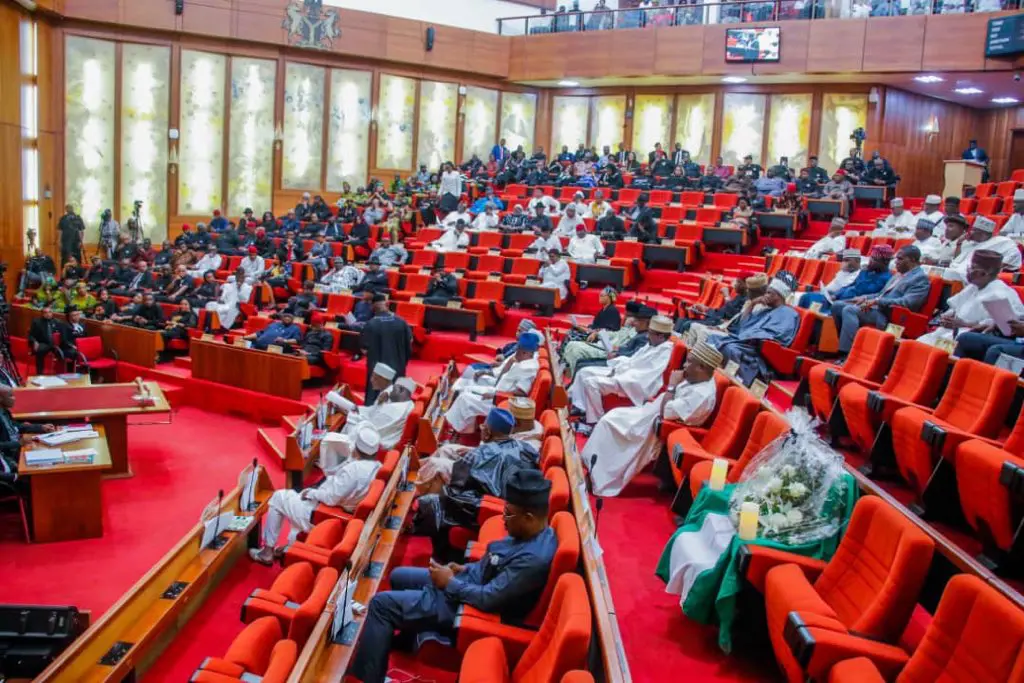
Senate Explains Decision on Election Results Transmission
The Senate has provided a detailed explanation of its decision to make the electronic transmission of election results discretionary rather than mandatory in the ongoing reform of the country’s electoral governance framework. According to the Senate, this decision was based on empirical data and not on emotions or sentiment. The move followed extensive consultations with key stakeholders in the communications and power sectors.
Senator Opeyomi Bamidele, Leader of the Senate, clarified the decision through his Directorate of Media and Public Affairs. He emphasized that law-making comes with significant responsibilities globally, and the Senate cannot fulfill these obligations at the expense of the citizenry.
The Red Chamber had previously resolved against Clause 60(3) of the Electoral Bill, 2026. This clause required presiding officers to electronically transmit results from each polling unit to the INEC Result Viewing Portal (IReV) in real time. However, the Senate later reviewed the clause to strengthen the electronic transmission of results while addressing concerns about infrastructure limitations.
Bamidele highlighted that Clause 60(3) of the Electoral Bill, 2026, is an initiative that many legislatures worldwide would typically embrace. He pointed out its potential to enhance trust in democratic institutions such as the National Assembly and INEC. However, he also acknowledged the challenges posed by the country’s infrastructure.
Citing data from the Nigerian Communications Commission (NCC), Bamidele noted that Nigeria achieved only about 70% broadband coverage in 2025, with Internet user penetration at 44.53% of the population during the same period. Additionally, the Speedtest Global Index ranked Nigeria 85th out of 105 countries in mobile network reliability and 129th out of 150 countries in fixed Internet broadband reliability.
According to the index, Nigeria’s mobile network reliability was 44.14 megabits per second (Mbps), significantly lower than countries like the UAE (691.76 Mbps), Qatar (573.53 Mbps), Kuwait (415.67 Mbps), Bahrain (303.21 Mbps), and Bulgaria (289.41 Mbps). In terms of fixed Internet broadband, Nigeria ranked 129th with only 33.32 Mbps, far below leaders like Singapore (410.06 Mbps), UAE (382.35 Mbps), France (346.25 Mbps), Chile (348.41 Mbps), and Hong Kong (345.25 Mbps).
The Senate leader also cited official data showing that at least 85 million Nigerians lack access to grid electricity, which accounts for approximately 43% of the population. Despite a generation capacity hovering between 12,000 and 13,500 megawatts, the distribution and transmission capacity remains limited, delivering only 4,500 megawatts to households nationwide. However, the Electricity Act, 2025, is expected to bring significant improvements to the power sector starting from this financial year.
Bamidele expressed doubts about the practicability of real-time electronic transmission of election results given these conditions. He argued that making such a provision mandatory could lead to a crisis. By global standards, he noted that real-time electronic transmission may not be feasible at this stage of the country’s development.
To avoid exacerbating existing challenges, the Senate opted for a discretionary approach. Section 62(2) of the Electoral Act, 2022, already established the National Electronic Register of Election Results. All these factors were considered before the Senate decided to retain Section 60(3) of the Electoral Act, 2022, in the interest of the people and security.
The data clearly reflects the stark realities of the federation, not emotions or sentiments. Bamidele stressed that lawmaking globally involves significant responsibilities, and the Senate cannot enact laws based solely on public emotion or sentiment. These obligations, as outlined by the Constitution, must not come at the expense of the citizenry.
In democracy, law-making is central to public governance. It serves as the lifeblood of all public institutions and should respond to facts, proofs, or realities that define or distort the future of the political system. If laws fail to reflect the realities of the federation, they risk becoming scripts for anarchy or ploys for instability.
This reasoning guided the Senate’s decision to redraft Clause 60(3) with a caveat while addressing the concerns of the people across the nation. The caveat involved the removal of the word “real time” from the clause to ensure the electoral governance framework aligns with the country’s realities.