Nigeria’s Ambitious Plan for Agricultural Mechanisation
The Nigerian Federal Government has announced plans to establish a mega tractor assembly plant capable of producing between 2,000 and 4,000 tractors annually. This initiative is part of broader efforts to reduce the country’s reliance on imported agricultural machinery and to bolster domestic manufacturing capabilities.
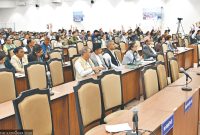
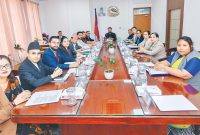
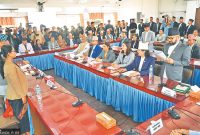
At the High-Level National Policy Dialogue on Agricultural Mechanisation in Abuja, Minister of Agriculture and Food Security, Senator Abubakar Kyari, outlined the government’s vision for a sustainable mechanisation industry. The event was themed: “Anchoring National Food Sovereignty through Sustainable Agricultural Mechanisation Policy, Innovation and Strategic Investment.”
Kyari emphasized that the proposed assembly plant is a key component of the National Agricultural Mechanisation Investment Strategy. This strategy aims to attract investment, create employment opportunities, and build a robust mechanisation industry within the country. He highlighted that the focus is not just on importing equipment but on developing a comprehensive ecosystem for machinery production, agricultural technology, and mechanisation services.
“Our Investment Strategy also includes plans to establish a mega tractor assembly plant with capacity to produce between 2,000 and 4,000 units annually, aimed at reducing import dependence and building domestic industrial capacity,” Kyari said.
He further explained that the initiative is about localising production, creating jobs, and building a sustainable mechanisation economy. Kyari called on both local and international investors to take advantage of the opportunities in Nigeria’s agricultural mechanisation sector. He stressed that the government is seeking long-term partnerships rather than capital solely for the purchase of equipment.
“Nigeria is open for investment in agricultural mechanisation. We are not seeking capital merely to purchase machines. We are seeking partners to build an enduring agricultural technology and services ecosystem,” Kyari stated.
Empowering Youth and Women in Agricultural Mechanisation
Kyari identified young people and women as critical to the success of the emerging mechanisation economy. He noted that agriculture is becoming increasingly technology-driven, offering new opportunities for employment and wealth creation. The sector requires a range of professionals, including operators, technicians, engineers, entrepreneurs, digital innovators, equipment managers, and service providers.
Initiatives under the mechanisation programme aim to provide pathways for youth, women, and persons with disabilities to become Mechanization Service Providers while improving smallholder farmers’ access to affordable machinery services.
Borno State Governor, Professor Babagana Zulum, shared his state’s experience in supporting agricultural transformation. He mentioned that Governor Zulum had provided 200 truckloads of fertiliser to farmers and opened more than a dozen solar-powered irrigation systems and sites. These investments help farmers extend their production beyond the rainy season and demonstrate the role states can play in boosting agricultural productivity.
Private Sector Participation and Collaboration
Kyari commended TracTrac MSL for training thousands of young Nigerians as mechanisation service providers and facilitating access to small-scale tractors for smallholder farmers. He described this initiative as an example of the private-sector participation the new National Agricultural Mechanisation Policy and Investment Strategy were designed to encourage and replicate.
However, Kyari stressed that the Federal Government cannot close Nigeria’s agricultural mechanisation gap alone. He called for coordinated investment and participation from state governments, financial institutions, private companies, development partners, research institutions, and farmers.
Under the emerging framework, the Federal Government will provide policies, standards, coordination, and investment architecture, while state governments will support implementation through land access and infrastructure. Private companies will be expected to invest, innovate, and provide mechanisation services, while financial institutions will develop financing, leasing, and risk-sharing products that could make agricultural machinery more affordable.
Development partners will provide catalytic financing, technical expertise, and institutional support, while research institutions will be required to develop and adapt technologies suited to Nigeria’s agricultural conditions.
Farmers at the Center of the Mechanisation Programme
Kyari reiterated that farmers must remain at the center of the mechanisation programme, not merely as beneficiaries of government interventions but as active commercial participants.
In his remarks, Borno State Governor, Professor Babagana Zulum, highlighted that Nigeria’s food security challenge goes beyond inadequate production. He identified gaps in technology, investment, and agricultural value chains as major constraints to the country’s ability to feed its growing population.
Zulum emphasized the need for a fundamental change in the way food is produced to create jobs for the youthful population, reduce dependence on food imports, and build a competitive agricultural economy.
Impact of Private Sector Initiatives
Chief Executive Officer of TracTrac MSL, Godson Ohuruogu, disclosed that its agricultural mechanisation interventions have reached more than 500,000 farmers and helped catalyse over N2 billion in investment in Nigeria’s mechanisation ecosystem in the last six years.
Ohuruogu also mentioned that the company, through the Inclusive Service Delivery Model for Agricultural Mechanisation (ISSAM) Project implemented with the Mastercard Foundation, had trained more than 6,000 young people, women, and persons with disabilities to participate in agricultural mechanisation and service delivery.
According to him, the intervention created more than 3,000 jobs within one year and supported the establishment of 567 youth- and women-led cooperatives. Hundreds of tractors and nearly 2,000 labour-saving devices had been deployed to a new generation of mechanisation service providers to improve farmers’ access to machinery.
Ohuruogu concluded by stating that the achievements demonstrated the impact that could be recorded when government and private-sector players work together to address the needs of farmers, particularly smallholders who have historically struggled to access agricultural machinery.