Rethinking Commodity Finance for Growth
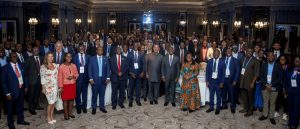
Ghana International Bank (GHIB) recently concluded its flagship thought-leadership and impact forum, GHIBCONVERGE 2025. The event took place in the City of London from 6–8 August 2025, bringing together a diverse group of stakeholders to discuss the future of African commodity trade and finance. The conference aimed to explore actionable strategies for transitioning the continent from raw commodity dependence to value-added trade, supported by sustainable finance and integrated infrastructure.
Under the theme “Rethinking Commodity Finance for Growth,” the conference delved into opportunities and structural reforms needed to accelerate Africa’s industrialization, strengthen its trade position, and unlock new sources of revenue. Key discussions focused on how to create a more resilient and competitive economic landscape for African nations.
Dean Adansi – Financing the Shift to Value-Addition
In his opening remarks, GHIB Chief Executive Officer Dean Adansi emphasized the need to re-engineer Africa’s commodity export model. He highlighted that only 14% of Africa’s exports are currently value-added goods, a figure that has remained stagnant for decades. This represents a significant missed opportunity in terms of export earnings.
Adansi pointed out that many African countries continue to export raw commodities such as cocoa, gold, and cashew, rather than processed products like chocolate, refined bullion, and processed kernels. He argued that the financing solutions exist but require alignment between banks, policymakers, and industry players.
To address this, Adansi proposed creating dedicated value-addition funds, expanding structured trade finance for processing plants, and promoting risk-sharing arrangements between African and global lenders. He also called for regulatory harmonization across African economies to facilitate the movement of processed goods under the African Continental Free Trade Area (AfCFTA).
Central Bank Perspectives – Gold Refining, Growth, and Resilience
A keynote session on “Growing Africa through Commodities” featured Governor Buah Saidy of the Central Bank of The Gambia. He provided a candid assessment of the strategic role commodities can play in macroeconomic stability. Saidy noted that for too long, Africa’s commodity wealth has been exported in its rawest form, leaving value and jobs offshore.
He stressed the importance of investing in domestic refining capacity, building regional value chains, and securing fairer terms of trade to anchor currencies, strengthen reserves, and create lasting resilience in African economies. Dr. Zakaria Mumuni, First Deputy Governor of the Bank of Ghana, echoed these sentiments, highlighting the Bank of Ghana’s commitment to expanding domestic gold refining capacity and integrating ESG considerations into commodity sector policy.
Mumuni emphasized that refining at source could reduce Ghana’s dependence on imported refined bullion and provide a hedge against volatility in global markets. He underscored that Ghana’s long-term macroeconomic stability depends on capturing more value from the commodities it produces.
Lord Boateng – Commodities as Strategic Leverage
In a keynote address on Day Two, Lord Paul Boateng, former UK Cabinet Minister and GHIB Board Member, argued that Africa must treat its commodity resources as geopolitical assets. He stated that critical minerals, cocoa, and gold are not just export lines in a trade ledger but bargaining chips in a changing global order. Boateng urged Africa to use these resources to secure technology transfer, infrastructure investment, and sustainable value chains.
His remarks framed a panel discussion on the race for critical minerals, a sector poised to benefit from surging global demand for battery metals and clean energy inputs. Panellists examined the policy frameworks and financing models needed to ensure Africa moves beyond extraction into refining and high-value manufacturing, particularly in electric vehicle supply chains.
Panel Highlights – Breadth, Depth, and Solutions
Over the three days of the conference, multiple panels and fireside chats explored various aspects of the commodity finance landscape. Topics included:
- Commodity Trade as a Catalyst for Economic Renewal: Speakers mapped Africa’s current commodity profile and explored financing gaps that keep processing industries underdeveloped.
- New Methods of Commodity Financing – The Cocoa Case Study: Using Ghana’s cocoa sector as a lens, this discussion examined how hybrid financing models and forward contracts can support smallholder farmers and processors.
- Minerals and Petroleum Finance: Executives from mining, energy, and banking sectors debated how to create competitive finance packages for large-scale extractive projects while incorporating local content requirements.
- AI and Blockchain in Commodity Finance: Technology leaders demonstrated real-world applications for digital ledgers in trade documentation, reducing fraud, and tracking goods in transit.
- Success Factors in Commodity Finance: Bankers and trade finance experts dissected what makes commodity finance deals work, from credit risk assessment to collateral management.
- Managing Risk in Modern Commodity Finance: Insurers, bankers, and traders discussed reimagining risk-sharing structures to reduce transaction costs and improve access for smaller players.
- Financial Crime Risks in Commodity Finance: Experts addressed sanctions compliance, anti-money laundering protocols, and proliferation financing safeguards.
- Infrastructure Solutions for Commodity Trade: Panelists stressed the importance of reliable ports, energy grids, and transport corridors for successful commodity trade.
- Legal Perspectives on Emerging Trends: Lawyers analyzed the evolving regulatory landscape, arbitration trends, and dispute resolution frameworks in cross-border trade.
- Agro-Commodity Finance: Specialists shared strategies for financing agricultural value chains, balancing seasonal cash flow needs with long-term investment in processing facilities.
Sustainability, ESG, and Long-Term Competitiveness
A recurring theme was the need to integrate sustainability into every stage of the commodity value chain. Discussions covered sustainability-linked loans, responsible sourcing certifications, and carbon footprint reporting as competitive differentiators for African exporters in environmentally conscious markets.
Partnerships and Recognition
The conference also served as a platform for strategic collaboration. GHIB announced a partnership with Vista Bank to expand trade finance offerings across West Africa. At the closing ceremony, GHIB presented its inaugural Trader of the Year award to Mr. Edmund Poku, CEO of Niche Cocoa Industry Ltd., in recognition of the company’s exceptional contribution to African commodity value addition.
Closing – A Call to Collective Action
In his closing address, Mr. Adansi reiterated GHIB’s commitment to bridging African opportunity with global capital. He emphasized that the transformation will not be led by governments or the private sector alone but requires a coalition of committed actors who see beyond short-term margins to long-term wealth creation for Africa.
GHIBCONVERGE is designed to harness the bank’s extensive experience and leverage its network of partners, clients, and even competitors. Structured off the Bank’s acclaimed ‘Summer School,’ which has upskilled many West African banking, treasury, and corporate executives over many years, the platform aims to initiate a continuous series of roundtables focused on generating, discussing, and implementing new ideas to foster the growth of African trade.

Related posts:

Fiction park: He was the best in class. He still wasn’t good enough

Gagan Thapa takes oath as Congress president, vows to regain public trust

Inside knowledge that has locals gripped by fear after gran’s body found decomposing in cattle dip

New property purchase disclosure rule in Japan sparks fears it may curb foreign investment

Dino-mite treasures: inside Singapore’s Fort Knox storing playthings of ultra-rich