Political Realignment in Benue State
Benue State’s political landscape is witnessing a dramatic transformation, fueled by Governor Hyacinth Alia’s resolve to redefine the ruling All Progressives Congress (APC) and, consequently, the state’s power dynamics. Alia’s mantra of “No Alia, No Benue” signals a new political order built on evolving strategies that could challenge the dominance of the old political guard as the 2027 general election approaches.
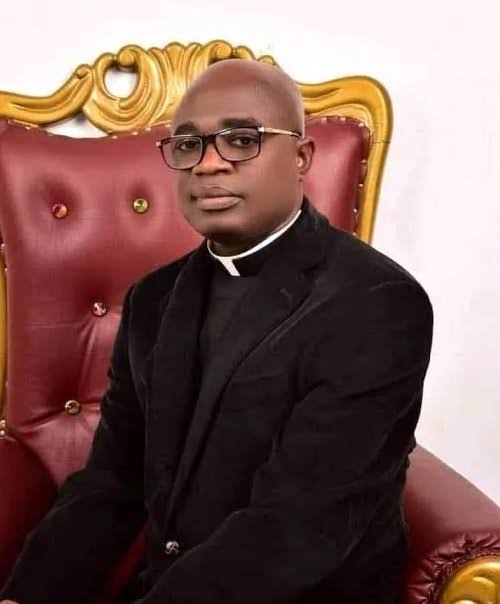
Before the 2023 elections, which brought Alia to power under the APC banner, the party’s structure in Benue was heavily influenced by the Secretary to the Government of the Federation (SGF), Senator George Akume. His political machinery played a crucial role in Alia’s rise. However, shortly after taking office, the priest-turned-politician began charting his own course.
Alia swiftly consolidated control over key positions within the APC, including leadership roles in the State House of Assembly, executive council members, and the party’s executive committee. This move has resulted in a clear division within the APC: one faction loyal to the SGF and another aligned with the governor. Efforts to reconcile these factions have repeatedly failed, deepening the rift.
A Divided Party
The ongoing crisis has led some analysts to predict that the division could jeopardize Alia’s chances of securing a second term in 2027. According to political analyst Ede Acheme, the APC’s continuous operation under two rival leaderships—one led by Comrade Austin Agada, who is loyal to Akume, and the other by Chief Benjamin Omale, who chairs the caretaker committee aligned with the governor—may make Alia the first governor of the state to fail a re-election bid since its creation.
Despite these concerns, Alia’s supporters argue that his main challenge lies in building a sustainable political structure capable of ensuring his re-election despite the internal divisions. Yohanna Luka, a resident of Wadata in Makurdi, remains skeptical. “If Alia, up till now, can’t subdue the ranks of the SGF, it would be difficult to concretise his structure before the 2027 election,” he said.
Alia’s Counteroffensive
Determined to secure his footing, Governor Alia has taken steps to broaden his base by attracting new political allies and setting up ‘point men’ in all 23 local government areas. This move is seen as part of his strategy to strengthen his political machinery ahead of 2027.
Alia has adopted subtle but effective political maneuvers, including quiet negotiations and tactical realignments, that are reshaping Benue’s political narrative. A significant turning point came in August when the Benue State House of Assembly witnessed a leadership change, widely attributed to the governor’s influence. This development weakened his opponents’ camp while bolstering his own.
Alia’s latest moves were highlighted during an “Evening of Fellowship and Dialogue” last Friday, which analysts described as a strategic show of strength. The event, organized by the APC in honor of prominent Benue indigenes who had joined the party, underscored Alia’s growing influence and his bid to reposition the APC as the dominant force in the state.
Prominent figures who attended included House of Representatives member for Apa/Agatu Federal Constituency, Ojema Ojotu; Benue Assembly member for Okpokwu Constituency, Andrew Agom; former NAFDAC Director-General Dr Paul Orhii; former governorship aspirant Prof. David Iornem; and former Benue PDP vice chairman Dr Cletus Tyokyaa, among others.
Speaking at the event, Alia emphasized a renewed spirit of unity beyond party lines, stating, “Benue is rising again, and we are moving forward together… Beyond politics and beyond 2027, our focus remains service, development, and unity.”
The following day, at an extended APC caucus meeting in Makurdi, the governor welcomed additional defectors from the PDP, ADC, and Labour Party, declaring that the “overwhelming support” from these figures underscored the positive direction of his administration.
During the caucus meeting, Alia unveiled 23 “head point men,” one for each local government area, tasked with coordinating political activities and ensuring equitable distribution of government programmes. Each will work with four supporting point men at the local level.
The appointments, which complement the existing Gubernatorial Liaison Officers (GLOs) created in December 2024, mark a significant restructuring within the APC. Alia stated that the initiative was designed to address past lapses in governance benefits and strengthen grassroots mobilisation ahead of 2027.
He also inaugurated a reconciliation committee under the APC Elders Forum and Advisory Council to mend divisions and unify party members across factions.
Reactions and Pushback
Predictably, Alia’s growing assertiveness has drawn mixed reactions. While his supporters view the moves as bold and necessary, critics argue that they are driven by desperation to usurp Akume’s long-standing influence.
Morgan Ihomun, the factional APC State Publicity Secretary loyal to the SGF, dismissed the fellowship and caucus meetings as “mere attempts to tap into Akume’s goodwill.” He cited a statement issued by the Benue National Assembly Caucus, signed by House of Representatives member Philip Agbese, which reaffirmed Akume’s stature as the cornerstone of Benue’s political unity.
“Senator Akume’s legacy as a unifier and champion of Benue’s interests is unmatched,” Agbese stated, describing Alia’s gatherings as “desperate and dubious attempts to piggyback on Akume’s monumental goodwill.”
The caucus further declared that the loyalty of Benue people “lies with Akume, a leader who has consistently delivered for the state and with Tinubu, whose policies are reshaping Benue for the better.”
Meanwhile, the opposition PDP said it was unbothered by the defection of some of its members, insisting that every party experiences internal wrangling. PDP State Publicity Secretary Daniel Nyikwagh claimed that his party was also in advanced talks to receive two serving senators and several APC members into its fold.
Despite the controversy, Alia’s base remains energized. Social media supporters have hailed him as a “Talk and Do” leader transforming Benue through courage and decisiveness.
For one such supporter, Patrick Apaa, “Yes Father” is not just a slogan, it’s a movement that cuts across youth, women, and the elderly. Alia is redefining governance in Benue like never before.
Another, Solo Aba, wrote, “Building a strong state requires a man who is strong, focused, and bold. Our governor is such a man. Those who love Benue will surely join him.”
As the saying goes, “the die is cast.” In Benue’s unfolding political drama, the coming months may finally reveal whether Governor Alia’s bold restructuring represents a decisive break from Akume’s shadow or merely the opening act in a longer supremacy battle within the state’s APC.