The Impact of Heavy Rains and the Debate Over Civil Society Involvement
In Kathmandu, the festive atmosphere on Vijaya Dashami was quickly overshadowed by heavy rains and warnings of floods and landslides. Starting from Saturday, the country experienced relentless downpours that drenched homes and sparked fear among residents. Although the rain has eased slightly, forecasts suggest it will continue until Monday, keeping the population on edge.
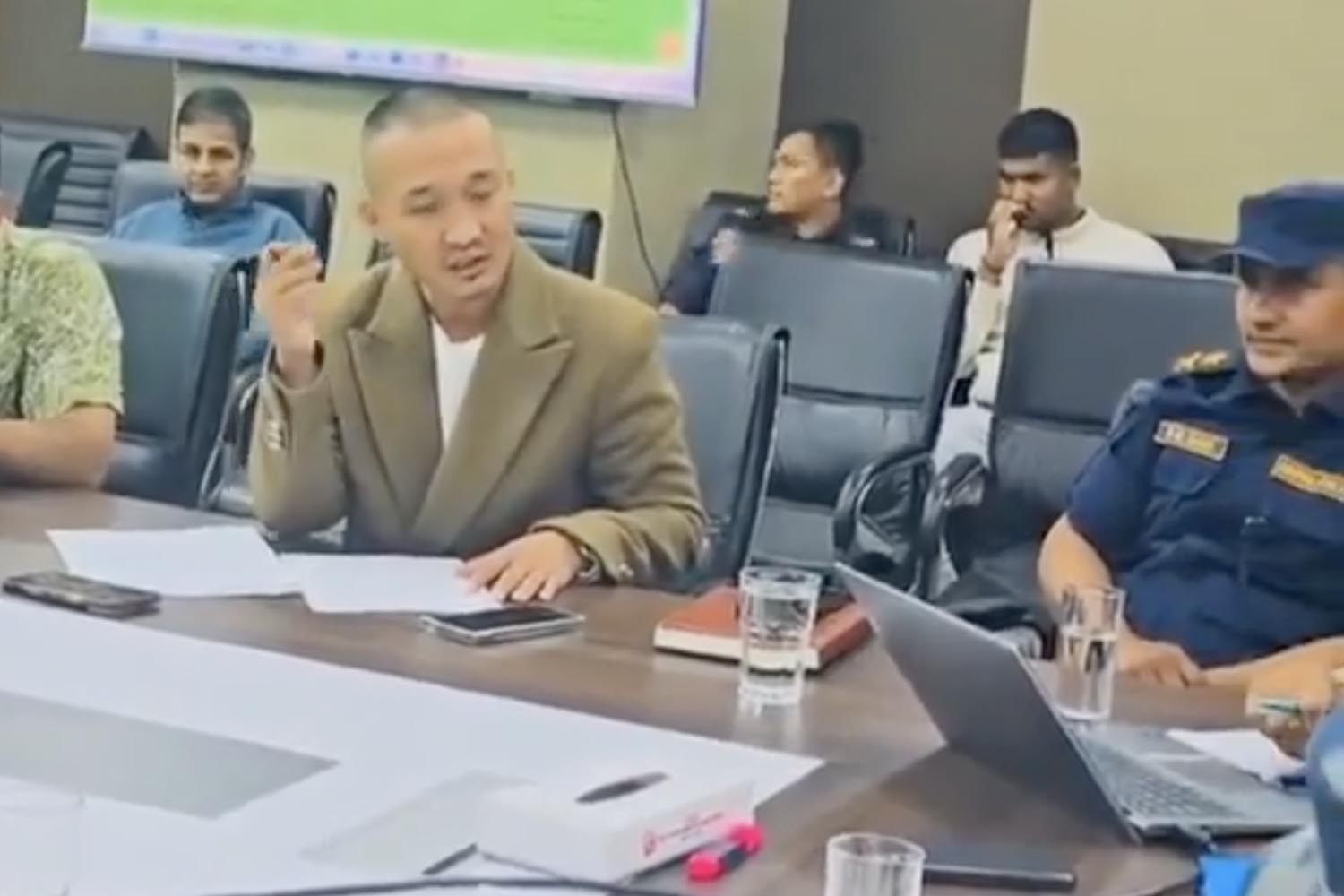
Social media has become a hub for updates, alerts, and discussions about the government’s preparedness. However, one particular event has taken center stage: a video of Sudan Gurung, founder of Hami Nepal, speaking at a meeting of the National Disaster Risk Reduction and Management Authority (NDRRMA). This video went viral across platforms like Facebook, Instagram, and Twitter, shifting public attention from disaster management to the discussion around Gurung’s role.
Divided Opinions on Gurung’s Participation
The conversation surrounding Gurung has been polarizing. Some critics question his qualifications to attend the meeting, mocking him and his organization with comments such as “an NGO is running the government.” Others defend his presence, emphasizing the importance of civil society input during crises.
Critics have raised concerns about the government’s perceived alignment with external forces and NGOs. For example, a Twitter user with over 2,000 followers questioned Gurung’s loyalties, asking, “For whom is Sudan Gurung working?” Another user claimed that Gurung had created key government positions, suggesting a lack of independence in governance.
However, supporters argue that civil society stakeholders with years of experience should be able to contribute to disaster management efforts. They see the criticism as a reflection of outdated mindsets or resistance from entrenched political interests.
Defending Citizen Participation
Advocates for Gurung highlight the importance of collaboration between the public, government, and non-governmental organizations. Aastha Dahal, an advocate, pointed out that the criticism reflects an older generation’s obsession with formality and subservience. She emphasized that the round table includes government representatives who are not bound to obey but are instead open to expert advice.
Another user, Anjali Subedi, noted that certain groups may resist the idea of citizens providing input, citing their historical preference for hierarchy and protocol. She argued that this mindset overlooks the value of straightforward communication and expertise.
Clarifying the Nature of the Meeting
Gurung clarified that he was not issuing instructions but offering suggestions. According to him, his organization reached out to the home minister via a call on Friday regarding disaster preparedness and offered assistance. After the minister agreed, they attended an informal meeting on Saturday.
Gurung admitted that his expression might not have been linguistically perfect, but his intention was to share his organization’s experience and offer recommendations. Dinesh Prasad Bhatta, chief of NDRRMA, confirmed that the meeting was informal and focused on exchanging ideas.
Bhatta added that Gurung shared his experience and offered Hami Nepal’s support, including volunteers and drones for relief efforts. He also highlighted the organization’s long history of involvement in disaster response, including the 2015 earthquakes, the Jajarkot earthquake, and the Roshi Khola disaster.
Government’s Perspective
Home Minister Om Prakash Aryal stated that Gurung was not giving instructions but sharing insights based on his experience. He praised the work of those on the ground, noting that their actions often speak louder than words.
Aryal acknowledged that the tone or manner of speaking might sometimes be misinterpreted, but he emphasized that the NDRRMA did not view Gurung’s contributions negatively. He also credited the government’s prompt response with saving lives.
The Broader Implications
Gurung suggested that those mocking Hami Nepal’s engagement are loyalists of established political parties who prefer maintaining hierarchical structures. He stressed that dismissive attitudes toward citizen participation run counter to democratic principles.
He argued that the government should work closely with the people, emphasizing that citizens have the right to question, suggest, and participate. Gurung noted a positive shift in recent years, with more space for civic collaboration and openness to accountability.
As the situation continues to evolve, the debate over civil society involvement in disaster management highlights the complex interplay between government, NGOs, and the public. The ongoing rains serve as a reminder of the need for unity and cooperation in times of crisis.


