New England’s last surviving Chinatown, Boston Chinatown has long suffered hostile urban renewal but now its community is stronger than ever
Chinatowns are often portrayed as gritty underworlds riddled with prostitution, gambling and drug trafficking. Some of this is rooted in truth, but that unfair depiction is largely the result of rampant xenophobia and cultural ignorance, especially in the West.
In a series of articles, the Post explores the historical and social significance of major Chinatowns around the world and the communities that shape them.
For decades, Boston Chinatown’s 150-year story of immigration, survival and community-building was excluded from the official civic story.
Do you have questions about the biggest topics and trends from around the world? Get the answers with SCMP Knowledge, our new platform of curated content with explainers, FAQs, analyses and infographics brought to you by our award-winning team.
But today, the Chinatown story is enshrined in both the Immigrant History Trail and Women’s Heritage Trail as a modern counterpoint to Boston’s Freedom Trail, established in 1951 to record the city’s public history.
Chinatown’s place in Boston was hard-won, stubbornly written into the city’s narrative after decades of activism and advocacy by the community and its allies.
While there have, at one time or another, been Chinatowns in other cities in the United States’ New England region – such as in Providence, Rhode Island – Boston’s is the only one that has survived. This is despite massive urban renewal projects throughout the 20th century physically shrinking the neighbourhood and threatening its very existence.
Unlike Chinatowns in New York and San Francisco, Boston’s did not begin with new immigrants arriving directly from China. Instead, it started when labourers who were already in the country were brought to break a strike in the late 19th century.
In 1870, Calvin T. Sampson, a shoe factory owner in North Adams, Massachusetts, recruited 75 Chinese labourers from San Francisco to replace his striking Irish workers. Their arrival was met with such hostility that Sampson famously carried six pistols for protection.
After this tense beginning, Chinese labourers slowly filtered into Boston. According to Alice Kane, managing director of the Chinese Historical Society of New England (CHSNE), the city’s role as a transport hub was key.
“Chinese workers travelling for various reasons would often have layovers in Boston. A few, seeing opportunity, decided to stay,” she says.
The workers found cheap lodging near what is today South Station in a mixed-immigrant neighbourhood, where they slowly built a community alongside Jewish, Syrian and Armenian residents.
Then there was the 1882 Chinese Exclusion Act, which froze Chinese immigration in the US. The community gradually grew into a “bachelor society” as labourers from other parts of the country moved in, many finding opportunity in the launderette business.
A low point in Boston Chinatown’s history came on October 11, 1903, when, during the funeral of a community leader, police stormed the procession in a mass document-check operation, arresting those without their “certificates of residence”.
Not long after, the neighbourhood started to experience existential threats. The early 20th century saw the authorities repeatedly carve up Chinatown, widening streets and building the grimy, shadow-casting Atlantic Avenue Elevated railway.
But this was only a prelude to the crowning blow: the urban renewal era.
“Many [Chinatowns] across the US were destroyed as part of large-scale urban renewal projects such as the construction of sports stadiums and highways in the 1950s and 1960s,” says Mary Lui, a professor and Chinatown historian at Yale University.
Boston was no exception. The Boston Redevelopment Authority seized property to make room for the I-93 Central Artery, a highway that slashed through Chinatown’s residential core. As a result, over 700 residents were displaced, and a severe housing crisis ensued.
But the people of Chinatown did not accept this destruction passively, especially when the New Chinese Merchants Association – a large community hall – was threatened with seizure just three years after its completion.
The community fought back, winning a partial victory by retaining one-third of the building, while the construction of Tai Tung Village provided some, albeit insufficient, housing for the displaced.
This spirit of resistance only grew.
“The remaining business owners and residents fought against further destruction,” Lui says. “By the 1970s, they were joined by a younger generation of Asian-American activists from campus movements.” This coalition gave rise to vital organisations such as the Boston Chinatown Neighbourhood Centre and the Chinese Progressive Association.
Another challenge arrived with the Big Dig in the 1990s. The project diverted the highway and created new green space, but it was a double-edged sword. The improvements also spurred drastic rent increases and gentrification.
Undeterred, the community fought to reclaim the new space on its own terms. As Kane notes, they rejected the concept of a passive lawn. Instead, they demanded a paved “hardscape” design for Chinatown Park – a greenway-style space with a central plaza, a moon gate and a serpentine wall, explicitly intended for street fairs, festive gatherings and even as a stage for traditional Chinese opera.
This same spirit secured a legacy a block away at the Chinatown Park on the Rose Kennedy Greenway. When the city proposed to renovate it in the late 1990s, advocates demanded a section be renamed after Auntie Kay and Uncle Frank Chin – two volunteers who had long served as the neighbourhood’s unofficial guardians – instead of wealthy donors.
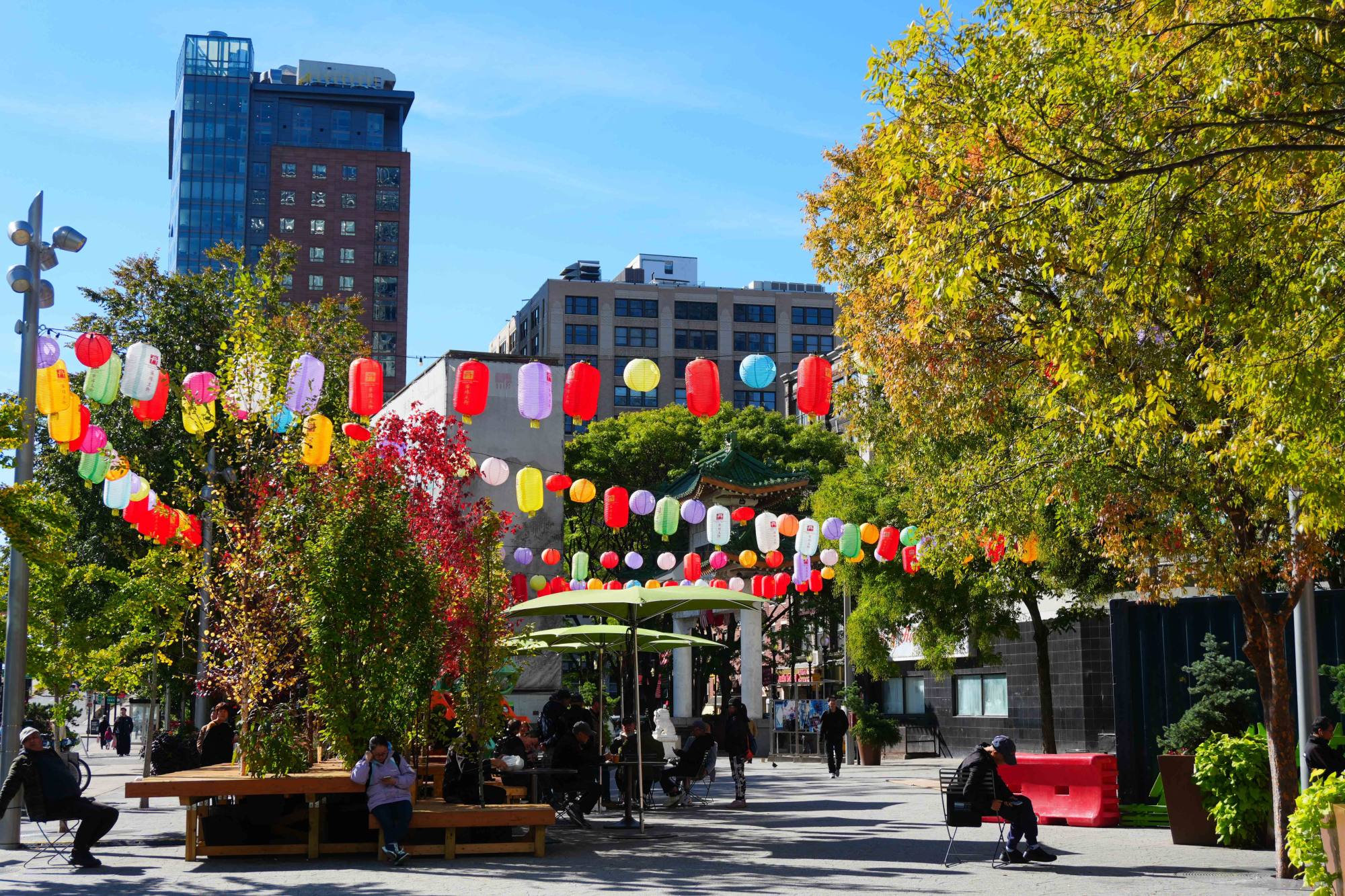
On December 8 this year, the Boston City Council approved a plan by American Legion Boston Chinatown Post 328 to install a Chinese-American veterans memorial in the park. The memorial will pay tribute to those who gave their lives to serve the US despite facing discrimination and barriers.
Now, the neighbourhood is transforming once more.
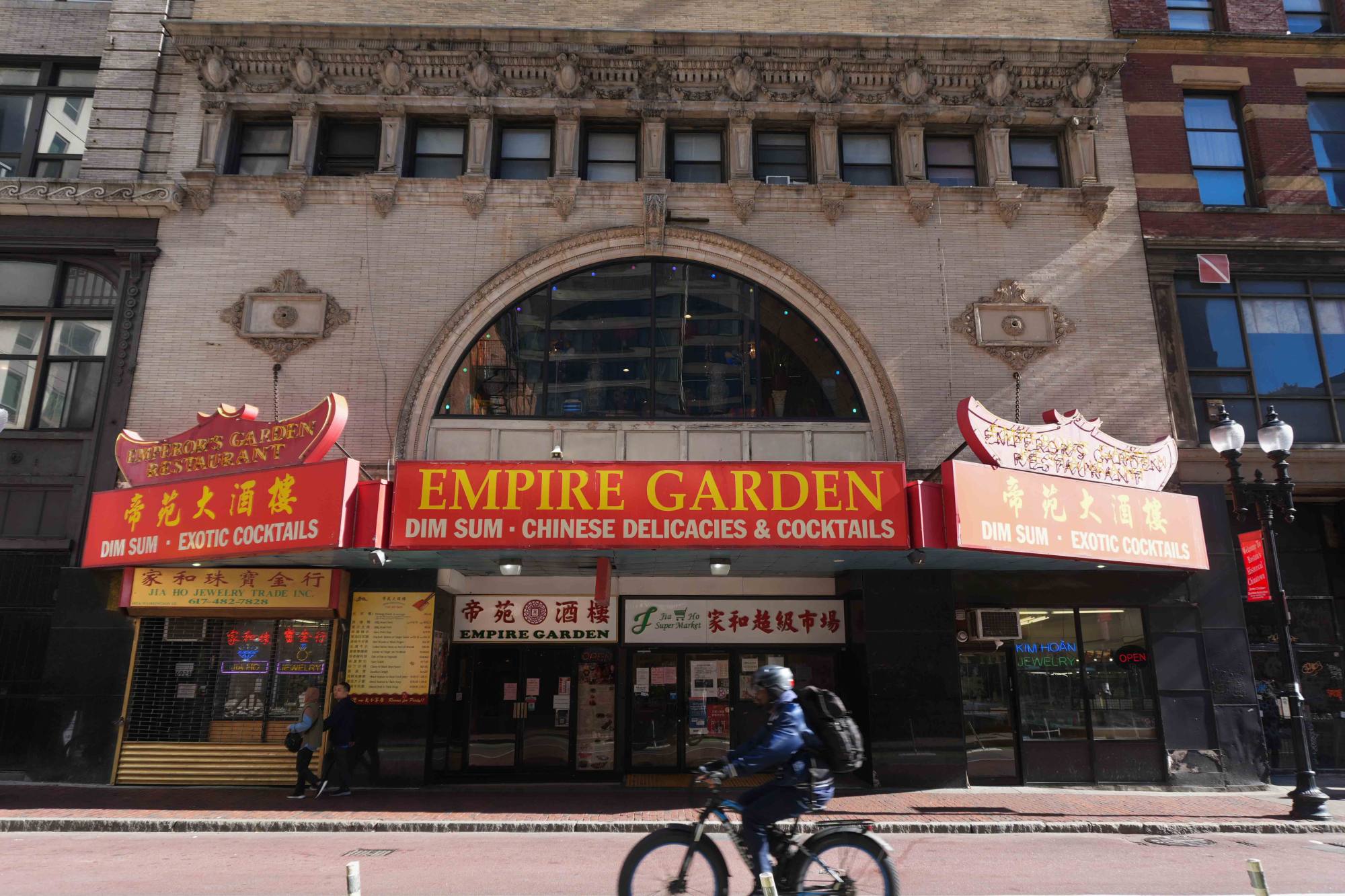
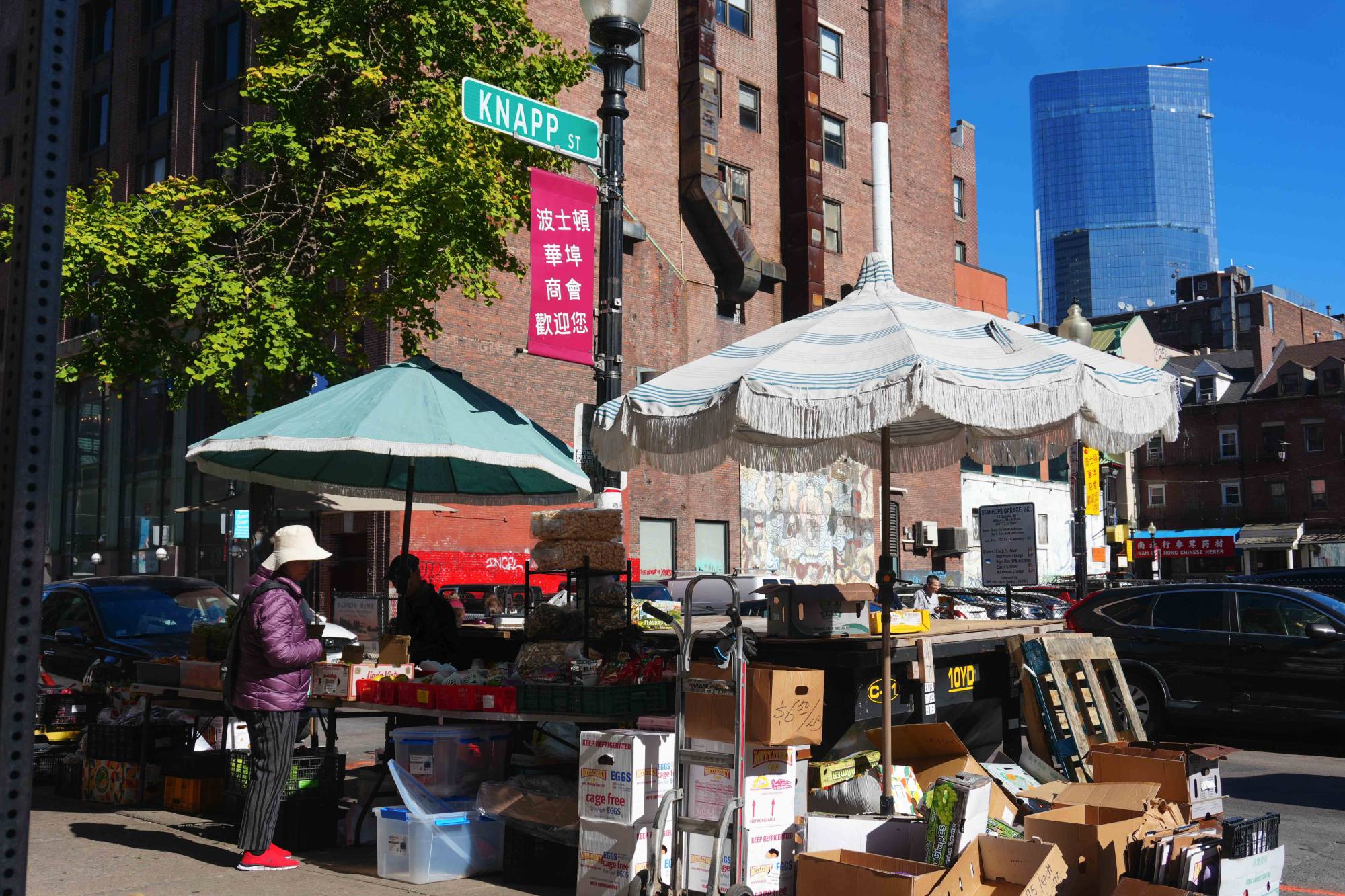
“It’s becoming more of a pan-Asian town than an exclusive ‘Chinatown’,” Kane says. “There are more signs in Japanese, Korean, Vietnamese and even Malaysian, reflecting current immigrant demographics.”
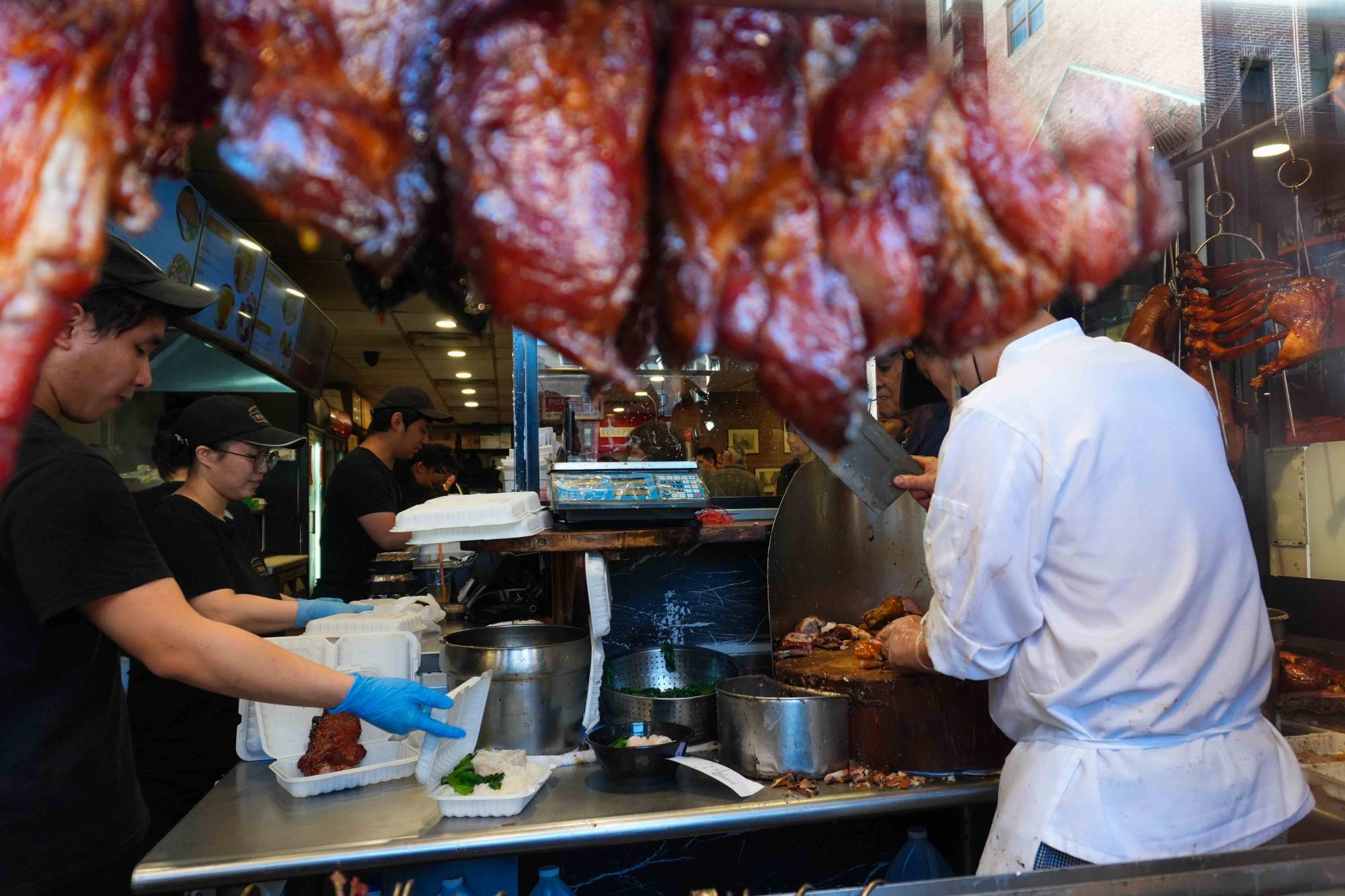
It has also solidified its status as a food destination with its decades-old, family-run establishments.
One such place is China Pearl. Established in 1960, it is the neighbourhood’s oldest operating restaurant. After a prolonged closure during the Covid-19 pandemic, it reopened in the summer of 2025 with a sleek, modern interior.
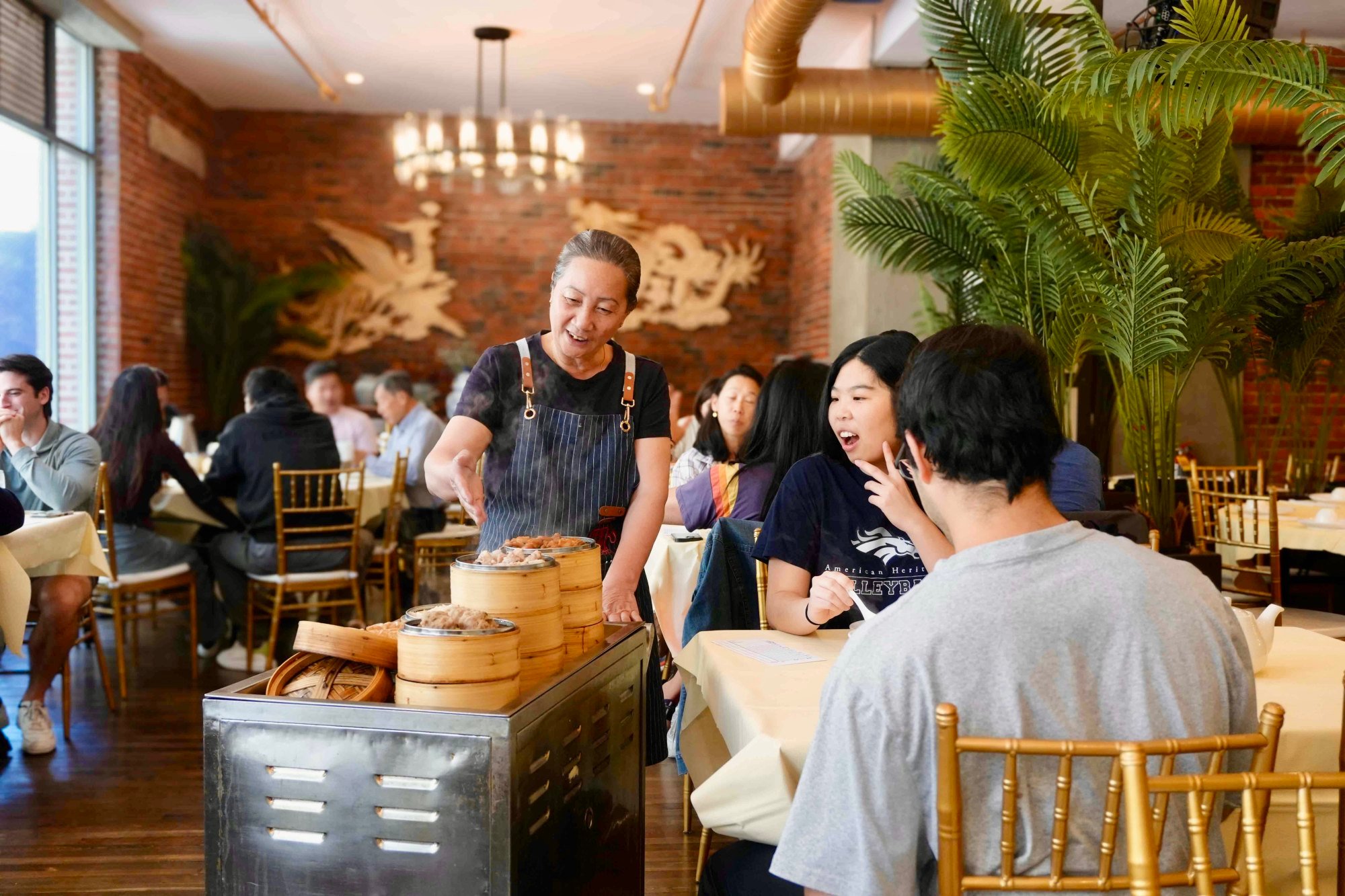
Here, dim sum is still served on trolleys, preserving an old-school culinary tradition that is gradually disappearing in places like Hong Kong.
“China Pearl used to serve more Chinese-American dishes, but after we took over in 1989, we wanted to make it more authentically Cantonese,” says one of the founder’s family members, who wishes to remain anonymous. “We’ve kept up with the times by adding some Sichuan dishes, too.”
Yet, in a nod to its history, staples like crab Rangoon and General Gau’s chicken (better known as General Tso’s chicken outside Boston) remain on the menu.
The restaurant’s ability to balance innovation with tradition echoes that of the neighbourhood itself. Facing persistent gentrification, the community’s future depends on sophisticated, bottom-up efforts.
According to Kane, organisations such as the Asian Community Development Corporation (ACDC) and the Chinatown Community Land Trust have become essential tools, fighting for affordable housing and community control against development pressures.
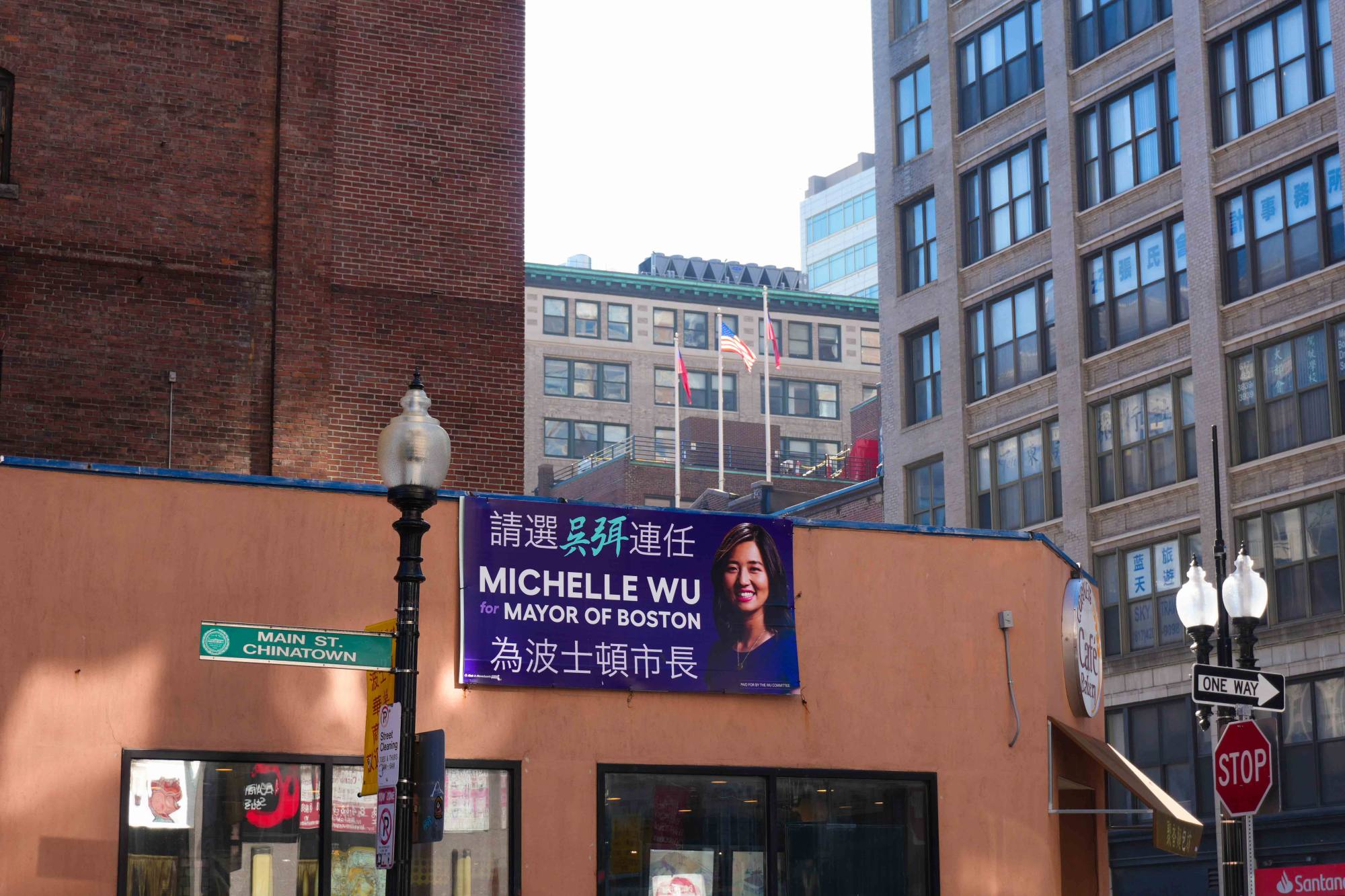
The success of this struggle for representation is now visible on the streets themselves. Amid the neon signs and restaurant awnings, the most ubiquitous image in Chinatown today is the face of Michelle Wu, Boston’s first Asian-American mayor.
In a video posted on social media in 2024, Wu echoed the sentiment of the generations of Chinese immigrants who have moved to Chinatown.
“Chinatown is our source of connection to arts and culture, education and opportunity, faith and community,” she said.
More Articles from SCMP
Hong Kong home prices to rise in 2026 on the back of mainland Chinese buyers, rate cut
Mental health support essential for all of society after Tai Po fire tragedy
US commission wants more Mandarin language courses as Congress looks to curb Beijing sway
Chinese supercomputer maker Sugon and chip developer Hygon call off merger plans
This article originally appeared on the South China Morning Post (www.scmp.com), the leading news media reporting on China and Asia.
Copyright (c) 2025. South China Morning Post Publishers Ltd. All rights reserved.