Overview of the Analysis
In the month leading up to Nepal’s parliamentary elections, a significant disparity was observed in the coverage of political parties on popular Facebook pages. An analysis conducted by The Kathmandu Post revealed that one political party dominated the content shared on these platforms, far surpassing all others combined.
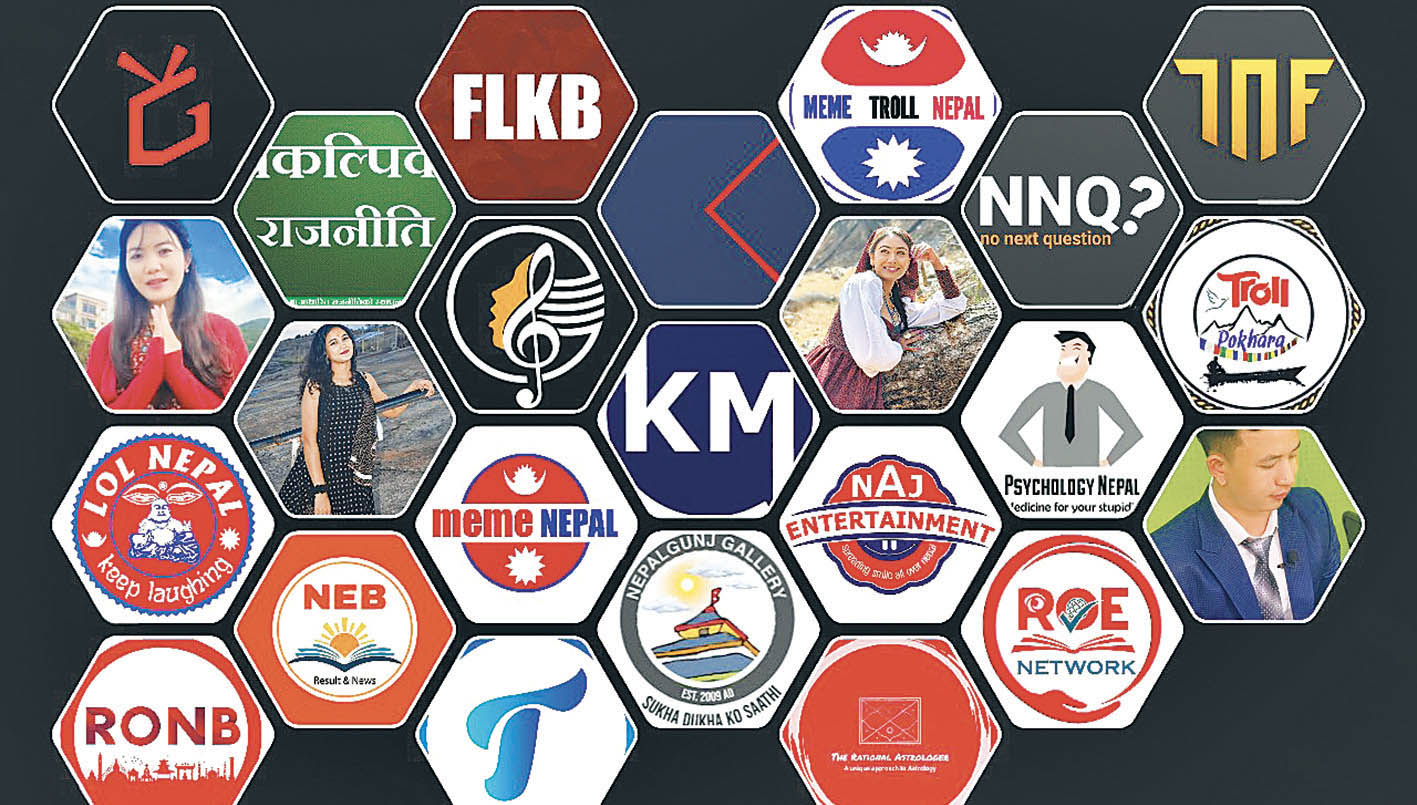
The study focused on 4,754 posts published between December 23, 2025, and January 22, 2026, from 24 Facebook pages with hundreds of thousands to several million followers. Out of these posts, 2,447 were political in nature. The Rastriya Swatantra Party (RSP) content appeared in 1,324 posts, accounting for 54.1 percent of the political posts—nearly nine times more than the Nepali Congress and more than twice as much as the combined efforts of the Nepali Congress and Communist Party Nepal (UML).
These pages, which are not officially affiliated with any political party, range from social media favorites like ‘Routine of Nepal Banda’ to regional pages such as ‘Troll Pokhara’ and ‘Nepalgunj Gallery’. They primarily publish mixed content, including local news, educational information, humor, satire, and entertainment.
Key Findings
The analysis highlights a striking imbalance in how one political party dominates content during Nepal’s election season. While the reasons behind this phenomenon remain unclear—whether it reflects a coordinated strategy, organic enthusiasm, or algorithmic preference for emotional content—the data clearly shows that content favoring the RSP, its leaders Balendra Shah and Rabi Lamichhane, and the party’s blue bell symbol vastly outweighs coverage of traditional parties.
Moreover, almost all the material reviewed by the Post focuses on personality-driven and emotional imagery while ignoring policy debate. This trend is particularly notable given the increasing reliance on social media platforms where millions of Nepalis now get their information, which they believe is fact-based news.
Methodology and Data Collection
The 24 pages were selected based on three criteria: follower count, engagement levels, and regular posting activity. Only pages demonstrating high interaction through likes, comments, and shares, with visibly active follower bases, were included.
For each page, the Post analyzed the most recent 200 posts, using AI-based tools to help categorize content, identify thematic patterns, and detect political references. Posts were coded as political if they referenced parties, candidates, elections, or governance.
Case Studies
Several pages demonstrated a clear focus on RSP-related content:
- Alternative for Nepal: Of 192 posts published during the study period, 181 (94 percent) were political content. Approximately 60 percent of these focused on RSP, Balen Shah, or Rabi Lamichhane.
- Ktm Post: With 147,000 followers, posted 161 items total, with 111 about RSP, six about UML, three about Nepali Congress, one about other political parties, and 37 non-political posts.
- The Nepali Favour: A page focused primarily on memes, posted 200 items during the study period. Of these, 135 (68 percent) were politics-related, with “Balen Shah” and “Rabi Lamichhane” as the dominant keywords.
- Routine of Nepal Banda: With nearly 5 million followers, posted 200 items between January 17 and 23. Of these, 99 (49.5 percent) were political content, with RSP-related content dominating.
Social Media and Algorithmic Influence
Dovan Rai, a technologist who studies behavior and oversees R&D at Body & Data, noted that the current moment is highly emotional. People are making decisions based on their gut feelings, which are further amplified by algorithms. Research supports this observation, showing that content generating strong emotional reactions—particularly outrage, inspiration, or anxiety—receives higher distribution than neutral information.
Facebook’s internal documents leaked by whistleblower Frances Haugen in 2021 showed that the company’s algorithm prioritizes content provoking “angry” reactions, leading to more divisiveness and polarization.
Global Context
The pattern identified in Nepal mirrors findings from elections globally. Investigations into Facebook’s role in elections in the Philippines, India, and Myanmar documented how personality-driven, emotionally charged political content systematically outperforms policy-focused material. In Myanmar, UN investigators found that Facebook’s algorithm had amplified hate speech and misinformation that contributed to violence against Rohingya Muslims.
Misinformation and AI-Generated Content
The content analyzed did not focus on hate speech but featured emotional narratives: leaders visiting hospitals, meeting with grieving families, surrounded by supporters. Many posts featured AI-generated images of RSP leaders.
Several pages also shared demonstrable misinformation, including AI-generated images and false claims that said Nepali Congress President Gagan Kumar Thapa had been arrested, or that CPN-UML leader and former prime minister KP Sharma Oli and former home minister Ramesh Lekhak had been taken into police custody.
Political Implications
Deepak Adhikari, a fact-checker and journalist who monitors social media, confirmed he has observed this pattern. “These same pages are at the forefront of spreading misinformation,” he said.
The most influential page in the network, ‘Routine of Nepal Banda’, has a history connected to RSP leader Balendra Shah, now the party’s candidate challenging CPN-UML Chairman Oli in Jhapa-5.
Traditional Parties and Digital Adaptation
Traditional political parties say they are working to adapt to the digital landscape, but with limited resources and largely volunteer teams. However, their content appeared in only 19% of political posts across the analyzed pages, less than one-fifth of RSP’s presence.
Conclusion
The contrast between what traditional parties describe and what the Post’s analysis shows is striking. Despite UML’s focus on “Gen Z” and Congress’s 15-person team, their content appeared in 19% of political posts across the analyzed pages—less than one-fifth of RSP’s presence.
As the election approaches, the influence of social media and the role of AI-generated content continue to shape the political landscape in Nepal. The balance of power may soon be determined not just by traditional campaign strategies, but by the ability to harness the digital realm effectively.